Reaction equation

[CH3:1]C([O-])(C)C.[K+].[C:7]([CH:11]1[CH2:16][CH2:15][C:14](=O)[CH2:13][CH2:12]1)([CH3:10])([CH3:9])[CH3:8].[NH4+].[Cl-]>[Br-].C[P+](C1C=CC=CC=1)(C1C=CC=CC=1)C1C=CC=CC=1.C(OCC)C>[C:7]([CH:11]1[CH2:16][CH2:15][C:14](=[CH2:1])[CH2:13][CH2:12]1)([CH3:10])([CH3:9])[CH3:8]Participants




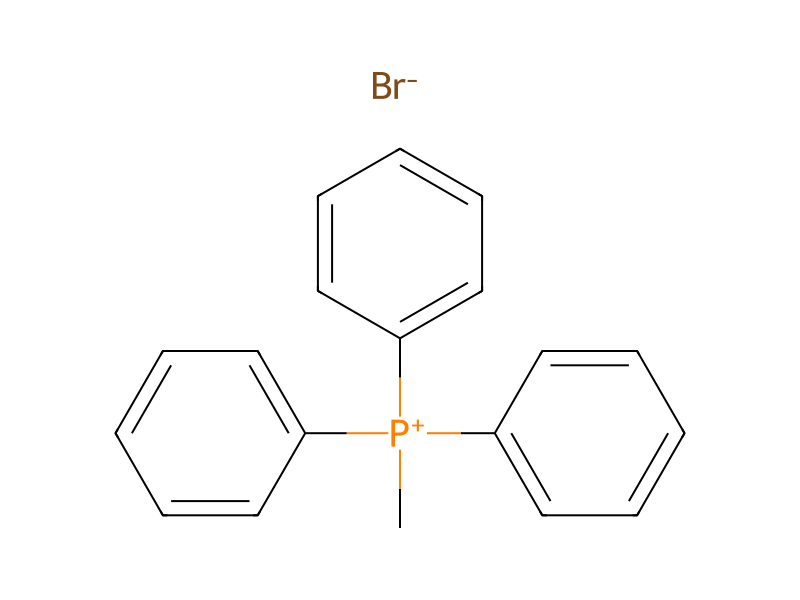

Procedure
Methyltriphenylphosphonium bromide (17.4 g, 48.6 mmol) was placed in abs. diethyl ether (106 ml) under a nitrogen atmosphere. Potassium tert-butylate (5.0 g, 45.4 mmol) was slowly added at 0° C. After 30 min, 4-tert-butylcyclohexanone (5.0 g, 32.4 mmol) as a solution in diethyl ether (10 ml) was slowly added dropwise, again at 0° C. The reaction mixture was stirred overnight at RT. For working up, the reaction mixture was cooled in an ice bath and mixed with sat. aq. NH4Cl solution. The phases were separated and the aqueous phase was shaken out several times with diethyl ether. The combined organic phases were dried over magnesium sulphate and the solvent was removed under vacuum. After column chromatography (silica gel, hexane/EtOAc 2:1), the desired compound 1-tert-butyl-4-methylenecyclohexane was obtained as a colourless liquid (3.93 g, 80% of the theoretical amount).
Workup
- temperaturethe reaction mixture was cooled in an ice bath
- customThe phases were separated
- stirringthe aqueous phase was shaken out several times with diethyl ether
- dry with materialThe combined organic phases were dried over magnesium sulphate
- customthe solvent was removed under vacuum
Sources & evidence
- ORD record
- ord-e87f74e273584391b095521f37b551f3
- Source dataset
- uspto-grants-2011_07
- Patent number
- US07981883B2
Linked notes
Loading…