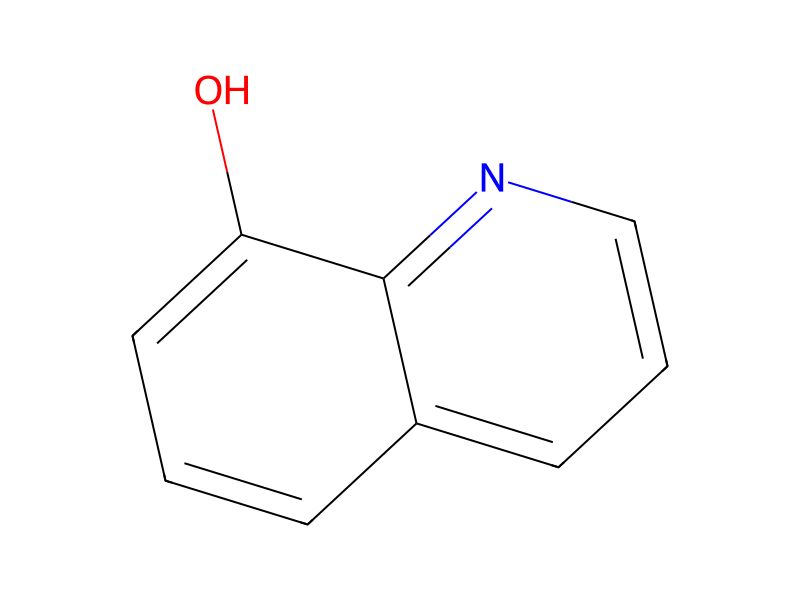
23.2 g of 8-hydroxyquinoline are dissolved in 400 ml of butan-2-one, under the influence of heat, and 30 g of potassium carbonate are added in portions. The mixture is refluxed for one hour. 2 g of potassium iodide are then added dropwise, followed by 40 g of methyl 2-bromopropionate in 100 ml of butan-2-one in the course of one hour, with stirring and boiling. The mixture is then refluxed for another 10 hours. After cooling to room temperature, the mixture is poured onto 1 liter of water and extracted with three 200 ml portions of ethyl acetate. The combined extracts are washed once with 50 ml of water, dried over sodium sulfate and filtered. The solvent is evaporated off and the oily residue is crystallised by trituration with petroleum ether. After recrystallisation from hexane, methyl 2-(8-quinolinoxy)-propionate (compound No.3) is obtained in the form of beige-coloured crystals of melting point 70° to 72° C.