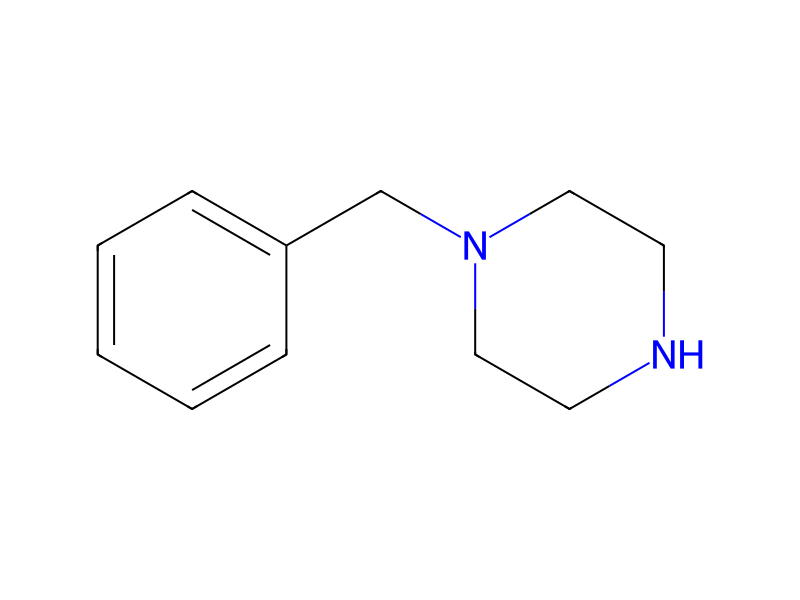
Cl[C:2]1[CH:7]=[CH:6][C:5]([C:8]2[CH:9]([CH3:15])[CH2:10][C:11](=[O:14])[NH:12][N:13]=2)=[CH:4][C:3]=1[N+:16]([O-:18])=[O:17].[CH2:19]([N:26]1[CH2:31][CH2:30][NH:29][CH2:28][CH2:27]1)[C:20]1[CH:25]=[CH:24][CH:23]=[CH:22][CH:21]=1.N1C=CC=CC=1>CN(C)C=O>[CH2:19]([N:26]1[CH2:31][CH2:30][N:29]([C:2]2[CH:7]=[CH:6][C:5]([C:8]3[CH:9]([CH3:15])[CH2:10][C:11](=[O:14])[NH:12][N:13]=3)=[CH:4][C:3]=2[N+:16]([O-:18])=[O:17])[CH2:28][CH2:27]1)[C:20]1[CH:21]=[CH:22][CH:23]=[CH:24][CH:25]=116.1 g (60 mmol) of 6-(4-chloro-3-nitro-phenyl)-4,5-dihydro-5-methyl-3(2H)-pyridazinone, 15.9 g (90 mmol) of 1-benzyl-piperazine and 7.3 ml (90 mmol) of pyridine are stirred into 60 ml of dimethyl formamide at 100° C. A further 5.8 g (33 mmol) of 1-benzyl-piperazine is added after 7 hours and stirring of the reaction mixture is continued for 12 hours at 100° C. When the reaction mixture is cold it is poured out on 300 ml of ice water and the solid which precipitates is suction filtered. The aqueous phase is extracted twice with 200 ml of dichloromethane. The combined organic phases are washed with water and saturated sodium chloride solution, dried, filtered and concentrated by evaporation in vacuo. The solid residue obtained is recrystallized from 500 ml of ethanol together with the solid initially obtained. 23.4 g (95%) of orange red crystals melting at 220° to 221° C. are obtained.
Loading…