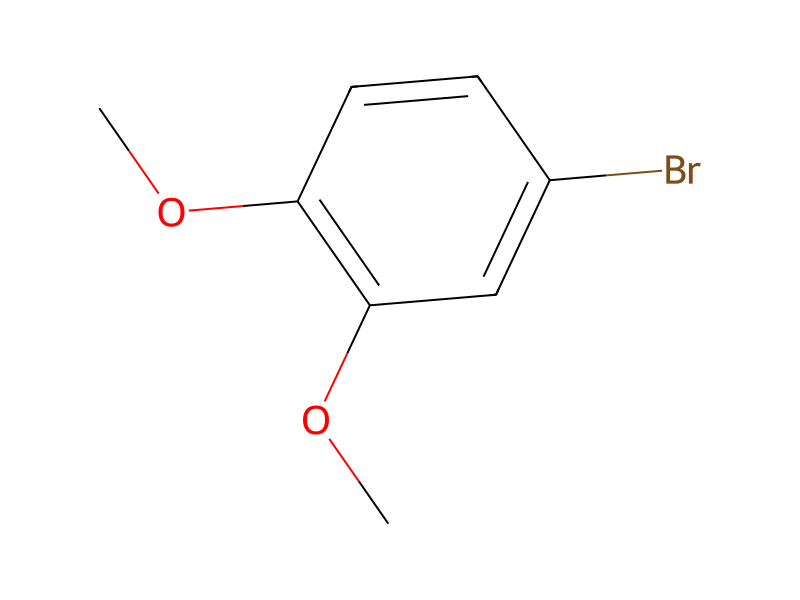
In dry tetrahydrofuran (10 ml) was dissolved 4-bromoveratrol (1.2 g). To the solution was added dropwise slowly an n-hexane solution (3.7 ml) of 15% n-butyllithium, while stirring under cooling at -68° C. to -70° C. under an atmosphere of nitrogen gas. The mixture was stirred for 20 minutes at the same temperature range for 20 minutes. Then there was added dropwise in the course of 30 minutes a solution of 2-(4-chlorophenyl)-5-cyanopyridine (0.8 g) in dry tetrahydrofuran (8 ml). The mixture was stirred at the same temperature range for 30 minutes, followed by addition of methanol (6 ml), and warming to the room temperature, slowly. The reaction mixture was concentrated, and there was added ethyl acetate (100 ml), and the solution was washed with ice-water (30 ml) once, to which was added silica gel (60 g), followed by stirring at room temperatures for 2 hours. The reaction mixture was then left standing overnight, and the silica gel was filtered off. To the filtrate was added anhydrous magnesium sulfate for drying, and the filtrate was subjected to filtration. The filtrate was concentrated, and the concentrate was purified by means of a silica gel chromatography (eluted with chloroform), followed by recrystallization from acetonitrile to obtain 2-(4-chlorophenyl)-5-(3,4-dimethoxybenzoyl)pridine (700 mg) as pale yellow granular crystals, m.p. 168° to 170° C.