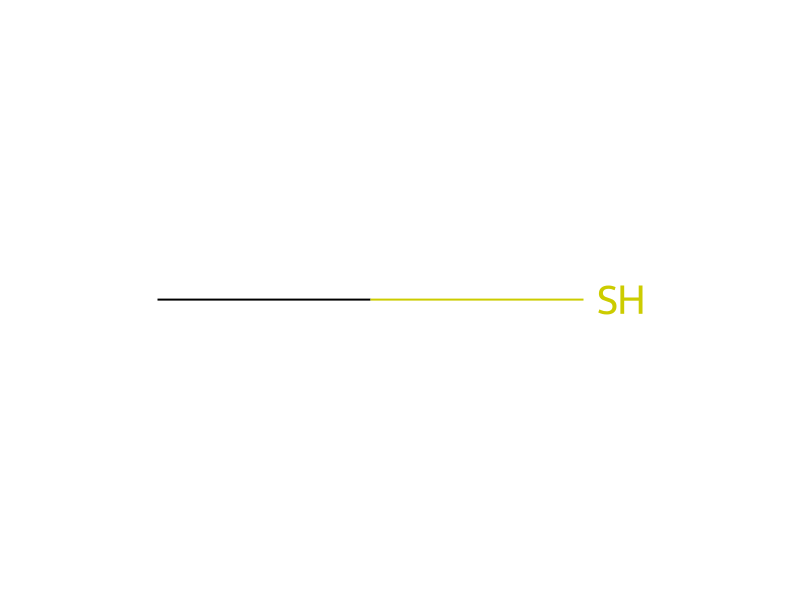
Br[CH:2]1[C:7](=[O:8])[C:6]2[CH:9]=[C:10]([O:18][C:19]3[CH:24]=[CH:23][CH:22]=[CH:21][CH:20]=3)[C:11]([NH:13][S:14]([CH3:17])(=[O:16])=[O:15])=[CH:12][C:5]=2[O:4][CH2:3]1.[CH3:25][SH:26].C(N(CC)CC)C.O>C(Cl)Cl>[CH3:17][S:14]([NH:13][C:11]1[C:10]([O:18][C:19]2[CH:24]=[CH:23][CH:22]=[CH:21][CH:20]=2)=[CH:9][C:6]2[C:7](=[O:8])[CH:2]([S:26][CH3:25])[CH2:3][O:4][C:5]=2[CH:12]=1)(=[O:16])=[O:15]In 50 ml of methylene chloride were dissolved 2.06 g of 3-bromo-2,3-dihydro-7-methylsulfonylamino-6-phenoxy-4H-1-benzopyran-4-one and 480 mg- of methylmercaptan. Thereto was added 2.02 g of triethylamine at 0°-5° C. The mixture was stirred for 1 hour at room temperature. The reaction mixture was introduced into 30 ml of water. The organic layer was separated, washed with water, and dried with anhydrous magnesium sulfate. The solvent was removed by distillation under reduced pressure. The residue was purified by a column chromatography (eluant: a 50 : 1 mixture of toluene and ethyl acetate) to obtain 900 mg (yield: 47.4%) of 2,3-dihydro-7-methylsulfonylamino-3-methylthio-6-phenoxy-4H-1-benzopyran-4-one.
Loading…