4-Methylmorpholine → 2-(4-Morpholino-6-propyl-1,3,5-triazin-2-yl)aminoethanol
HRID 1031873
Reaction equation

Cl[C:2]1[N:7]=[C:6]([CH2:8][CH2:9][CH3:10])[N:5]=[C:4]([NH:11][CH2:12][CH2:13][OH:14])[N:3]=1.C[N:16]1[CH2:21][CH2:20][O:19][CH2:18][CH2:17]1>O1CCOCC1>[O:19]1[CH2:20][CH2:21][N:16]([C:2]2[N:7]=[C:6]([CH2:8][CH2:9][CH3:10])[N:5]=[C:4]([NH:11][CH2:12][CH2:13][OH:14])[N:3]=2)[CH2:17][CH2:18]1Participants
4
Reactant 2
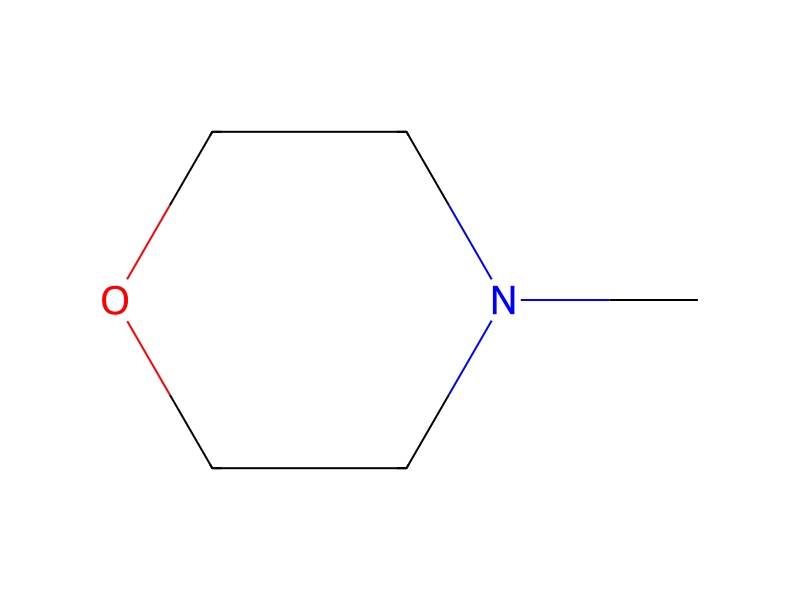

Product 1

Reagents, catalysts & solvents 1

Procedure
10.83 g (0.05 mole) of 2-[(4-chloro-6-propyl-1,3,5-triazin-2-yl)amino]-ethanol and 15.15 g (0.15 mole) of N-methylmorpholine are mixed in 100 ml of dioxane. The mixture is heated under reflux for 20 hours; it is then cooled and the dioxane is removed under reduced pressure. The residue is dissolved in 200 ml of ethyl acetate. The solution is washed twice with 50 ml of water, dried over sodium sulfate and concentrated. The product crystallizes during the evaporation. 9.23 g of 2-[(4-morpholino-6-propyl-1,3,5-triazin-2-yl)amino]-ethanol identical to the product obtained above are obtained.