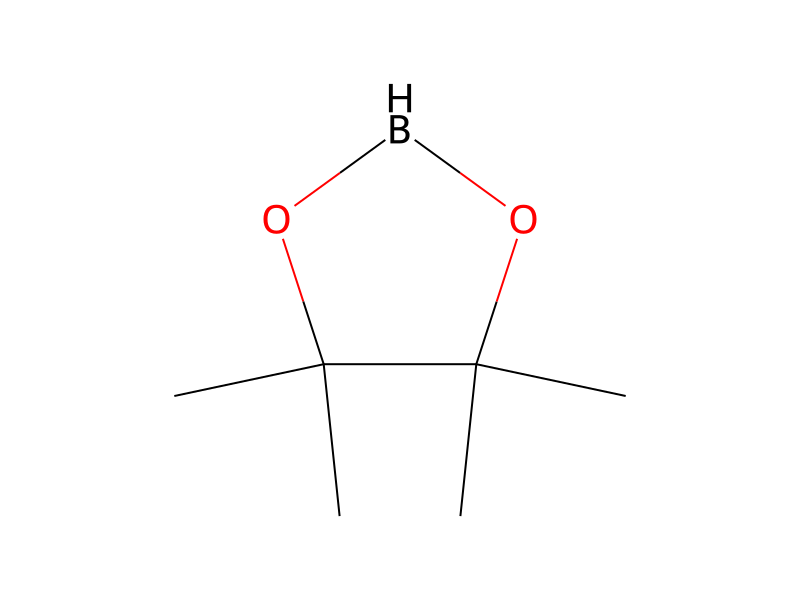
Br[C:2]1[C:6]2[O:7][C:8]([N:12]3[CH2:17][CH2:16][O:15][CH2:14][CH2:13]3)=[CH:9][C:10](=[O:11])[C:5]=2[S:4][CH:3]=1.O1CCOCC1.C(N(C(C)C)CC)(C)C.CC1(C)C(C)(C)[O:37][BH:36][O:35]1>ClCCl.[Ni](Cl)Cl.C1(P(C2C=CC=CC=2)CCCP(C2C=CC=CC=2)C2C=CC=CC=2)C=CC=CC=1.C1(P(C2C=CC=CC=2)CCCP(C2C=CC=CC=2)C2C=CC=CC=2)C=CC=CC=1>[O:15]1[CH2:16][CH2:17][N:12]([C:8]2[O:7][C:6]3[C:2]([B:36]([OH:37])[OH:35])=[CH:3][S:4][C:5]=3[C:10](=[O:11])[CH:9]=2)[CH2:13][CH2:14]1A 20 mL microwave vial was charged with a magnetic stirring bar, 3-bromo-5-morpholino-7H-thieno[3,2-b]pyran-7-one (103) (1.20 g, 3.80 mmol), 1,3-bis(diphenylphosphino)propane (156 mg, 0.38 mmol), 1,3-bis(diphenylphosphino)propane nickel(II) chloride (205 mg, 0.38 mmol), dioxane (8 mL), diisopropylethylamine (1.98 mL, 11.39 mmol), and 4,4,5,5-tetramethyl-1,3,2-dioxaborolane (1.10 mL, 7.59 mmol). The reaction mixture magnetically stirred and heated via microwave irradiation for 15 minutes at 160° C. Upon cooling to room temperature, the reaction was transferred to a separatory funnel, diluted with dichloromethane (100 mL), and washed three times with saturated aqueous ammonium chloride solution (100 mL). The dichloromethane layer was dried over magnesium sulfate, filtered, and concentrated in vacuo. The resulting brown foam was stirred in aqueous hydrochloric acid (1.0M, 100 mL) for 30 minutes, frozen, and lyophilized to give 5-morpholino-7-oxo-7H-thieno[3,2-b]pyran-3-ylboronic acid (69) (1.51 g, 4.15 mmol) as a brown solid.