HomeMCPSkillsWorkbenchOpenChem
HomeWorkbenchNotificationsMe
llms.txt · skill.md · MCP GuidePrivacy Policy · Terms of Service · Supportv1.8.5
  1. Home
  2. /Reaction

Ammonium formate → Methyl 5,6,7,8-tetrahydro-2,7-naphthyridine-4-carboxylate

HRID 1052080
Print

Reaction equation

[CH3:1][O:2][C:3]([C:5]1[C:14]2[CH2:13][CH2:12][N:11](CC3C=CC=CC=3)[CH2:10][C:9]=2[CH:8]=[N:7][CH:6]=1)=[O:4].C([O-])=O.[NH4+]>CO.[Pd]>[CH3:1][O:2][C:3]([C:5]1[C:14]2[CH2:13][CH2:12][NH:11][CH2:10][C:9]=2[CH:8]=[N:7][CH:6]=1)=[O:4]
ParticipantsProcedureWorkupSources & evidenceReaction notes

Participants

5

Reactant 2

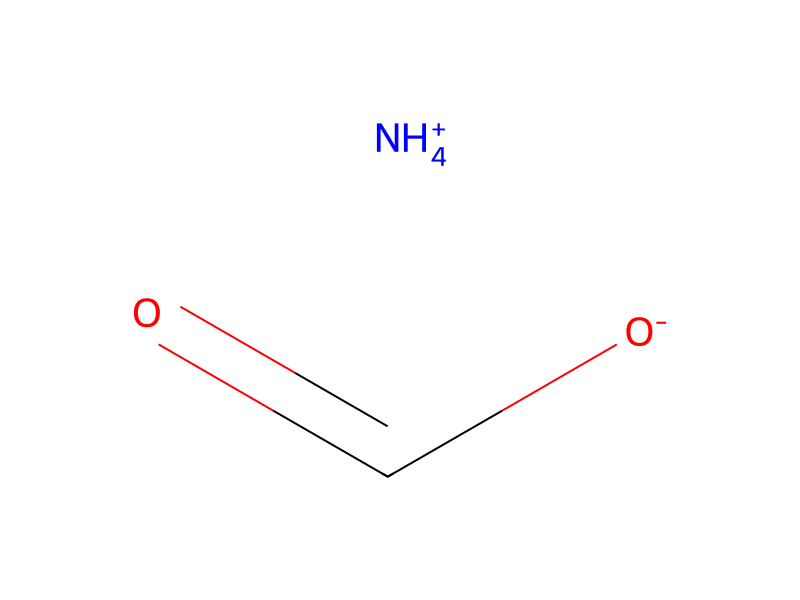
HCID 2723923Ammonium formateHCID 866958797-Benzyl-5,6,7,8-tetrahydro-[2,7]naphthyridine-4-carboxylic acid methyl ester

Product 1

HCID 84663902Methyl 5,6,7,8-tetrahydro-2,7-naphthyridine-4-carboxylateYield 79.4%

Reagents, catalysts & solvents 2

HCID 23938PalladiumCatalystHCID 887MethanolSolvent

Procedure

In a 2 L 3-necked flask equipped with a mechanical stirrer and condenser was placed 7-benzyl-5,6,7,8-tetrahydro-[2,7]naphthyridine-4-carboxylic acid methyl ester (11.28 g, 0.04) in methanol (500 mL). To this solution was added ammonium formate (37.8 g, 0.6 mol) and 10% Pd/C (11 g, 50% water wet). The resulting mixture was stirred and heated to reflux for 15 min. The reaction mixture was filtered through glass microfiber filter paper. The catalyst on filter paper was washed with hot methanol (200 mL). The filtrate was concentrated under reduced pressure to give a solid residue. The residue was purified by flash chromatography over silica gel (120 g) with anhydrous sodium sulfate (15 g) on top packed with hexane. The column was eluted with 100 mL portions of dichloromethane for fractions 1-4, 5% of (10% ammonia in methanol) in dichloromethane for fractions 6-9, and 10% of (10% ammonia in methanol) in dichloromethane for fractions 10-18. All fractions checked by TLC [10% of (10% ammonia in methanol) in dichloromethane]. The product was eluted in fractions 11-16 to give the title compound (6.1 g, 79%) as a light yellow solid. 1H NMR 60 MHz, (CDCl3), δ 8.8 (s, 1H), 8.2 (s, 1H), 4.0 (s, 2H), 3.8 (s, 3H), 3.0 (s, 4H), 1.7 (s, 1H).

Workup

  1. customIn a 2 L 3-necked flask equipped with a mechanical stirrer and condenser
  2. temperatureheated
  3. temperatureto reflux for 15 min
  4. filtrationThe reaction mixture was filtered through glass microfiber
  5. filtrationfilter paper
  6. filtrationThe catalyst on filter paper
  7. washwas washed with hot methanol (200 mL)
  8. concentrationThe filtrate was concentrated under reduced pressure
  9. customto give a solid residue
  10. customThe residue was purified by flash chromatography over silica gel (120 g) with anhydrous sodium sulfate (15 g) on top
  11. washThe column was eluted with 100 mL portions of dichloromethane for fractions 1-4, 5% of (10% ammonia in methanol) in dichloromethane for fractions 6-9, and 10% of (10% ammonia in methanol) in dichloromethane for fractions 10-18
  12. washThe product was eluted in fractions 11-16

Sources & evidence

ORD record
ord-40343d7c64d04424b5567556e1676671
Source dataset
uspto-grants-2016_07
DOI
10.6084/m9.figshare.5104873.v1
Patent number
US09388176B2

Reaction notes

On this pageParticipantsProcedureWorkupSources & evidenceReaction notes

