Formaldehyde → 2,6-Dihydroxybenzaldehyde
HRID 1058343
Reaction equation

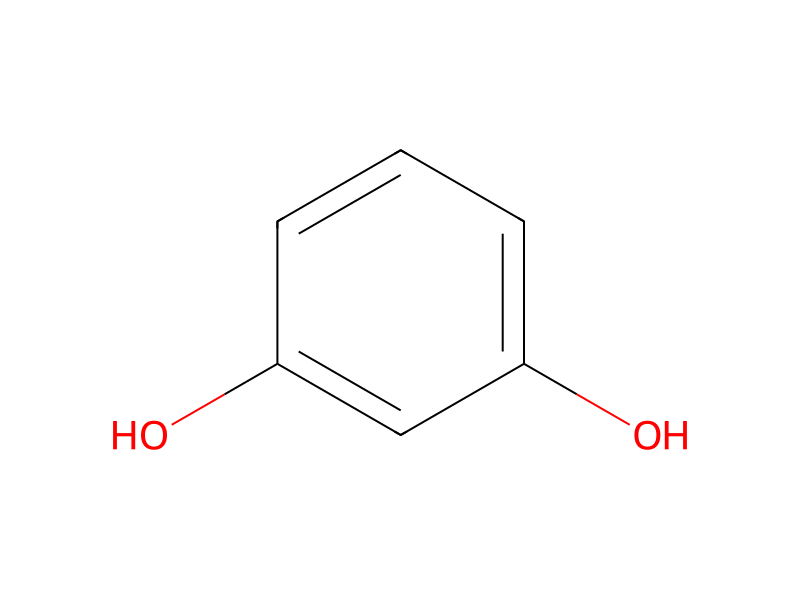
[C:1]1([CH:8]=[CH:7][CH:6]=[C:4]([OH:5])[CH:3]=1)[OH:2].[CH2:9]=[O:10]>>[C:1]1([CH:8]=[CH:7][CH:6]=[C:4]([OH:5])[C:3]=1[CH:9]=[O:10])[OH:2]Participants
3


Procedure
In the case of using RF-gel as carbon precursor, aqueous solutions containing 20 to 60 weight percent of inorganic template particles stabilized with surfactants specified in the step (a) are prepared, and the resulting aqueous solution is mixed with 30 to 70 weight percent aqueous solution of the mixture of resorcinol and formaldehyde (1:2 to 1:3 molar ratio) to produce mixtures with weight ratio of 1:1 to 1:20 (resorcinol-formaldehyde:inorganic template), followed by polymerizing at 20° C. to 95° C. to produce inorganic template/carbon precursor composites as specified in the step (a). In the case of commercial silica sol as template, resorcinol and formaldehyde can be polymerized without using catalyst, because weak basic property of the silica sol solution readily induces polymerization. In order to accelerate the specified polymerization reaction, catalyst such as sodium carbonate can be also added.