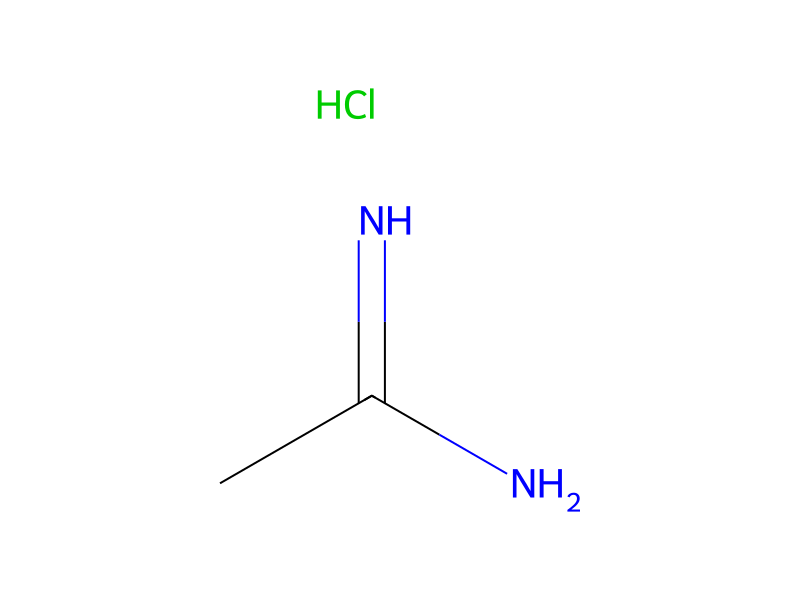
[C:1]1([N:7]=[N:8][CH:9]([C:13](=O)[CH3:14])[C:10](=O)[CH3:11])[CH:6]=[CH:5][CH:4]=[CH:3][CH:2]=1.Cl.[C:17](=[NH:20])([NH2:19])[CH3:18].[Na]>C(O)C>[CH3:14][C:13]1[C:9]([N:8]=[N:7][C:1]2[CH:6]=[CH:5][CH:4]=[CH:3][CH:2]=2)=[C:10]([CH3:11])[N:20]=[C:17]([NH2:19])[CH:18]=1To a stirred solution of 50 parts of 3-(phenylazo)-2,4-pentanedione and 35 parts of ethanimidamide monohydrochloride in 711 parts of ethanol was added a solution of 8.5 parts of sodium in 126 parts of ethanol. After stirring overnight at room temperature, the precipitate was filtered off and the filtrate was stirred for 2 days at room temperature. The mixture was evaporated and the residue was diluted with a sodium hydroxide solution 10%. The separated aqueous layer was extracted with methylbenzene. The extract was dried, filtered and evaporated. The residue was purified by column chromatography over silica gel using a mixture of trichloromethane and methanol (98:2 by volume) as eluent. The pure fractions were collected and the eluent was evaporated with methylbenzene, yielding 7.5 parts (13.8%) of 4,6-dimethyl-5-(phenylazo)-2-pyridinamine as a residue (int. 95).