Reaction equation

C[O:2][C:3]1[CH:8]=[CH:7][CH:6]=[CH:5][C:4]=1[C:9]([C:15]1[C:20]([CH3:21])=[CH:19][CH:18]=[CH:17][N:16]=1)([OH:14])[CH:10]=[C:11]([CH3:13])C.[CH3:22][S-].[Na+]>CN(C)C=O>[OH:2][C:3]1[CH:8]=[CH:7][CH:6]=[CH:5][C:4]=1[C:9]([C:15]1[C:20]([CH3:21])=[CH:19][CH:18]=[CH:17][N:16]=1)([OH:14])[CH:10]=[CH:11][CH2:13][CH3:22]Participants
4
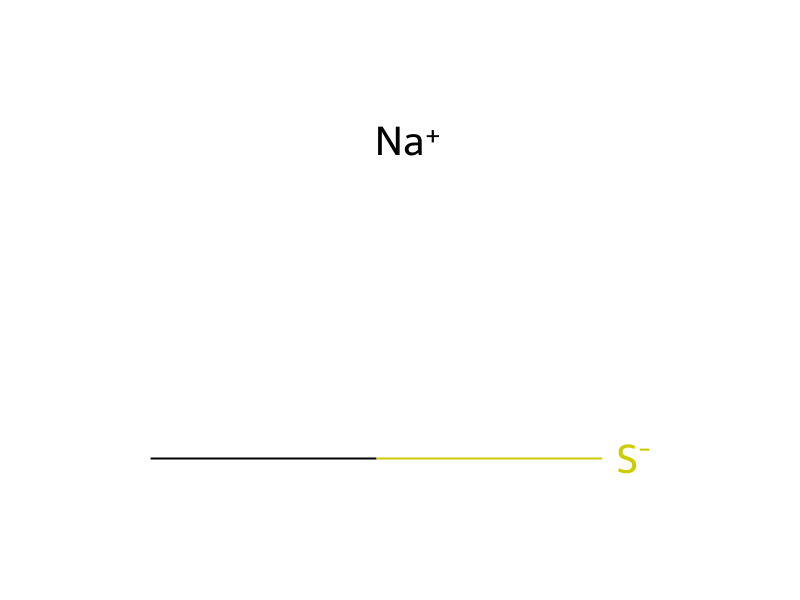



Conditions
- Temperature
- 120 °C
Procedure
7.13 g of 1-(2-methoxyphenyl)-3-methyl-1-(3-methyl-2-pyridyl)-2-buten-1-ol were dissolved in 100 ml of dimethylformamide at room temperature and 5.29 g of sodium methanethiolate were added. After stirring at 120° C. for 2 hours the mixture was allowed to cool to room temperature and then evaporated. Water and ethyl acetate were added, and the organic phase was separated, dried over sodium sulphate and evaporated. The residue was chromatographed on silica gel using ethyl acetate/petroleum ether (1:4) for the elution. There were obtained 4.53 g of 1-(2-hydroxyphenyl)-4-methyl-1-(3-methyl-2-pyridyl)-2-buten-1-ol in the form of an oil.
Workup
- temperatureto cool to room temperature
- customevaporated
- additionWater and ethyl acetate were added
- customthe organic phase was separated
- dry with materialdried over sodium sulphate
- customevaporated
- customThe residue was chromatographed on silica gel
- washfor the elution
Sources & evidence
- ORD record
- ord-2de101ede6b94f8b82533aa62d05aad9
- Source dataset
- uspto-grants-1990_11
- Patent number
- US04971982
Linked notes
Loading…