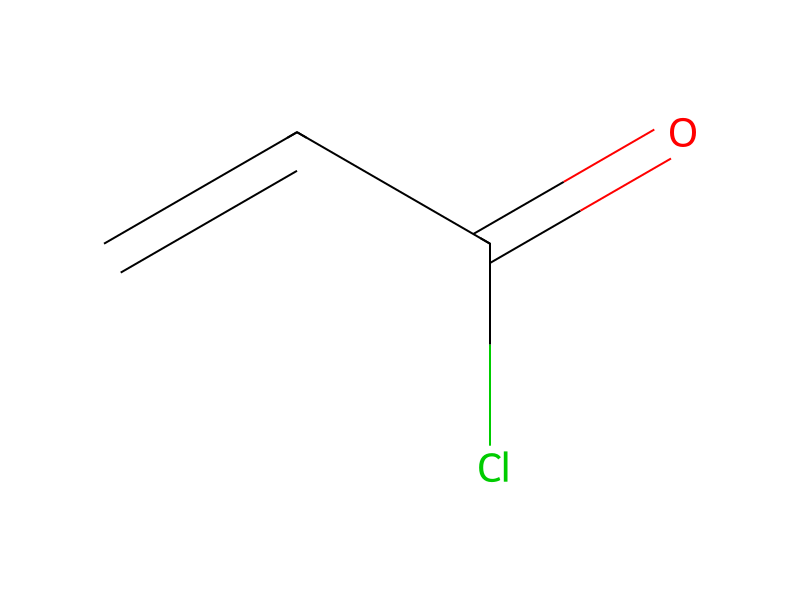
Following a similar preparation as described by D'Alelio and Huemmer (J. Poly. Sci., 5, 1967, pp. 307-321), to a two liter, three necked, round bottomed flask equipped with a paddle stirrer and thermometer, was added 87 g (0.74 mol.) of glycerol carbonate, followed by 1000 ml of benzene, 100 ml dioxane and 0.95 g of BHT. A drying tube and a nitrogen line were attached to the flask. Stirring was begun and the heterogeneous mixture was cooled to 0° C. with a brine bath. Two addition funnels were charged as follows: to the first was added 75 g (0.74 mol.) of triethylamine; to the second was added a solution of 100 ml of benzene and 60 g (0.66 mol.) of acryloyl chloride. Two drops of acryloyl chloride solution were added for every one drop of triethylamine. The addition took place over a period of two hours. The reaction contents were filtered through diatomaceous earth filtering media and the solution was washed with cold 5% HCl, followed by four 200 ml portions of water. 0.3 g of tert-butanol was added and the solution was dried over MgSO4. The solution was filtered to remove the drying agent and allowed to stand over a mixture of NaHCO3 and Na2SO4 for two days. The solution was filtered, transferred to a one liter, round bottomed flask and placed on a rotoevaporator. Without heat being applied, a vacuum of approximately 5 mmHg (667 Pa) was applied and the solvent was removed as completely as possible. 52 g (42%) of a light yellow liquid was recovered. 13C NMR identified the liquid to contain 86%, by weight, of the desired compound, the balance being benzene and dioxane.