Reaction equation

[O:1]([C:8]1[CH:13]=[CH:12][C:11]([OH:14])=[CH:10][CH:9]=1)[C:2]1[CH:7]=[CH:6][CH:5]=[CH:4][CH:3]=1.Cl.Cl[CH2:17][CH2:18][N:19]1[CH2:23][CH2:22][CH2:21][CH2:20]1.CCOCC.O>CN(C=O)C>[O:1]([C:8]1[CH:9]=[CH:10][C:11]([O:14][CH2:17][CH2:18][N:19]2[CH2:23][CH2:22][CH2:21][CH2:20]2)=[CH:12][CH:13]=1)[C:2]1[CH:7]=[CH:6][CH:5]=[CH:4][CH:3]=1Participants
6





Procedure
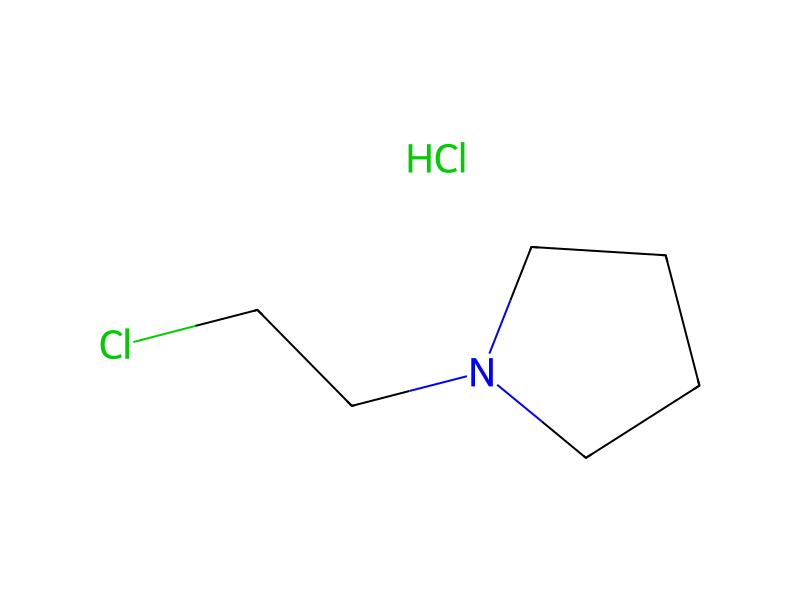
A solution of 4-phenoxyphenol (0.56 g, 3.0 mmol), 1-(2-chloroethyl)-pyrrolidine HCl (0.51 g, 3.0 mmol) and powdered K2 CO3 (1.2 g, 8.7 mmol) in 30 mL DMF was stirred at 80°-90° C. for 15 hours. The solution was cooled, poured into Et2O and water and the ether layer washed with water and brine, dried over Na2SO4 and concentrated in vacuo to give 0.79 g of a brown oil. The crude product was flashed chromatographed on silica gel using a gradient of 2:1 hexane/EtOAc to 100% EtOAc to provide the title compound (0.65 g, 76.5%) as a light yellow oil:
Workup
- temperatureThe solution was cooled
- washthe ether layer washed with water and brine
- dry with materialdried over Na2SO4
- concentrationconcentrated in vacuo
Sources & evidence
- ORD record
- ord-64836a6fca744252ac2345f2b4e4762d
- Source dataset
- uspto-grants-1998_03
- Patent number
- US05723492
Linked notes
Loading…