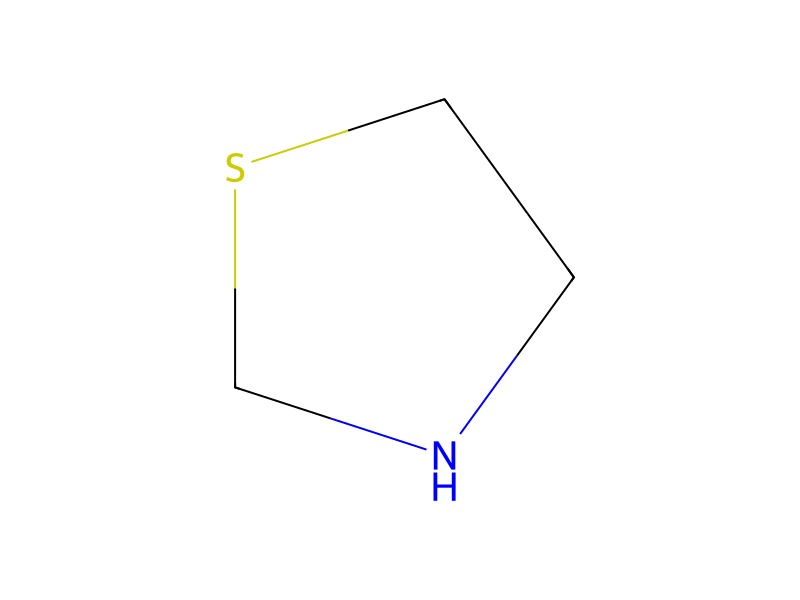
[CH:1]1([CH2:10][C:11]([CH:13]2[S:17][CH2:16][NH:15][C@@H:14]2[C:18]([OH:20])=O)=[O:12])[C:9]2[C:4](=[CH:5][CH:6]=[CH:7][CH:8]=2)[CH2:3][CH2:2]1.CCN=C=NCCCN(C)C.Cl.[S:33]1[CH2:37][CH2:36][NH:35][CH2:34]1>C(Cl)Cl>[CH:1]1([CH2:10][C:11]([CH:13]2[S:17][CH2:16][NH:15][C@@H:14]2[C:18]([N:35]2[CH2:36][CH2:37][S:33][CH2:34]2)=[O:20])=[O:12])[C:9]2[C:4](=[CH:5][CH:6]=[CH:7][CH:8]=2)[CH2:3][CH2:2]10.60 g .COPYRGT.f 3-(2-indanylacetyl)-L-thioproline was suspended in 5 ml of methylene chloride. To the suspension was added 0.46 g of WSC HCl with stirring at room temperature. After 5 minutes, 0.18 g of thiazolidine dissolved in 5 ml of methylene chloride was added to the mixture, and the mixture was stirred for 17 hours at room temperature. The reaction mixture was washed with water, diluted hydrochloric acid, and saturated sodium hydrogen carbonate in this order. The organic layer was dried over anhydrous magnesium sulfate, and the solvent was evaporated under reduced pressure. The residue thus obtained was purified by silica gel column chromatography to produce 0.40 g of 3-[3-(2-indanylacetyl)-L-thioprolyl]thiazolidine as a colorless oil (yield: 55%).