Reaction equation

C1C=CN=CC=1.[FH:7].[Cl:8][C:9]1[CH2:10][C:11]2[C:16](=[O:17])[O:15][C:13](=[O:14])[C:12]=2[CH2:18][CH:19]=1.[Br:20]Br.C(=O)([O-])[O-].[Na+].[Na+]>C(Cl)Cl>[Br:20][CH:19]1[CH2:18][C:12]2[C:13]([O:15][C:16](=[O:17])[C:11]=2[CH2:10][C:9]1([Cl:8])[F:7])=[O:14]Participants
6



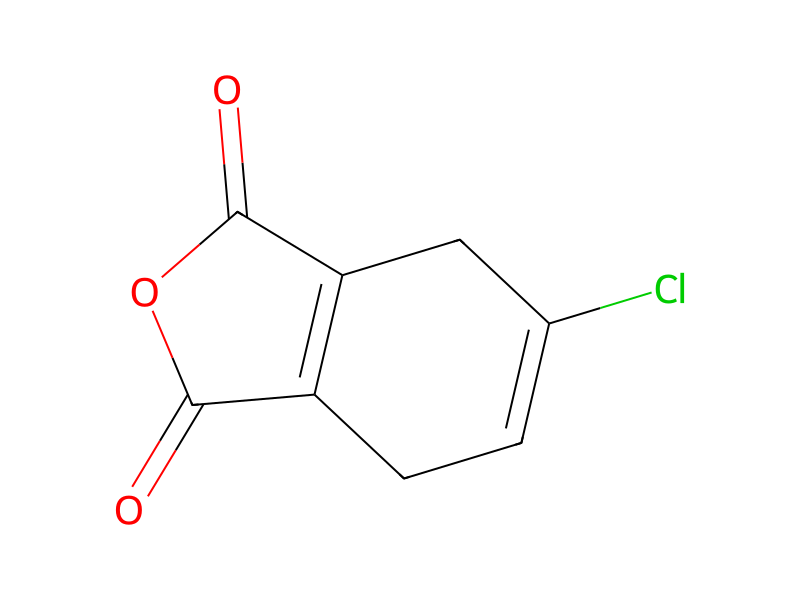


Procedure
Pyridinium poly(hydrogen fluoride) was added to a solution of 4-chloro-3,6-dihydrophthalic anhydride (6.5 g) in methylene chloride (10.1 g) at room temperature. Bromine (3.1 g) was added. A violent reaction occurs. The solution was allowed to stand for 6 hours and then was poured into a two phase mixture of methylene chloride (30 ml) and solid sodium carbonate. The suspension was stirred for 10 minutes until bubbling stopped. The mixture was filtered and the methylene chloride removed under reduced pressure. The material was purified by a bulb to bulb distillation (140° C. air temperature and 2.8 torr) to give a yellowish solid, (3.74 g).
Workup
- customA violent reaction
- customuntil bubbling
- filtrationThe mixture was filtered
- customthe methylene chloride removed under reduced pressure
- distillationThe material was purified by a bulb to bulb distillation (140° C. air temperature and 2.8 torr)
- customto give a yellowish solid, (3.74 g)
Sources & evidence
- ORD record
- ord-8d4d1e2b6eb74cb0a5fd90834ca6e944
- Source dataset
- uspto-grants-1994_06
- Patent number
- US05322954
Linked notes
Loading…