Reaction equation

COc1cc(N2CCN(C(C)=O)CC2)c(OC)cc1N.Clc1ncc(Cl)c(-c2cnc3ccccn23)n1>C1COCCO1.CC(=O)O.CC(=O)O.CC1(C)c2cccc(P(c3ccccc3)c3ccccc3)c2Oc2c(P(c3ccccc3)c3ccccc3)cccc21.O=C([O-])[O-].[Cs+].[Cs+].[Pd]>COc1cc(N2CCN(C(C)=O)CC2)c(OC)cc1Nc1ncc(Cl)c(-c2cnc3ccccn23)n1Participants
7
Reactant 2
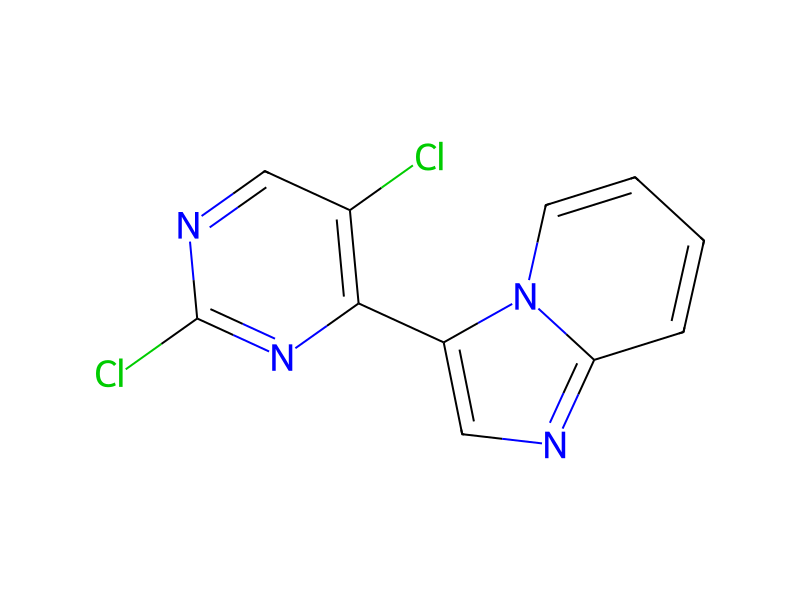

Product 1

Reagents, catalysts & solvents 4



Conditions
- Temperature
- 80 °C
Procedure
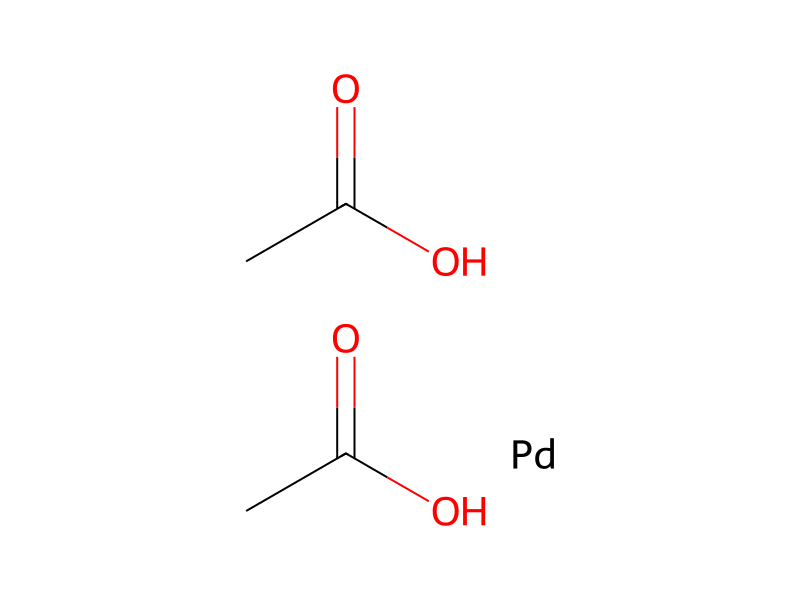
_3-(2,5-dichloropyrimidin-4-yl)imidazo[1,2-a]pyridine (132.5 mg, 0.50 mmol)_ _ _ _1-(4-(4-amino-2,5-dimethoxyphenyl)piperazin-1-yl)ethanone (140 mg, 0.50 mmol)_ ___(9,9-dimethyl-9H-xanthene-4,5-diyl)bis(diphenylphosphine) (23.14 mg, 0.04 mmol)_ _ _ _cesium carbonate (244 mg, 0.75 mmol)_ ___diacetoxypalladium (4.49 mg, 0.02 mmol)_ _were suspended in_ _1,4-dioxane (4 ml)_ _,degased with argon . The mixture was heated to_ _80 °C_ _ for 2 hrs *_
Sources & evidence
- ORD record
- ord-ea73803169b640e3b40a2b6127b91b44
- Source dataset
- 750 AstraZeneca ELN dataset
- Original link
- View source
Linked notes
Loading…