Reaction equation
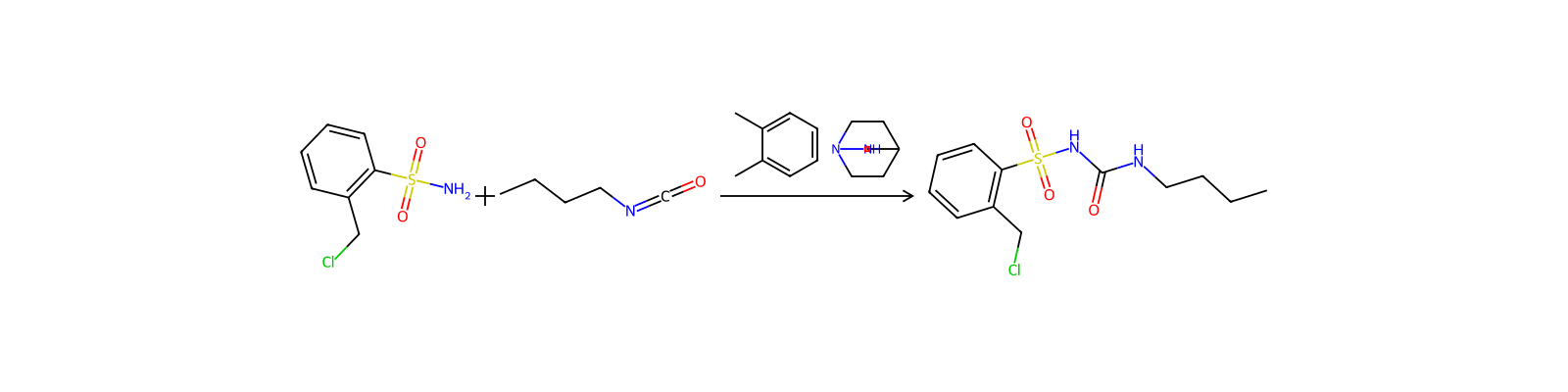
[Cl:1][CH2:2][C:3]1[CH:8]=[CH:7][CH:6]=[CH:5][C:4]=1[S:9]([NH2:12])(=[O:11])=[O:10].[CH2:13]([N:17]=[C:18]=[O:19])[CH2:14][CH2:15][CH3:16]>C1(C)C(C)=CC=CC=1.N12CCC(CC1)CN2>[Cl:1][CH2:2][C:3]1[CH:8]=[CH:7][CH:6]=[CH:5][C:4]=1[S:9]([NH:12][C:18]([NH:17][CH2:13][CH2:14][CH2:15][CH3:16])=[O:19])(=[O:11])=[O:10]Participants
5



Procedure
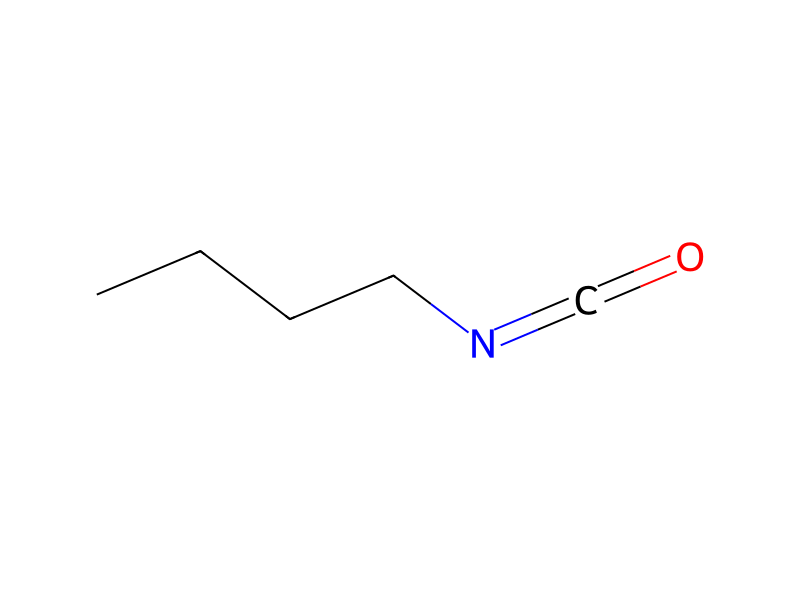
A mixture of 2-(chloromethyl)benzenesulfonamide (13.2 g, 64 mmol) and butyl isocyanate (7.0 g, 71 mmol) in xylene (80 ml) was contacted with diazabicyclo[2.2.2]-octane (0.25 g) and heated to reflux for 5.0 hrs. Volatiles were removed under vacuum and the residue was treated with 0.5N NaOH (200 ml) and extracted with ethyl acetate (75 ml). The aqueous layer was separated, chilled, acidified (pH 4) with hydrochloric acid, and extracted with ethyl acetate. The organic layer was washed with brine, dried (MgSO4), and evaporated to give 14.6 g of white solid. A sample was recrystallized from toluene to give m.p. 104°-106°. 1H nmr δCDCl3TMS 9.5-8.1 (brds), 8.05-7.10 (m), 6.28 (t, J=2 Hz), 4.91 (s), 3.25-2.95 (m), 1.70-0.70 (m).
Workup
- temperatureheated
- temperatureto reflux for 5.0 hrs
- customVolatiles were removed under vacuum
- additionthe residue was treated with 0.5N NaOH (200 ml)
- extractionextracted with ethyl acetate (75 ml)
- customThe aqueous layer was separated
- temperaturechilled
- extractionextracted with ethyl acetate
- washThe organic layer was washed with brine
- dry with materialdried (MgSO4)
- customevaporated
Sources & evidence
- ORD record
- ord-10390e26897849d38b250841db16aacf
- Source dataset
- uspto-grants-1984_12
- Patent number
- US04486589
Linked notes
Loading…