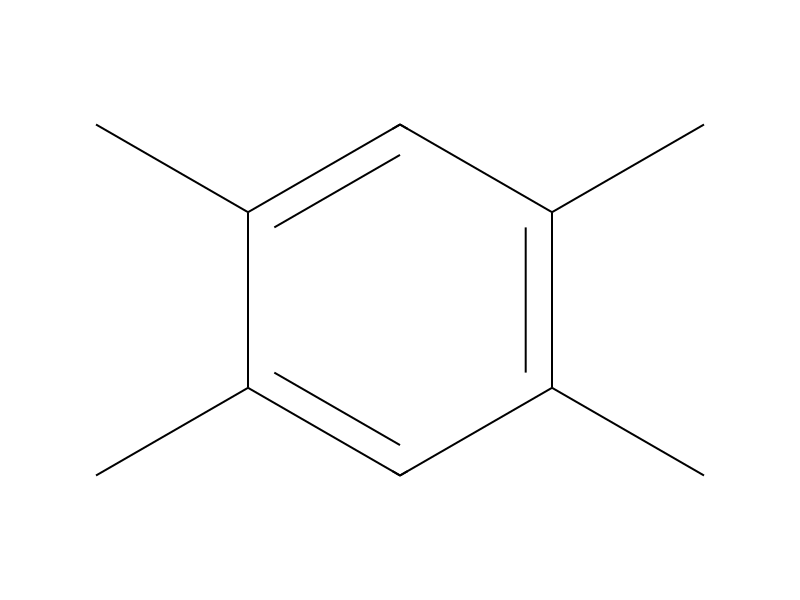
20 g of aluminum power (BDH fine powder) and 27 g of aluminum chloride were introduced into a two liter flask. The mixture of solids was stirred and heated to a temperature of 130° C., which temperature was maintained for two hours. The mixture was then cooled, and a solution of 15.5 g of durene in one liter of toluene was added. The flask contents were stirred and heated to reflux temperature. 19.9 g of titanium tetrachloride in 100 ml of toluene were added dropwise over a period of 30 minutes. Heating was continued, at reflux temperature, for a further hour and the mixture was then allowed to cool. The mixture was then filtered and the filtrate was allowed to run directly into 2.5 liters of n-heptane. A dark-colored precipitate separated out and was filtered and then washed four times with 250 ml of n-heptane for each wash. The precipitate was then dried under vacuum (0.2 mm pressure) at ambient temperature (about 20° C.).