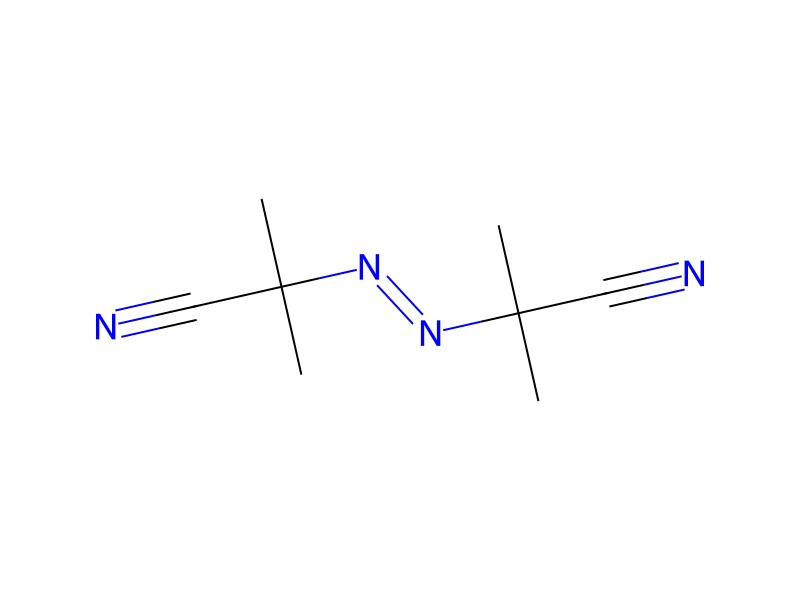
A solution of methyl 3,5-dibromo-4-methylbenzoate (5 g, 16.24 mmol) in carbon tetrachloride (50 mL) was treated with N-bromosuccinamide (3.6 g, 20.23 mmol) and 2,2′-azobisisobutyronitrile (0.56 g, 3.410 mmol). The reaction mixture was heated to reflux for 24 h. The reaction was cooled to room temperature and concentrated under vacuum. The resulting mixture was absorbed onto silica and was purified by flash chromatography using silica gel eluted with 3:1 hexanes:ethyl acetate. The desired fractions were collected and concentrated under vacuum to afford a solid which was dried under high vacuum to afford 3,5-dibromo-4-bromomethyl-benzoic acid methyl ester (57) (6.22 g, 99%) as a yellow solid; LRMS for C9H7Br3O2 (M+Na) m/z=407. MW=386.8669, Exact Mass=383.7996