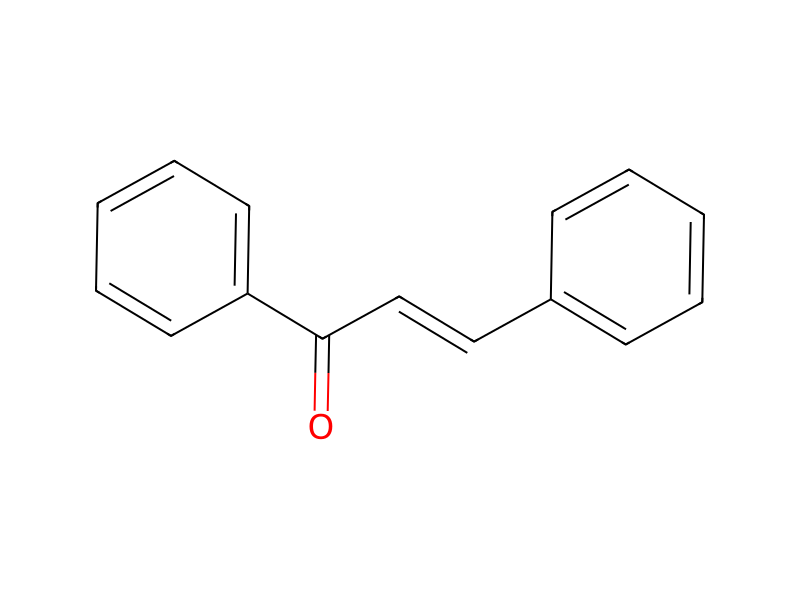
Cinnamoylbenzene → HCID 3798265, compound
Reaction equation

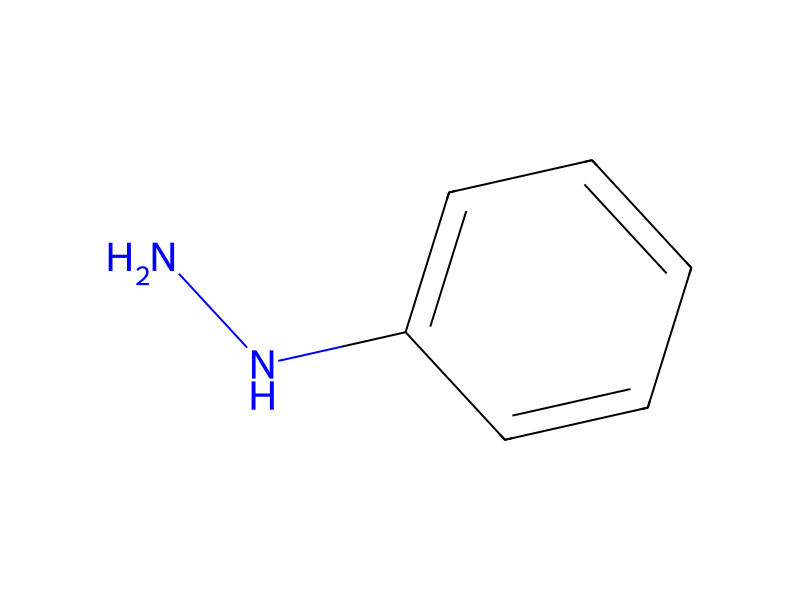
[OH-].[K+].[C:3]1([CH:9]=[CH:10][C:11]([C:13]2[CH:18]=[CH:17][CH:16]=[CH:15][CH:14]=2)=O)[CH:8]=[CH:7][CH:6]=[CH:5][CH:4]=1.[C:19]1([NH:25][NH2:26])[CH:24]=[CH:23][CH:22]=[CH:21][CH:20]=1>C(O)C>[C:19]1([N:25]2[CH:11]([C:13]3[CH:18]=[CH:17][CH:16]=[CH:15][CH:14]=3)[CH:10]=[C:9]([C:3]3[CH:8]=[CH:7][CH:6]=[CH:5][CH:4]=3)[NH:26]2)[CH:24]=[CH:23][CH:22]=[CH:21][CH:20]=1Participants
5
Reactant 3

Product 1

Reagents, catalysts & solvents 1

Procedure
In a 2000-ml four-necked flask were placed 13.0 g (0.23 mole) of potassium hydroxide and 1004.5 g of ethanol. The mixture was stirred at room temperature until the potassium hydroxide dissolved and 25.8 g (0.12 mole) of chalcone and 26.4 g (0.24 mole) of phenylhydrazine were added at room temperature. After the addition, the mixture was heated under reflux with stirring for three hours. Upon completion of the reaction, the reaction mixture was cooled to room temperature and a solid was recovered by filtration. The solid was washed with hexane and dried under reduced pressure to give 27.8 g of 1,3,5-triphenylpyrazoline as a white powder.