Reaction equation

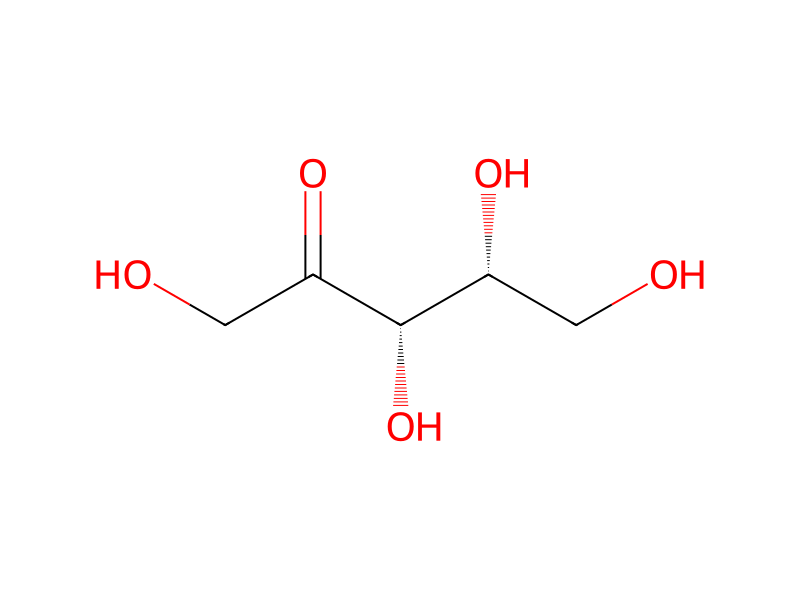
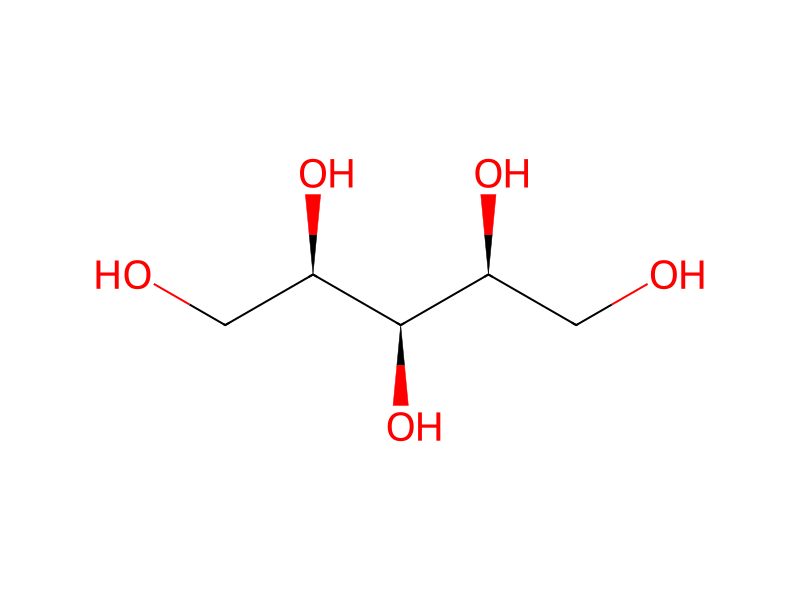
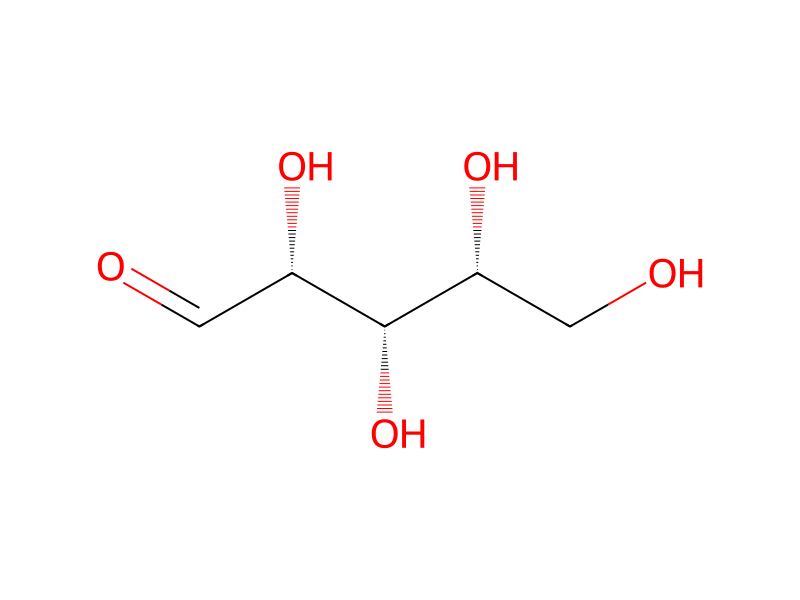
[CH2:1]([OH:10])[C@@H:2]([C@H:4]([C@@H:6]([CH2:8][OH:9])[OH:7])[OH:5])[OH:3].[OH:11][CH2:12][C:13]([C@H:15]([C@@H:17]([CH2:19][OH:20])[OH:18])[OH:16])=[O:14]>>[CH2:1]([OH:10])[C@@H:2]([C@H:4]([C@@H:6]([CH2:8][OH:9])[OH:7])[OH:5])[OH:3].[O:11]=[CH:12][C@@H:13]([C@H:15]([C@@H:17]([CH2:19][OH:20])[OH:18])[OH:16])[OH:14]Participants
Procedure
Paying attention to the fact that xylitol produced in Candida sp strains is reduced by its conversion to xylulose by xylitol dehydrogenase, the present inventors have developed xylitol dehydrogenase-inactivated Candida tropicalis mutant, in which xylitol produced from xylose can no longer be used for cell growth, and thus xylose can be bioconverted to xylitol with a theoretical yield of 100% (Ko, B. S. et. al., Appl. Environ. Microbiol. 72:4207-4213, 2006). Thus, the present inventors filed an application for the protection of an invention relating to a method of producing xylitol in high yield using a xylitol-producing strain, in which the expression of xylitol dehydrogenase is inhibited (Korean Patent Application No. 10-2005-0079751, filed on Aug. 30, 2005).
Workup
- customproduced in Candida sp strains
Sources & evidence
- ORD record
- ord-7efaf3d8aede43c6ad7f9fb6317b3920
- Source dataset
- uspto-grants-2010_10
- Patent number
- US07820414B2
Linked notes
Loading…