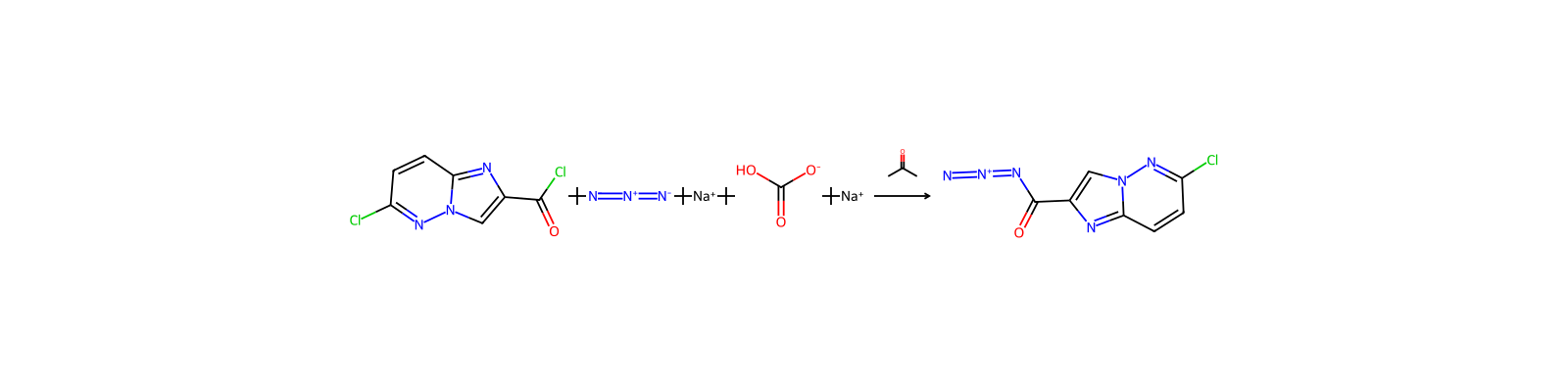
To a solution of 6-chloroimidazo[1,2-b]pyridazine-2-carbonyl chloride from Step 1 (2.2 g, 10 mmol) in acetone (40 mL) was added sodium azide (0.43 g, 6.6 mmol, solution in 1.5 mL H2O). The mixture was stirred at 25° C. for 1 h then poured into aq. NaHCO3. The solid precipitate was collected by careful filtration. The filtercake was not allowed to go dry (solvent-free). The filtercake was washed with benzene (2×50 mL) and then transferred to a 150-mL, round-bottomed flask. To azeotropically remove residual water, the solid was suspended in benzene (75 mL) and then concentrated to one-third its volume. Then once again the material was suspended in benzene (75 mL) and concentrated to near dryness to provide the title compound, which was taken on to the next step without further purification.