Reaction equation

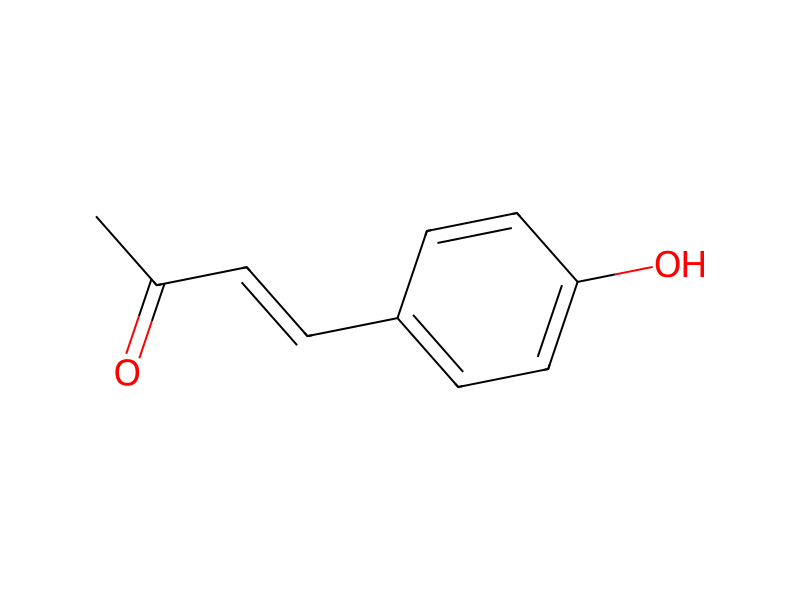
[OH:1][C:2]1[CH:9]=[CH:8][C:5]([CH:6]=O)=[CH:4][CH:3]=1>CC(C)=O>[OH:1][C:2]1[CH:9]=[CH:8][C:5]([CH:6]=[CH:3][C:2](=[O:1])[CH3:9])=[CH:4][CH:3]=1Participants
3
Reactant 1

Product 1
Reagents, catalysts & solvents 1

Procedure
It has also been disclosed that 4-hydroxy-benzaldehyde can be condensed with acetone to give 4-hydroxy-benzalacetone, which is then hydrogenated to 4-(4-hydroxy-phenyl)-butan-2-one (cf. J. Am. Chem. Soc. 70 (1948), 3360). The 4-hydroxy-benzaldehyde required as the starting compound for this two-stage process is, however, difficult to prepare and therefore very expensive. Furthermore, the overall yield of 1-(4-hydroxy-phenyl)-butan-3-one obtained by this process is unsatisfactory.
Sources & evidence
- ORD record
- ord-c6245e7859df4aaa8b30b87fecd27e60
- Source dataset
- uspto-grants-1990_03
- Patent number
- US04908481
Linked notes
Loading…