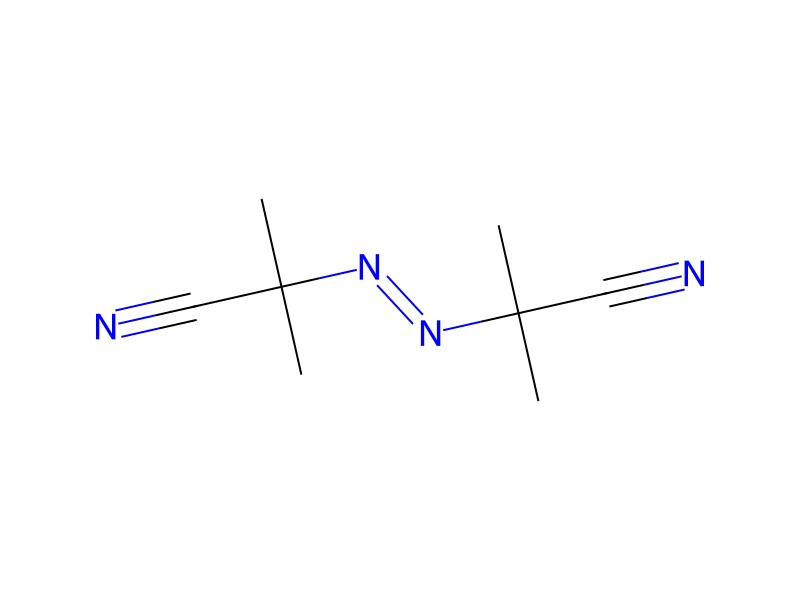
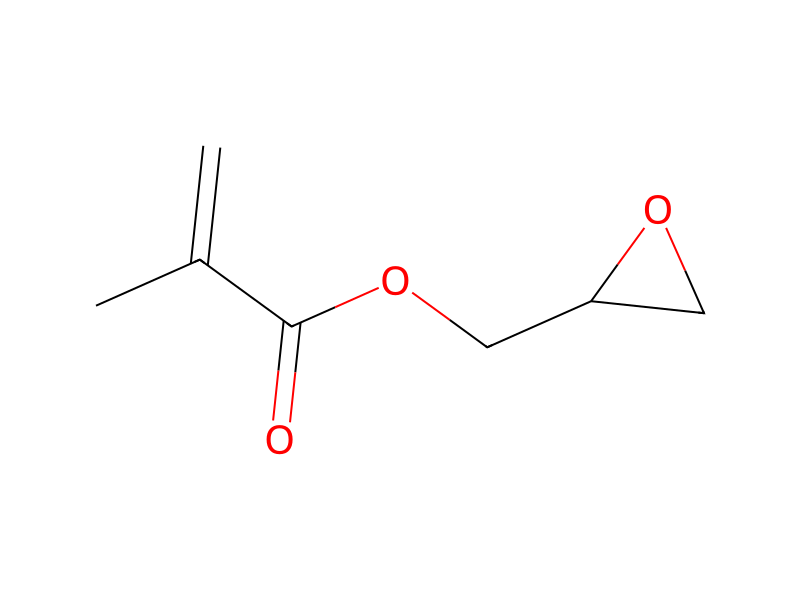
Azobisisobutyronitrile → Styrene glycidyl Methacrylate
HRID 1166408
Reaction equation

[CH2:1]=[CH:2][C:3]1[CH:8]=[CH:7][CH:6]=[CH:5][CH:4]=1.[C:9]([O:14][CH2:15][CH:16]1[O:18][CH2:17]1)(=[O:13])[C:10]([CH3:12])=[CH2:11].N(C(C)(C)C#N)=NC(C)(C)C#N>C1(C)C=CC=CC=1>[CH2:1]=[CH:2][C:3]1[CH:8]=[CH:7][CH:6]=[CH:5][CH:4]=1.[C:9]([O:14][CH2:15][CH:16]1[O:18][CH2:17]1)(=[O:13])[C:10]([CH3:12])=[CH2:11]Participants
5
Reactant 3

Product 1

Reagents, catalysts & solvents 1

Procedure
The same four-necked flask as used in Example 1 was charged with 100 g of toluene, and the temperature was adjusted to 80° C. with stirring under nitrogen. Then, 120 g of styrene, 89 g of glycidyl methacrylate and 0.1 g of azobisisobutyronitrile were added thereto and the reaction carried out in the same manner as in Example 1 to give a styrene-glycidyl methacrylate copolymer. This copolymer (96 weight parts) and 4 weight parts of 4,4′-bisazidobenzal(4-methyl)cyclohexanone were dissolved in 100 weight parts of xylene and the solution was subjected to polymerization in the same manner as in Example 1, whereupon an over coat film was obtained.