Reaction equation

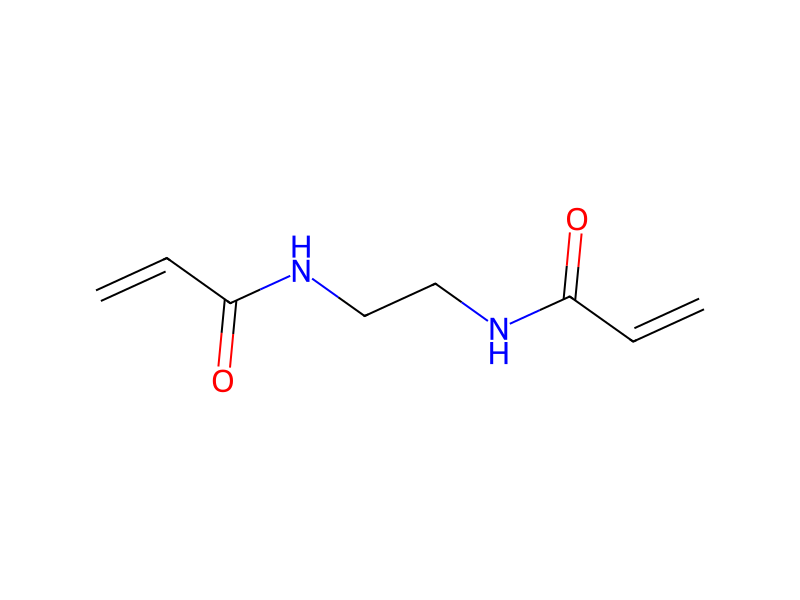
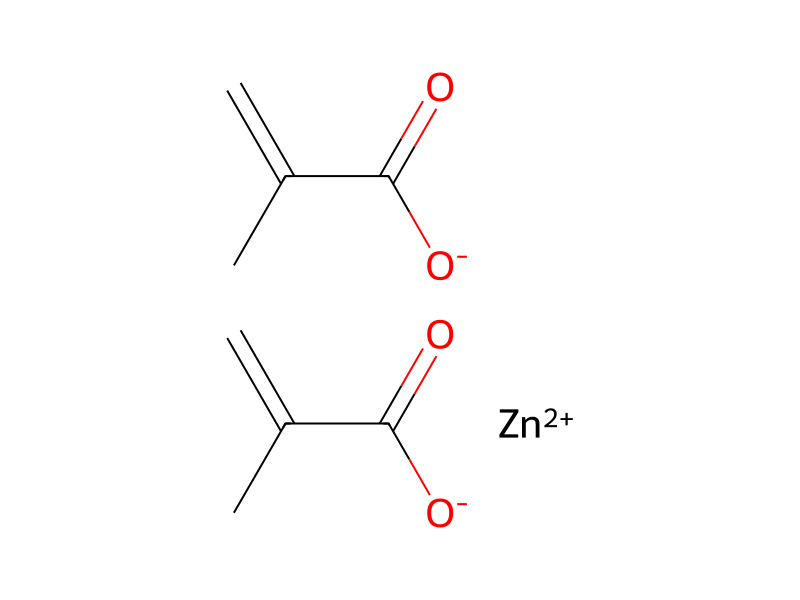
[C:1]([O-:6])(=[O:5])[C:2]([CH3:4])=[CH2:3].[Zn+2:7].[C:8]([O-:13])(=[O:12])[C:9]([CH3:11])=[CH2:10].[CH2:14]([NH:21][C:22](=[O:25])[CH:23]=[CH2:24])[CH2:15][NH:16][C:17](=[O:20])[CH:18]=[CH2:19].CC(N=NC(C#N)(C)C)(C#N)C>CO>[C:1]([O-:6])(=[O:5])[C:2]([CH3:4])=[CH2:3].[Zn+2:7].[C:8]([O-:13])(=[O:12])[C:9]([CH3:11])=[CH2:10].[CH2:15]([NH:16][C:17](=[O:20])[CH:18]=[CH2:19])[CH2:14][NH:21][C:22](=[O:25])[CH:23]=[CH2:24]Participants



Procedure
Zinc methacrylate (848 mg, 3.6 mmol), N,N′-ethylenebisacrylamide (50 mg, 0.30 mmol) and VAZO® (20 mg, 0.08 mmol) were dissolved in methanol (3 ml) in a borosilicate test tube. The solution was sonicated for 1 min and sparged with nitrogen. The test tube was covered with parafilm and placed in an ice bath. The reaction mixture was allowed to go to room temperature while being irradiated at 365 nm for 24 hrs. The resulting opaque polymer was scraped out of the test tube and ground in a Retsch RM100 Mortar Grinder for 1 min. The polymer powder was suspended in methanol (25 ml), filtered through a fluted paper filter and washed with methanol (100 ml). The polymer was then stirred up in acetone (50 ml) and allowed to settle for 0.5 hr. The finest particles remained suspended in the supernatant, which was discarded. The polymer was subsequently air-dried at approximately 50° C. for 48 hrs.
Workup
- customThe solution was sonicated for 1 min
- customsparged with nitrogen
- customplaced in an ice bath
- customto go to room temperature
- customwhile being irradiated at 365 nm for 24 hrs
- filtrationfiltered through a fluted paper
- filtrationfilter
- washwashed with methanol (100 ml)
- waitto settle for 0.5 hr
- customThe polymer was subsequently air-dried at approximately 50° C. for 48 hrs
Sources & evidence
- ORD record
- ord-758ded2bcb244c69bf8cfa8848914b09
- Source dataset
- uspto-grants-2003_09
- Patent number
- US06616846B2
Linked notes
Loading…