Hydrochloric Acid → 1-Dimethoxymethyl-4-propyl-benzene
Reaction equation

[CH2:1]([C:4]1[CH:11]=[CH:10][C:7](C=O)=[CH:6][CH:5]=1)[CH2:2][CH3:3].[CH:12](OC)([O:15][CH3:16])[O:13][CH3:14].Cl>CO>[CH3:14][O:13][CH:12]([O:15][CH3:16])[C:7]1[CH:10]=[CH:11][C:4]([CH2:1][CH2:2][CH3:3])=[CH:5][CH:6]=1Participants
Reactant 3

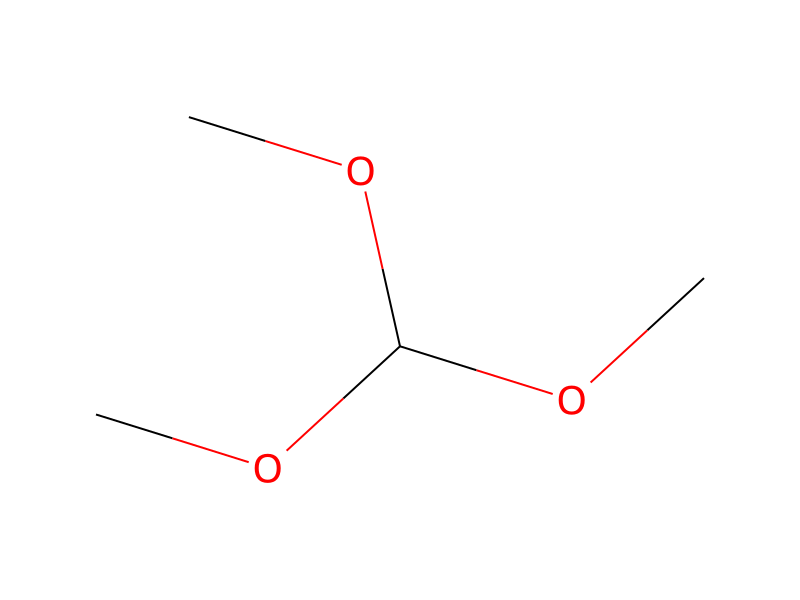

Product 1

Reagents, catalysts & solvents 1

Conditions
- Temperature
- -5 °C
Procedure
A reaction flask was charged with 4-propyl benzaldehyde (1.064 Kg, commercially available from Mitsubishi Gas Chemical Company, Inc.), methanol (500 mL), and trimethyl orthoformate (TMOF) (1.144 Kg, commercially available from Sigma-Aldrich, Inc.). The reaction mass was cooled to −10 to 0° C. and hydrochloric acid (37%, 1 g) was added in one portion. The reaction was instantaneous and the temperature was allowed to rise to 25° C. for over 30 minutes. The reaction mass was then quenched with sodium acetate (20 g) and the solvent was removed by evaporation. The crude intermediate product 1-dimethoxymethyl-4-propyl-benzene (1.388 Kg) was obtained and charged to a second reaction flask at 25° C. Boron trifluride etherate (1 g, commercially available from Sigma-Aldrich, Inc.) was added. Ethyl vinyl ether (684 g, commercially available from Sigma-Aldrich, Inc.) was then fed for over 4 hours with the temperature maintained at 25-30° C. The reaction mass was quenched with saturated sodium carbonate (500 mL). The crude intermediate products methoxy ethoxy acetals were obtained, which were contained in the organic layer and confirmed by NMR analysis. Crude methoxy ethoxy acetals were hydrolyzed in the presence of water (500 mL) containing hydrochloric acid (37%, 50 g) at 90° C. for 5 hours and further catalytically hydrogenated in 2-propanol (200 mL) using palladium on carbon (5%, 1 g) and hydrogen in a 1 L zipper autoclave to provide the product 3-(4-propyl-phenyl)-propionaldehyde (1.008 Kg), which had a boiling point of 115° C. at a pressure of 6 mmHg.
Workup
- customto rise to 25° C. for over 30 minutes
- customThe reaction mass was then quenched with sodium acetate (20 g)
- customthe solvent was removed by evaporation
Sources & evidence
- ORD record
- ord-027deb0f4d434e6cb38aa8fa5a59996b
- Source dataset
- uspto-grants-2010_11
- Patent number
- US07834219B1
Reaction notes
Loading…