HomeMCPWorkbenchSkills
HomeWorkbenchNotificationsMe
llms.txt · MCP GuidePrivacy Policy · Terms of Service · Supportv1.8.3
  1. Home
  2. /Reaction

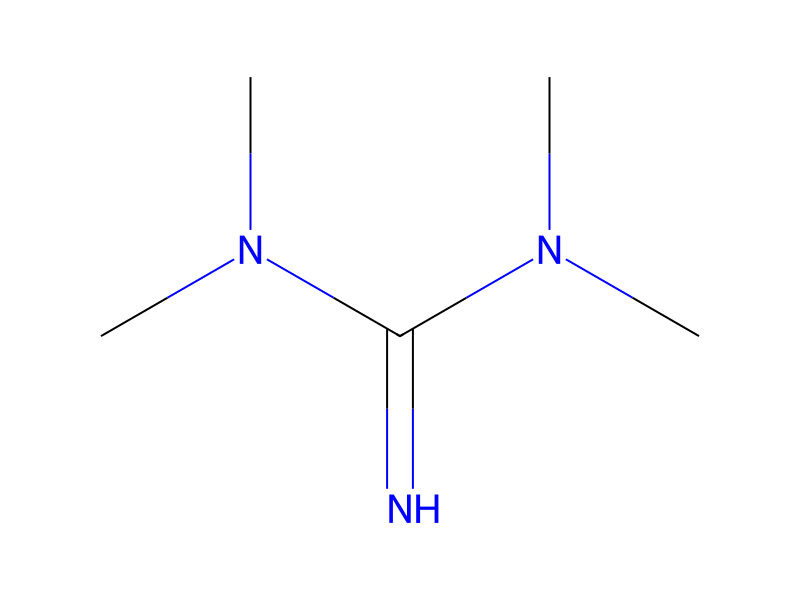
1,1,3,3-Tetramethylguanidine → 2-Benzyloxycarbonylamino-3-(3,4-dinitro-phenyl)-acrylic acid methyl ester

HRID 1177707
Print

Reaction equation

HRID 1177707 reaction equation
CN(C)C(N(C)C)=N.[CH3:9][O:10][C:11]([CH:13](P(OC)(OC)=O)[NH:14][C:15]([O:17][CH2:18][C:19]1[CH:24]=[CH:23][CH:22]=[CH:21][CH:20]=1)=[O:16])=[O:12].[N+:31]([C:34]1[CH:35]=[C:36]([CH:39]=[CH:40][C:41]=1[N+:42]([O-:44])=[O:43])[CH:37]=O)([O-:33])=[O:32]>O1CCCC1>[CH3:9][O:10][C:11](=[O:12])[C:13]([NH:14][C:15]([O:17][CH2:18][C:19]1[CH:20]=[CH:21][CH:22]=[CH:23][CH:24]=1)=[O:16])=[CH:37][C:36]1[CH:39]=[CH:40][C:41]([N+:42]([O-:44])=[O:43])=[C:34]([N+:31]([O-:33])=[O:32])[CH:35]=1
ParticipantsProcedureWorkupSources & evidenceReaction notes

Participants

5

Reactant 3

HCID 664601,1,3,3-TetramethylguanidineHCID 2734718Methyl 2-{[(benzyloxy)carbonyl]amino}-2-(dimethyl phosphono)acetateHCID 33622013,4-Dinitrobenzaldehyde

Product 1

HCID 743925232-Benzyloxycarbonylamino-3-(3,4-dinitro-phenyl)-acrylic acid methyl ester

Reagents, catalysts & solvents 1

HCID 8028
Tetrahydrofuran
Solvent
2×

Procedure

1,1,3,3-Tetramethylguanidine (41.2 mL, 329 mmol) was added at room temperature to a solution of N-(benzyloxycarbonyl)-alpha-phophonoglycine trimethyl ester (114.1 g, 344 mmol) in tetrahydrofuran (800 mL). The mixture was stirred at room temperature for 15 min and cooled to −78° C. A solution 3,4-dinitro-benzaldehyde (61.4 g, 313 mmol) in tetrahydrofuran (200 mL) was slowly added via cannula. The resulting mixture was stirred at −78° C. for 2 h and then allowed to warm to room temperature overnight. Solvents were removed in vacuo, and the yellow residue was dissolved in 4.5 L of ethyl acetate. The solution was washed with 1.5 L of 1N sulfuric acid, water twice, brine and dried over sodium sulfate. After filtration, solvents were removed in vacuo and the residue was crystallized from ethyl acetate (20 g crude product/100 mL of ethyl acetate). The yellow crystals were collected and further purified by chromatography on silica gel using methylene chloride as eluent. The title compound was obtained a s yellow crystals (77%). 1H-NMR (CDCl3, 500 MHz) δ 7.85 (d, J=1.5 Hz, 1H), 7.74 (d, J=8.0 Hz, 1H), 7.62 (dd, J=8.5, 1.5 Hz, 1H), 7.35-7.34 (m, 3H), 7.34 (br s, 2H), 7.23 (s, 1H), 6.95 (br s, 1H), 5.07 (s, 2H), 3.90 (s, 3H).

Workup

  1. temperaturecooled to −78° C
  2. stirringThe resulting mixture was stirred at −78° C. for 2 h
  3. temperatureto warm to room temperature overnight
  4. customSolvents were removed in vacuo
  5. dissolutionthe yellow residue was dissolved in 4.5 L of ethyl acetate
  6. washThe solution was washed with 1.5 L of 1N sulfuric acid, water twice
  7. dry with materialbrine and dried over sodium sulfate
  8. filtrationAfter filtration, solvents
  9. customwere removed in vacuo
  10. customthe residue was crystallized from ethyl acetate (20 g crude product/100 mL of ethyl acetate)
  11. customThe yellow crystals were collected
  12. customfurther purified by chromatography on silica gel

Sources & evidence

ORD record
ord-2565193cee71400c9f411382c4283b82
Source dataset
uspto-grants-2010_11
DOI
10.6084/m9.figshare.5104873.v1
Patent number
US07842808B2

Reaction notes

On this pageParticipantsProcedureWorkupSources & evidenceReaction notes