HomeMCPWorkbenchSkills
HomeWorkbenchNotificationsMe
llms.txt · MCP GuidePrivacy Policy · Terms of Service · Supportv1.8.3
  1. Home
  2. /Reaction

Potassium Phosphate, Tribasic → 1-{2'-Fluoro-5'-[8-fluoro-7-(1-hydroxy-1-methylethyl)imidazo[1,2-alpha]pyridin-3-yl]biphenyl-4-yl}ethanone

HRID 1180269
Print

Reaction equation

HRID 1180269 reaction equation
Cl[C:2]1[CH:3]=[C:4]([C:9]2[N:13]3[CH:14]=[CH:15][C:16]([C:19]([OH:22])([CH3:21])[CH3:20])=[C:17]([F:18])[C:12]3=[N:11][CH:10]=2)[CH:5]=[CH:6][C:7]=1[F:8].[C:23]([C:26]1[CH:31]=[CH:30][C:29](B(O)O)=[CH:28][CH:27]=1)(=[O:25])[CH3:24].P([O-])([O-])([O-])=O.[K+].[K+].[K+].C(P(C(C)(C)C)C(C)(C)C)(C)(C)C>C1C=CC(/C=C/C(/C=C/C2C=CC=CC=2)=O)=CC=1.C1C=CC(/C=C/C(/C=C/C2C=CC=CC=2)=O)=CC=1.C1C=CC(/C=C/C(/C=C/C2C=CC=CC=2)=O)=CC=1.[Pd].[Pd].O1CCOCC1.O1CCOCC1.O>[F:8][C:7]1[CH:6]=[CH:5][C:4]([C:9]2[N:13]3[CH:14]=[CH:15][C:16]([C:19]([OH:22])([CH3:21])[CH3:20])=[C:17]([F:18])[C:12]3=[N:11][CH:10]=2)=[CH:3][C:2]=1[C:29]1[CH:30]=[CH:31][C:26]([C:23](=[O:25])[CH3:24])=[CH:27][CH:28]=1
ParticipantsConditionsProcedureWorkupSources & evidenceReaction notes

Participants

8

Reactant 4

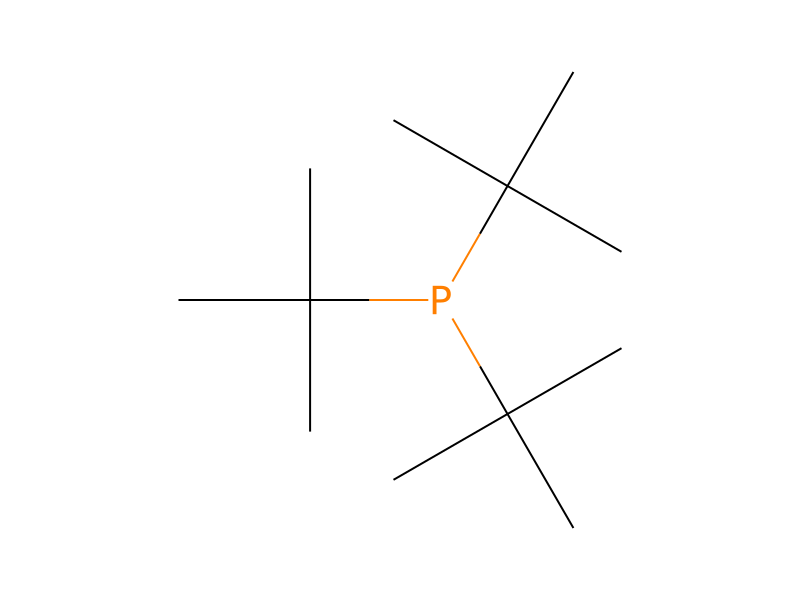
HCID 62657Potassium Phosphate, TribasicHCID 83681Tris(1,1-dimethylethyl)phosphineHCID 37021224-Acetylphenylboronic acidHCID 674866802-[3-(3-Chloro-4-fluorophenyl)-8-fluoroimidazo[1,2-alpha]pyridin-7-yl]propan-2-ol

Product 1

HCID 103412761-{2'-Fluoro-5'-[8-fluoro-7-(1-hydroxy-1-methylethyl)imidazo[1,2-alpha]pyridin-3-yl]biphenyl-4-yl}ethanone
Yield 5%

Reagents, catalysts & solvents 3

HCID 9811564Bis(dibenzylideneacetone)palladiumCatalystHCID 312751,4-DioxaneSolventHCID 218864351,4-Dioxane--water (1/1)Solvent

Conditions

Temperature
70 °C

Procedure

2-[3-(3-Chloro-4-fluorophenyl)-8-fluoroimidazo[1,2-α]pyridin-7-yl]-propan-2-ol, 4acetylbenzeneboronic acid and potassium phosphate were placed in a dry tube with 1,4dioxane/water (3:1) and this was heated to 70° C. under nitrogen. Tris(dibenzylideneacetone)dipalladium(0), tri-tert-butylphosphine (0.2M in 1,4dioxane) and 1,4-dioxane (0.5 ml) were mixed in a vial, and this mixture was added to the hot reaction via syringe. The resulting reaction mixture was heated at 70° C. for 12 h. The reaction was allowed to cool to room temperature then partitioned between dichloromethane and 2N hydrochloric acid. The aqueous layer was filtered through glass microfibre filter paper and evaporated to dryness. The residue was dissolved in methanol and evaporated to dryness. The residue was dissolved in dimethylsulfoxide (˜25 mg/ml), filtered through glass microfibre filter paper and purified by LC-MS. Appropriate fractions were combined and evaporated to give 1-{2′-fluoro-5′-[8-fluoro-7-(1-hydroxy-1-methylethyl)imidazo[1,2-α]pyridin-3-yl]biphenyl-4-yl}ethanone as an off-white solid (6 mg, 5%); m/z (ES+) 407 [MH+].

Workup

  1. additionwas added to the hot reaction via syringe
  2. customThe resulting reaction mixture
  3. temperaturewas heated at 70° C. for 12 h
  4. temperatureto cool to room temperature
  5. customthen partitioned between dichloromethane and 2N hydrochloric acid
  6. filtrationThe aqueous layer was filtered through glass microfibre
  7. filtrationfilter paper
  8. customevaporated to dryness
  9. dissolutionThe residue was dissolved in methanol
  10. customevaporated to dryness
  11. dissolutionThe residue was dissolved in dimethylsulfoxide (˜25 mg/ml)
  12. filtrationfiltered through glass microfibre
  13. filtrationfilter paper
  14. custompurified by LC-MS
  15. customevaporated

Sources & evidence

ORD record
ord-220a78023af24056808665fca52d7017
Source dataset
uspto-grants-2007_10
DOI
10.6084/m9.figshare.5104873.v1
Patent number
US07279580B2

Reaction notes

On this pageParticipantsConditionsProcedureWorkupSources & evidenceReaction notes