Hydrochloric Acid → HCID 57514645, compound
HRID 1182912
Reaction equation

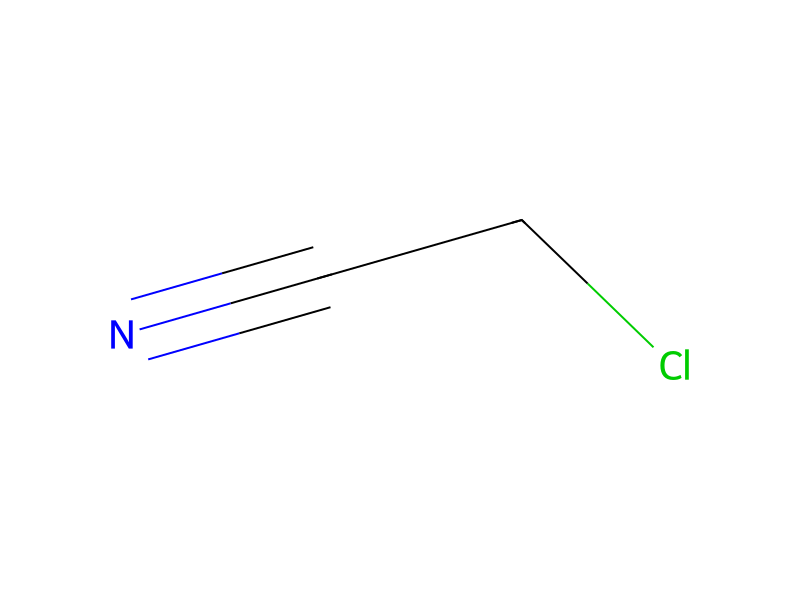
Cl.[NH2:2][C:3]1[CH:8]=[CH:7][CH:6]=[CH:5][C:4]=1[C:9](=O)[CH:10]([CH3:12])[CH3:11].[Cl:14][CH2:15][C:16]#[N:17]>O1CCOCC1>[Cl:14][CH2:15][C:16]1[N:17]=[C:9]([CH:10]([CH3:12])[CH3:11])[C:4]2[C:3](=[CH:8][CH:7]=[CH:6][CH:5]=2)[N:2]=1Participants
5
Reactant 3


Product 1

Reagents, catalysts & solvents 1

Procedure
Dry hydrogen chloride gas is piped through a solution of 2.86 g of 1-(2-amino-phenyl)-2-methyl-propan-1-one and 1.33 ml of chloroacetonitrile in 14 ml dioxane with stirring at ambient temperature for approx. five hours. Then the dioxane is largely distilled off in a water jet vacuum. The honey-like residue is combined with ice water and the resulting suspension is made alkaline with saturated potassium carbonate solution while cooling with an ice bath. The precipitate is suction filtered, washed with water and dried. The crude product is purified by chromatography over a silica gel column with petroleum ether/methylene chloride (8:2 to 0:1) as eluant.