Trityl chloride → 5-(4'-Methyl-(1,1'-biphenyl)-2-yl)-1-trityl-1H-tetrazole
HRID 1197581
Reaction equation

C[Sn](C)(C)[N:3]1[C:7]([C:8]2[CH:13]=[CH:12][CH:11]=[CH:10][C:9]=2[C:14]2[CH:19]=[CH:18][C:17]([CH3:20])=[CH:16][CH:15]=2)=[N:6][N:5]=[N:4]1.[C:23]1([C:29](Cl)([C:36]2[CH:41]=[CH:40][CH:39]=[CH:38][CH:37]=2)[C:30]2[CH:35]=[CH:34][CH:33]=[CH:32][CH:31]=2)[CH:28]=[CH:27][CH:26]=[CH:25][CH:24]=1>N1C=CC=CC=1>[C:23]1([C:29]([C:30]2[CH:31]=[CH:32][CH:33]=[CH:34][CH:35]=2)([C:36]2[CH:37]=[CH:38][CH:39]=[CH:40][CH:41]=2)[N:3]2[C:7]([C:8]3[CH:13]=[CH:12][CH:11]=[CH:10][C:9]=3[C:14]3[CH:19]=[CH:18][C:17]([CH3:20])=[CH:16][CH:15]=3)=[N:6][N:5]=[N:4]2)[CH:24]=[CH:25][CH:26]=[CH:27][CH:28]=1Participants
4
Reactant 2
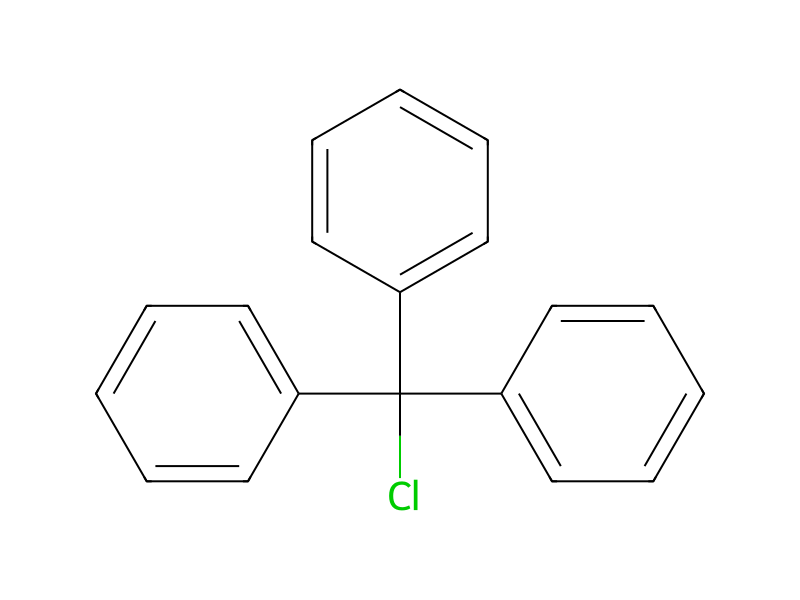

Product 1

Reagents, catalysts & solvents 1

Procedure
A mixture of N-trimethylstannyl-5-(4'-methylbiphenyl-2-yl)tetrazole (Example 10, 0.4 g) and anhydrous pyridine (10 mL) was treated with triphenylmethyl chloride (0.3 g) and stirred at room temperature under a nitrogen atmosphere for 48 hours. The resulting solution was evaporated and the residue was partitioned between dichloromethane and saturated aqueous CuSO4. The organic layer was dried over MgSO4 and evaporated. The residual solid was triturated with diisopropyl ether and collected by filtration to give the title compound, mp 163°-165° C. (decomp., gas evol.).