Reaction equation

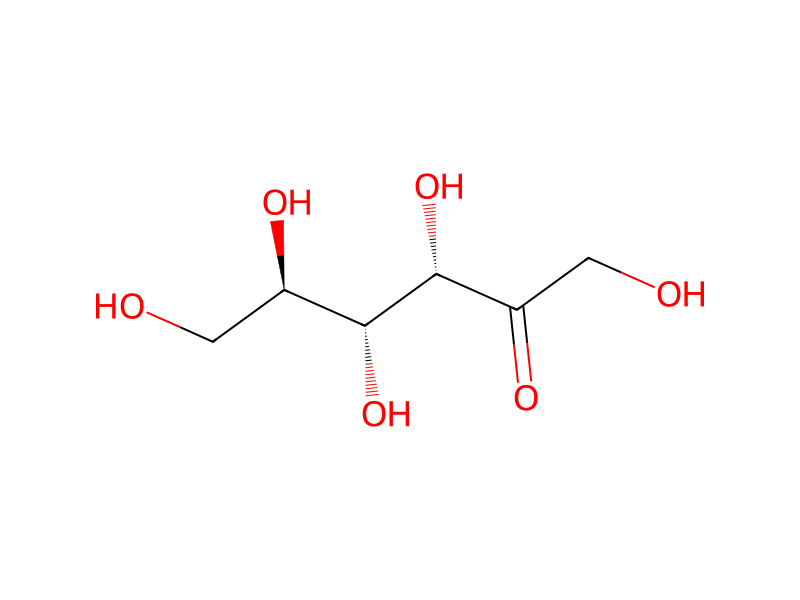
N[C@H](C(O)=O)CC(=O)O.C(O)(=O)CC(CC(O)=O)(C(O)=O)O.C([O-])(=O)CC(CC([O-])=O)(C([O-])=O)O.[Na+].[Na+].[Na+].[O:39]=[CH:40][C@@H:41]([C@H:43]([C@@H:45]([C@@H:47]([CH2:49][OH:50])[OH:48])[OH:46])[OH:44])[OH:42].[OH:51][CH2:52][C:53]([C@H:55]([C@@H:57]([C@@H:59]([CH2:61]O)[OH:60])[OH:58])[OH:56])=[O:54]>>[CH2:49]([OH:50])[C@H:47]1[O:48][C@H:40]([O:39][CH2:61][C@H:59]2[O:60][C:53]([OH:54])([CH2:52][OH:51])[C@@H:55]([OH:56])[C@@H:57]2[OH:58])[C@H:41]([OH:42])[C@@H:43]([OH:44])[C@@H:45]1[OH:46]Participants




Procedure
6100 units of glucoamylase of Asp. niger origin were added to 5 ml of a reaction mixture of a citric acid-sodium citrate buffer (pH 4.5) containing 10% glucose and 30% fructose, and a reaction was carried out at 65° C. overnight. The yield of isomaltulose formed during the reaction was 46% in relation to the glucose added. Note, the isomaltulose was determined according to the following procedure: The reaction mixture was filtrated by a ultrafiltration membrane to eliminate proteins, and the filtrate was diluted 6 to 10 fold. One μl of the diluted sample was spotted on a thin layer Kiesel Gel 60F254 plate (Merck), and the plate was subjected to two-dimensional thin layer chromatography using, as a developing solution, a mixture of methyl ethyl ketone, 2-propanol, acetonitrile, 0.5 M boric acid, and 0.25 M isopropylamine dissolved in acetic acid (2:3:1:1), and a mixture of methyl ethyl ketone, dipropyl ether, 2-propanol, pyridine, water and pheny boric acid (2:1:3:1:2.4). The plate was then treated with a mixture of 2% diphenylamine and 2% aniline dissolved in acetone, and phosphoric acid (1:1:8.5) to detect the isomaltulose by color development. Further, the reaction mixture was analyzed by high performance liquid chromatography using Shodex DC 613 column or Shodex SZ 5532 column (Showa Denko, Japan)
Sources & evidence
- ORD record
- ord-8f6f9d0b228c4505a3687fd68ac1d3d7
- Source dataset
- uspto-grants-1990_02
- Patent number
- US04898820
Linked notes
Loading…