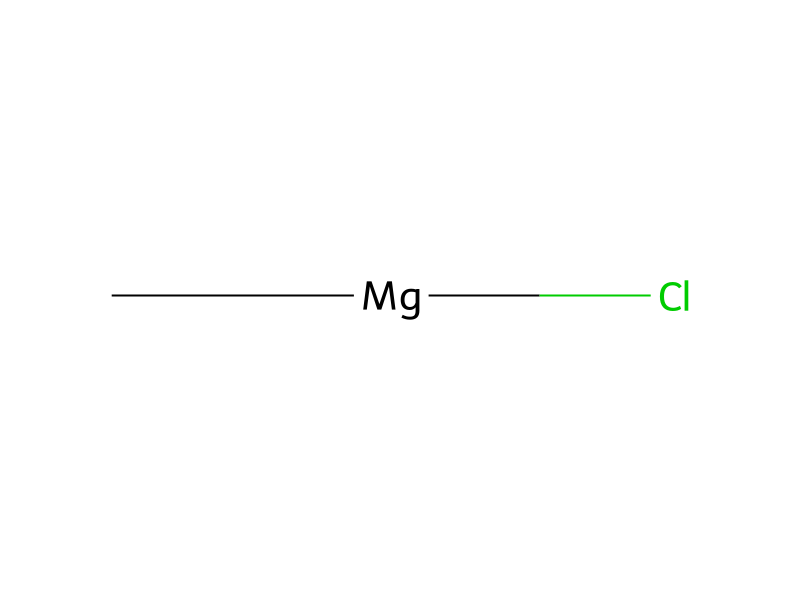
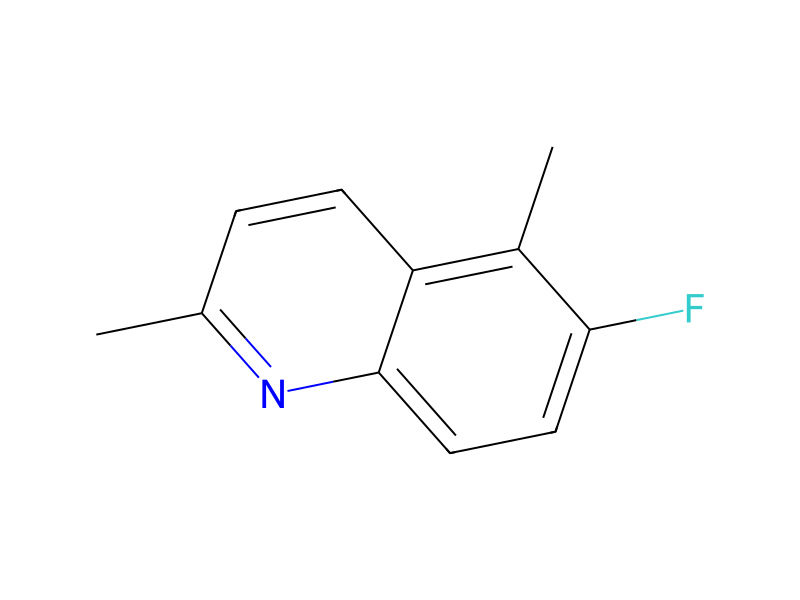
Under a nitrogen atmosphere, 24.0 g (0.1 mole) of 5-bromo-6-fluoro-2-methylquinoline, 2.8 g (0.005 mole) of dichloro[1,3-bisdiphenylphosphinopropane] nickel (II) catalyst, and 380 ml of diethyl ether were combined. 44 ml of 3.17M methylmagnesium chloride in tetrahydrofuran was added dropwise at a rapid rate. The reaction was allowed to stir at room temperature overnight. The ether solution was decanted off into 200 ml of 3N hydrochloric acid in an ice bath, accompanied by vigorous stirring. The aqueous and organic layers were then separated. The aqueous layer was extracted with 100 ml of ethyl acetate and cooled in an ice bath, and the pH was adjusted to pH 10 with concentrated ammonium hydroxide. This was extracted twice with 100 ml of portions of ethyl acetate. The extracts were combined and washed with 30 ml of brine, dried over magnesium sulfate, and filtered and evaporated to give 14.9 g of 2,5-dimethyl-6-fluoroquinoline of 94.4% purity as determined by gas chromatography analysis.