Reaction equation
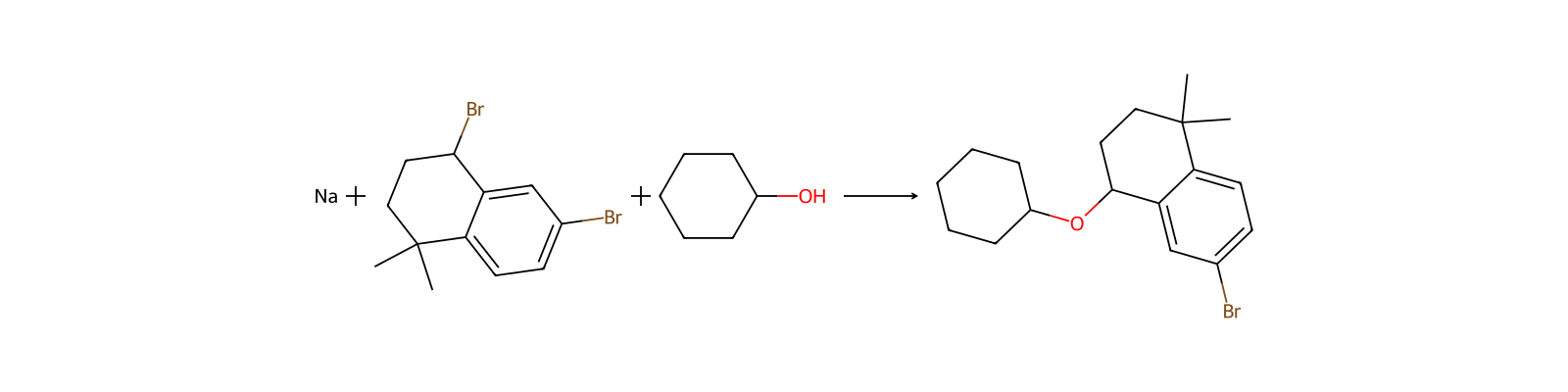
[Na].Br[CH:3]1[C:12]2[C:7](=[CH:8][CH:9]=[C:10]([Br:13])[CH:11]=2)[C:6]([CH3:15])([CH3:14])[CH2:5][CH2:4]1.[CH:16]1([OH:22])[CH2:21][CH2:20][CH2:19][CH2:18][CH2:17]1>>[Br:13][C:10]1[CH:11]=[C:12]2[C:7](=[CH:8][CH:9]=1)[C:6]([CH3:15])([CH3:14])[CH2:5][CH2:4][CH:3]2[O:22][CH:16]1[CH2:21][CH2:20][CH2:19][CH2:18][CH2:17]1Participants
4



Conditions
- Temperature
- 70 °C
Procedure
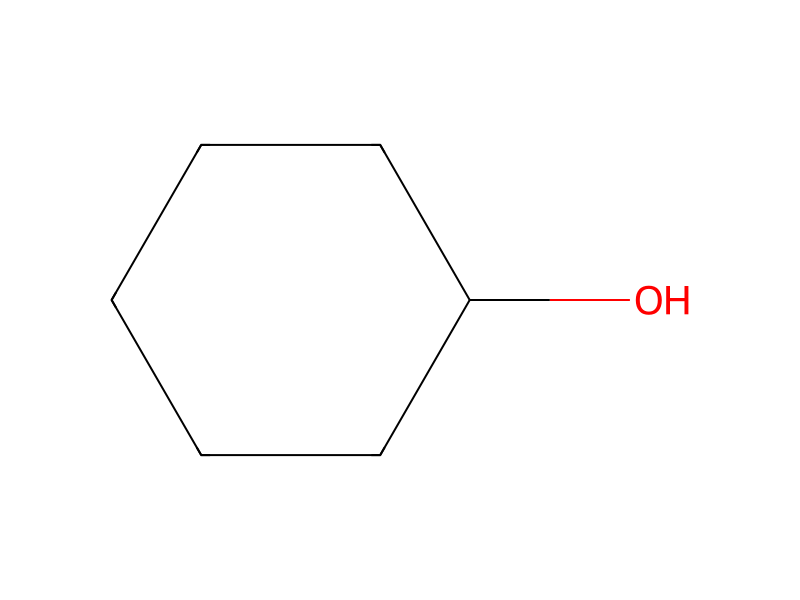
To 9 g (89.9 mmol) of cyclohexanol was added 160 mg (7.0 mmol) of sodium metal and the mixture was stirred at 70° C. for 12 hours. After all of the sodium dissolved the reaction mixture was cooled to ambient temperature and then a solution of 1 g (3.2 mmol) of 4,6-dibromo-1,1-dimethyl-1,2,3,4-tetrahydronaphthalene (Compound I) in 1 ml of cyclohexanol was added. The mixture was heated at 120° C. for 4 hours and thereafter the excess solvent distilled off under reduced pressure. The product was dissolved in Et2O (75 ml), washed with water (5 ml) and brine (5 ml), dried over MgSO4 and concentrated in vacuo. Purification by column chromatography (silica, 5% EtOAc-hexane) yielded the title compound as a colorless oil.
Workup
- temperaturewas cooled to ambient temperature
- temperatureThe mixture was heated at 120° C. for 4 hours
- distillationthe excess solvent distilled off under reduced pressure
- dissolutionThe product was dissolved in Et2O (75 ml)
- washwashed with water (5 ml) and brine (5 ml)
- dry with materialdried over MgSO4
- concentrationconcentrated in vacuo
- customPurification by column chromatography (silica, 5% EtOAc-hexane)
Sources & evidence
- ORD record
- ord-d9d51c679b094d58b2ae53013e4113f3
- Source dataset
- uspto-grants-1998_03
- Patent number
- US05723620
Linked notes
Loading…