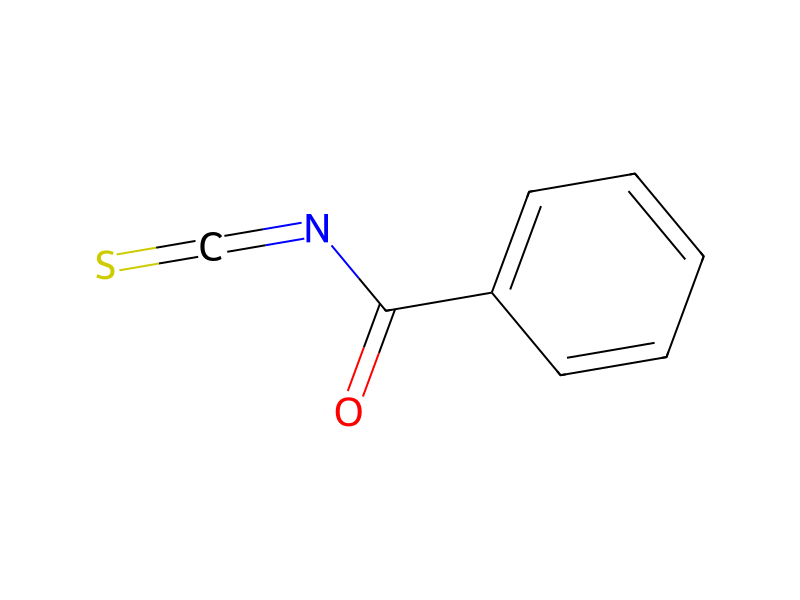
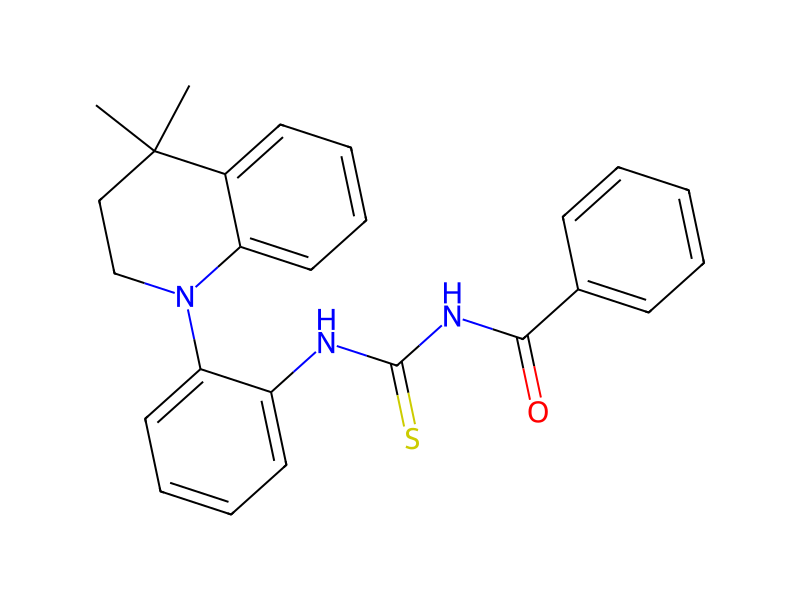
Reaction equation

[CH3:1][C:2]1([CH3:19])[C:11]2[C:6](=[CH:7][CH:8]=[CH:9][CH:10]=2)[N:5]([C:12]2[CH:17]=[CH:16][CH:15]=[CH:14][C:13]=2[NH2:18])[CH2:4][CH2:3]1.[C:20]([N:28]=[C:29]=[S:30])(=[O:27])[C:21]1[CH:26]=[CH:25][CH:24]=[CH:23][CH:22]=1>C(Cl)Cl>[C:20]([NH:28][C:29]([NH:18][C:13]1[CH:14]=[CH:15][CH:16]=[CH:17][C:12]=1[N:5]1[C:6]2[C:11](=[CH:10][CH:9]=[CH:8][CH:7]=2)[C:2]([CH3:19])([CH3:1])[CH2:3][CH2:4]1)=[S:30])(=[O:27])[C:21]1[CH:26]=[CH:25][CH:24]=[CH:23][CH:22]=1Participants
4


Procedure
1d (65.4 mg, mmol) and benzoyl isothiocyanate (60 mg) were heated at refluxing CH2Cl2 for 2 h. After cooling, the solvent was evaporated. The resulting crude 1e was dried over vacuum and used directly in the next step: LC-MS ESI, 416.3 (M+H) (10-90% MeOH in H2O with 0.1% TFA in a 4 min run, tR=4.49 min).
Workup
- temperatureAfter cooling
- customthe solvent was evaporated
- dry with materialThe resulting crude 1e was dried over vacuum
Sources & evidence
- ORD record
- ord-f29cdedad1cb4ee98680c27ced2d0799
- Source dataset
- uspto-grants-2010_06
- Patent number
- US07728008B2
Linked notes
Loading…