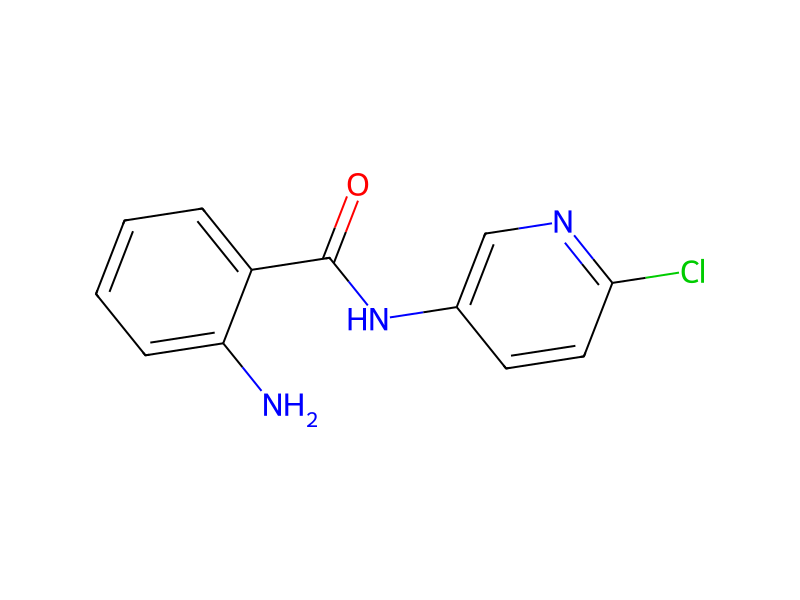
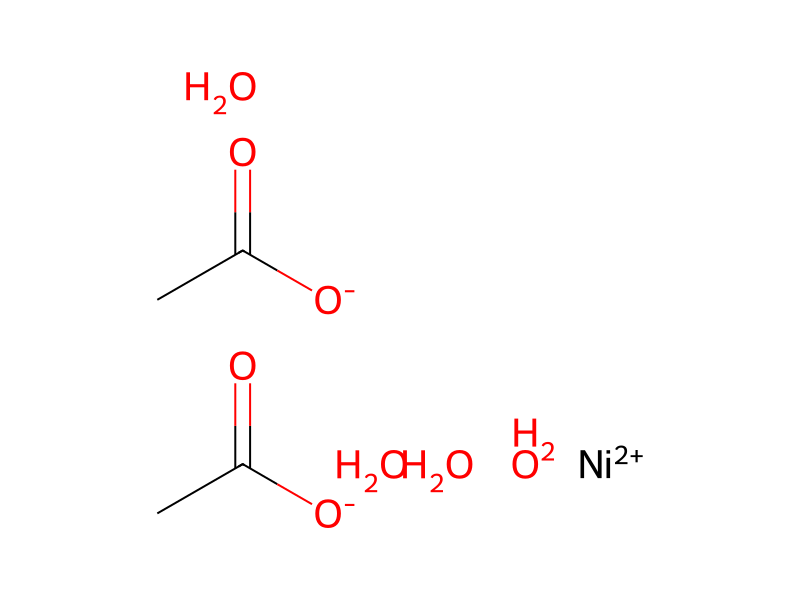
[Cl:1][C:2]1[N:7]=[CH:6][C:5]([NH:8][C:9](=[O:19])[C:10]2[CH:15]=[CH:14][CH:13]=[CH:12][C:11]=2[N+:16]([O-])=O)=[CH:4][CH:3]=1.[BH4-].[Na+]>CO.O1CCCC1.O.O.O.O.C([O-])(=O)C.[Ni+2].C([O-])(=O)C>[Cl:1][C:2]1[N:7]=[CH:6][C:5]([NH:8][C:9](=[O:19])[C:10]2[CH:15]=[CH:14][CH:13]=[CH:12][C:11]=2[NH2:16])=[CH:4][CH:3]=1To a stirred solution of N-(6-chloropyridin-3-yl)-2-nitrobenzamide (0.6 g, 2.15 mmol) in methanol (150 mL) and tetrahydrofuran (75 mL) was added nickel acetate tetrahydrate (1.07 g, 4.3 mmol). Sodium borohydride (0.326 g, 8.61 mmol) was then added in small portions. After gas evolution had ceased, the solvent was removed in vacuo. The residue was partitioned between ethyl acetate and concentrated ammonium hydroxide, and the layers separated. The organic phase was washed with concentrated ammonium hydroxide and saturated aqueous sodium chloride solution, dried (magnesium sulfate), filtered, and concentrated in vacuo. The solid was suspended in ether, sonicated, and filtered to give 0.243 g (46%) of a pink solid.
Loading…