Reaction equation

[O:1]=[CH:2][C@@H:3]([C@H:5]([C@@H:7]([C@@H:9](CO)[OH:10])[OH:8])[OH:6])[OH:4].[CH2:13]([OH:22])[C@@H:14]([OH:21])[CH:15]([OH:20])[C@H:16]([OH:19])[CH2:17][OH:18]>C(O)C>[OH:1][CH2:2][C:3]([C@H:5]([C@@H:7]([CH2:9][OH:10])[OH:8])[OH:6])=[O:4].[CH2:17]([OH:18])[C@@H:16]([C@H:15]([C@@H:14]([CH2:13][OH:22])[OH:21])[OH:20])[OH:19]Participants
5
Reactant 2


Product 2
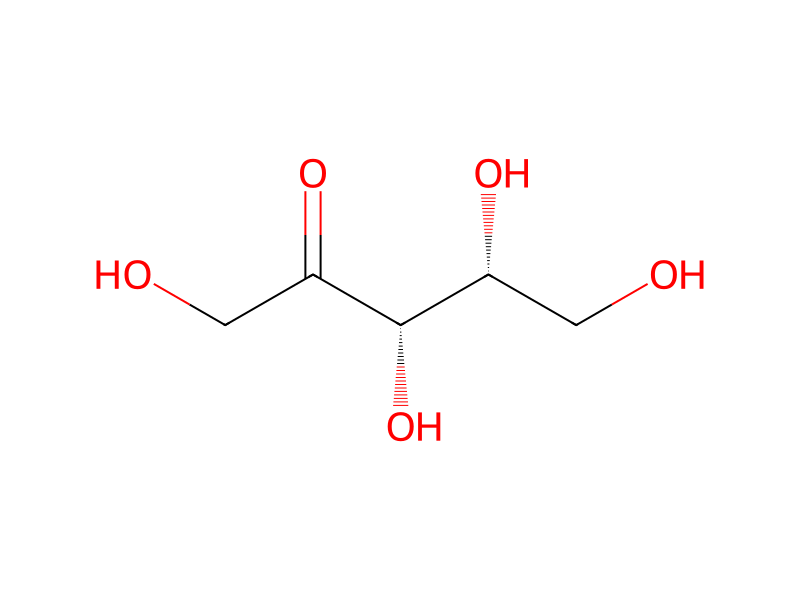
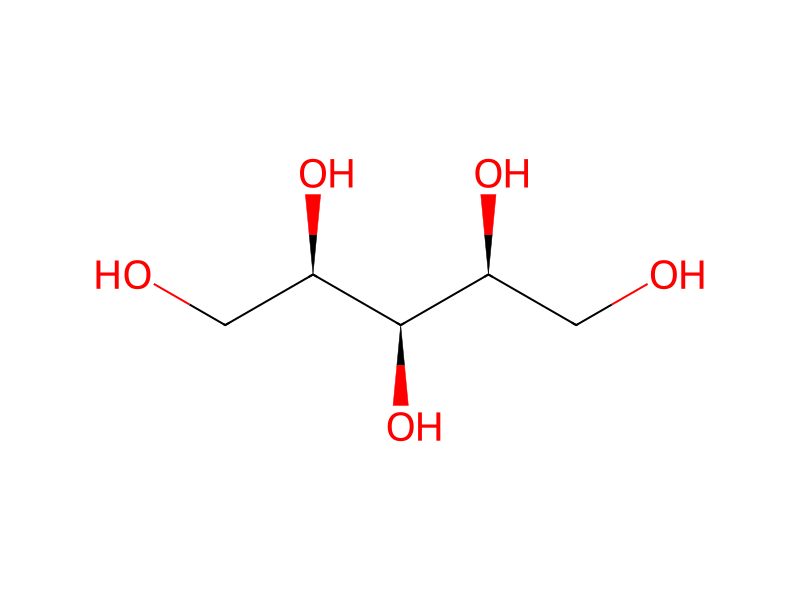
Reagents, catalysts & solvents 1

Procedure
Based on this idea, as shown in Example 6, glucose and ethanol were added and allowed to react in a conversion reaction of D-arabitol using Gluconobacter oxydans ATCC621 and the effect of their addition was examined. As a result, a considerable effect of addition was recognized as shown in Example 6. That is, when no carbon source was added, a portion of D-xylulose remained unreacted, giving a low yield of xylitol whereas with the addition of a carbon source, reduction of D-xylulose to xylitol proceeded advantageously and the yield of xylitol (based on the yield of D-arabitol) reached at most 98%.
Workup
- additionwere added
- additionthe effect of their addition
- additionAs a result, a considerable effect of addition
- additionwhen no carbon source was added
Sources & evidence
- ORD record
- ord-73267700da3b46d6b36fb68f5da2280f
- Source dataset
- uspto-grants-2002_01
- Patent number
- US06340582B1
Linked notes
Loading…