4-Chlorobutyryl chloride → 4-Chloro-n-(3-((4-oxo-3,4,5,6,7,8-hexahydrophthalazin-1-yl)methyl)phenyl)butanamide
Reaction equation

[NH2:1][C:2]1[CH:3]=[C:4]([CH:17]=[CH:18][CH:19]=1)[CH2:5][C:6]1[C:15]2[CH2:14][CH2:13][CH2:12][CH2:11][C:10]=2[C:9](=[O:16])[NH:8][N:7]=1.[Cl:20][CH2:21][CH2:22][CH2:23][C:24](Cl)=[O:25]>ClCCl>[Cl:20][CH2:21][CH2:22][CH2:23][C:24]([NH:1][C:2]1[CH:19]=[CH:18][CH:17]=[C:4]([CH2:5][C:6]2[C:15]3[CH2:14][CH2:13][CH2:12][CH2:11][C:10]=3[C:9](=[O:16])[NH:8][N:7]=2)[CH:3]=1)=[O:25]Participants
4
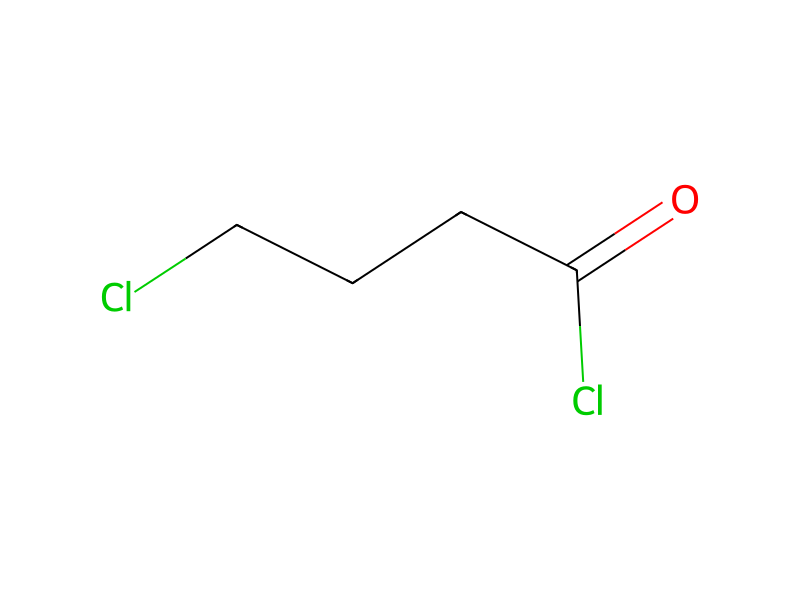



Procedure
A solution of EXAMPLE 89 (150 mg, 0.59 mmol) and 4-chlorobutanoyl chloride (83 mg, 0.59 mmol) in dichloromethane (5 mL) was stirred at room temperature for 16 hours, and was concentrated. The residue was partitioned between ethyl acetate and brine. The organic phase was washed with brine, and concentrated to provide the title compound. MS (DCI/NH3) m/z 360 (M+H)+; 1H NMR (400 MHz, CD3OD): δ 1.66-1.73 (m, 4H), 2.07-2.15 (m, 2H), 2.40-2.46 (m, 2H), 2.48-2.51 (m, 2H), 2.50-2.56 (m, 2H), 3.63 (t, J=6.44 Hz, 2H), 3.96 (s, 2H), 6.93 (d, J=7.67 Hz, 1H), 7.21-7.26 (m, 1H), 7.36 (s, 1H), 7.38-7.46 (m, 1H).