HomeMCPWorkbenchSkills
HomeWorkbenchNotificationsMe
llms.txt · MCP GuidePrivacy Policy · Terms of Service · Supportv1.8.0
  1. Home
  2. /Compound

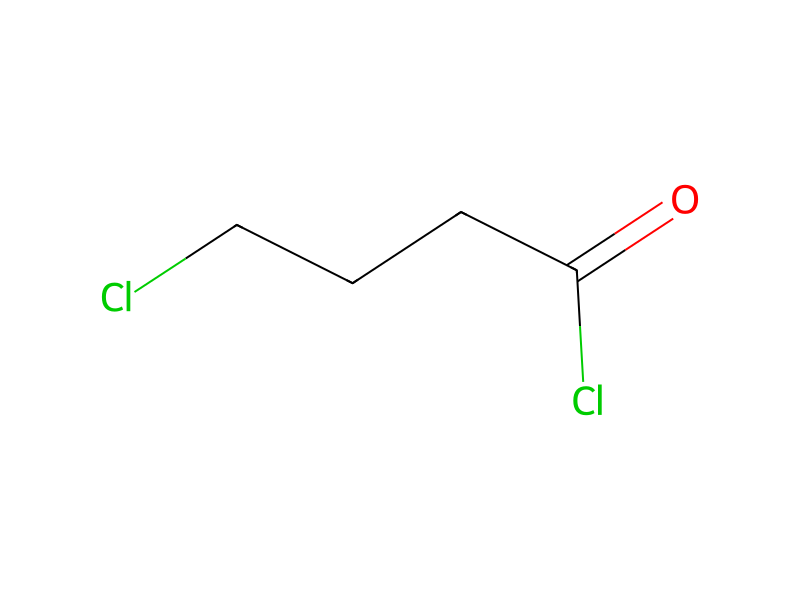
4-Chlorobutyryl chloride
HCID 78370
New noteNew reactionRequest quotes
Print preview
Basic informationNames & identifiersPropertiesSafety & regulationChemistry & industryRelated reactionsCompound notes
Substructure searchFind similar structures

Basic information

CAS
4635-59-0
Standard SMILES
O=C(Cl)CCCCl
InChIKey
CDIIZULDSLKBKV-UHFFFAOYSA-N
Molecular formula
C4H6Cl2O
Average molar mass
140.99 g/mol
Monoisotopic mass
139.97957017

Names & identifiers

Preferred name
4-Chlorobutyryl chloride
IUPAC
4-chlorobutanoyl chloride
English name
4-Chlorobutyryl chloride
Molecular formula
C4H6Cl2O
Molecular weight
141

Names & synonyms

4-Chlorobutyryl chloride4-Chlorobutanoyl chlorideButanoyl chloride, 4-chloro-4-Chlorobutyroyl chloride4-Chlorobutyric acid chloride4-Chlorobutanoic acid chloridegamma-Chlorobutyryl chlorideButyryl chloride, 4-chloro-gamma-Chlorobutyroyl chlorideHSDB 7299EINECS 225-059-1UNII-3663U0VKRI
Show more names
4-CBCMONA-002orobutyryL4-Chlorobutyryl4-Chlorobutyryl chlo4-Chlorbutyrylchlorid-Chlorobutyrylchloride4-chloroprene chloride4-CHLOROBUTRYL CHLORIDE
.gamma.-Chlorobutyryl chloride3663U0VKRI4-Chlorobutyl chlorideDTXSID6052114CDIIZULDSLKBKV-UHFFFAOYSA-.gamma.-Chloro-n-butyryl chlorideEC 225-059-1.OMEGA.-CHLOROBUTYRYL CHLORIDE

Database identifiers

CAS
4635-59-0
PubChem CID
78370
DTXSID
DTXSID6052114
UNII
3663U0VKRI
EC Number
225-059-1
Nikkaji
J26.724D

Properties

Computed structural properties

XLogP
1.7
Topological polar surface area
17.1 Ų
Hydrogen bond donors
0
Hydrogen bond acceptors
1
Rotatable bonds
3
Heavy atoms
7
Formal charge
0
Complexity
62.7

Experimental & physicochemical properties

Chemical ClassesToxic Gases & Vapors -> Acid Halides
SpringerMaterials PropertiesNuclear quadrupole resonance spectroscopy
Density · 2 items

1.258

1.258 @25 °C

SolubilitySoluble in ethanol
Boiling Point · 2 items

173.5 °C

173.5 °C @760 [mm Hg]

Vapor Pressure · 3 items

1.32 [mmHg]

1.32 mm Hg at 25 °C at 25 °C /Estimated/

1.32 [mm Hg] @25 °C

Refractive IndexIndex of refraction = 1.462
Physical DescriptionLight gold liquid; [MSDSonline]
Other Experimental PropertiesHydroxyl radical reaction rate constant = 1.8X10⁻¹² cu cm/molec-sec at 25 °C /Estimated/

Safety & regulation

Safety information is for reference only and does not replace the supplier’s Safety Data Sheet (SDS), applicable regulations, or professional assessment.

GHS classification

GHS Classification · 4 items

Danger

H290 (67.1%): May be corrosive to metals [Warning Corrosive to Metals]

P234, P260, P264, P270, P271, P280, P284, P301+P317, P301+P330+P331, P302+P361+P354, P304+P340, P305+P354+P338, P316, P320, P321, P330, P363, P390, P403+P233, P405, P406, and P501 (click each P-code to see the statement)

Aggregated GHS information provided per 161 reports by companies from 12 notifications to the ECHA C&L Inventory. Each notification may be associated with multiple companies.

Hazard information

Regulatory Information · 3 items

Chemical: Butanoyl chloride, 4-chloro-

Status: Active Update: 27-06-2012 https://echa.europa.eu/registration-dossier/-/registered-dossier/5789

4-Chlorobutyryl chloride: Does not have an individual approval but may be used under an appropriate group standard

Hazards SummaryReacts violently with water; A corrosive substance that can cause injury to the skin, eyes, and respiratory tract; Inhalation may cause edema and chemical pneumonitis; [MSDSonline]
Hazard Classes and CategoriesMet. Corr. 1 (67.1%)

Safety & protection

Disposal Methods · 1 item

SRP: The most favorable course of action is to use an alternative chemical product with less inherent propensity for occupational exposure or environmental contamination. Recycle any unused portion of the material for its approved use or return it to the manufacturer or supplier. Ultimate disposal of the chemical must consider: the material's impact on air quality; potential migration in soil or water; effects on animal, aquatic, and plant life; and conformance with environmental and public health regulations.

Chemistry & industry

Uses & manufacturing

General Manufacturing InformationButanoyl chloride, 4-chloro-: ACTIVE

Applications

Uses4-Chlorobutyryl chloride (4-CBCl) is mainly used in the production of pharmaceuticals and agrochemicals. It is used as pyrazinamide intermediate.

Uses4-Chlorobutyroyl Chloride is used in the preparation of mitosene and mitosane analogs of Mitomycin C (M371900), an antitumor antibiotic. .

Upstream & downstream products

Upstream raw materials

Zinc chlorideGamma Butyrolactone

Downstream products

4-Chlorophenyl cyclopropyl ketoneLevetiracetamTerfenadineCyclopropanecarboxylic acid4,4'-DichlorobutyrophenoneCyclopropyl 4-fluorophenyl ketone4-Chloro-1-morpholin-4-yl-1-butanone4-chloro-1-(piperidin-1-yl)butan-1-oneButanoic acid, 4-chloro-, 2-(diphenylMethylene)hydrazide

Related reactions

564 records
New reaction record
HRID 954 reaction equation
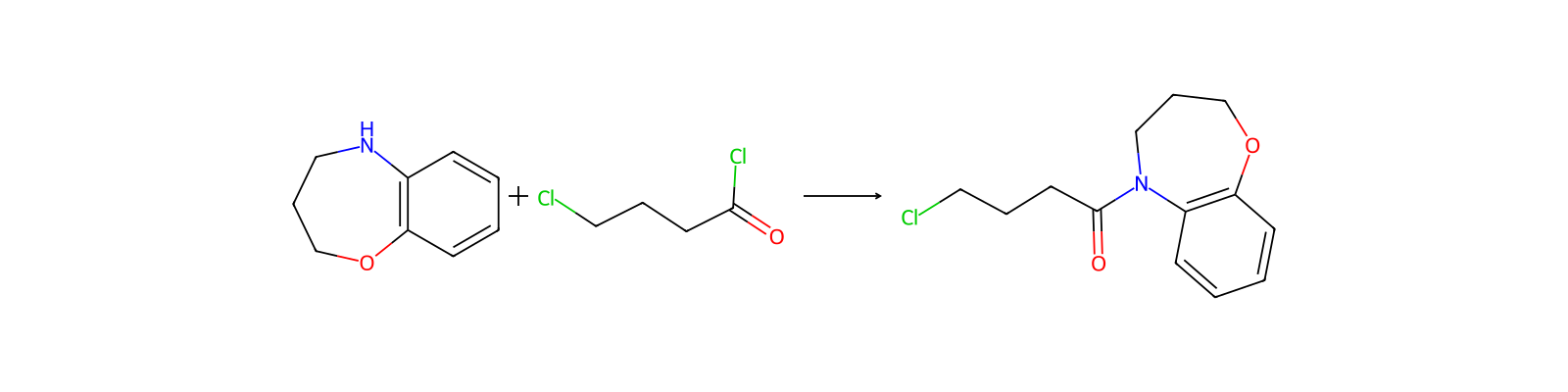
HRID 954As reactantuspto-grants-1998_03
HRID 958 reaction equation
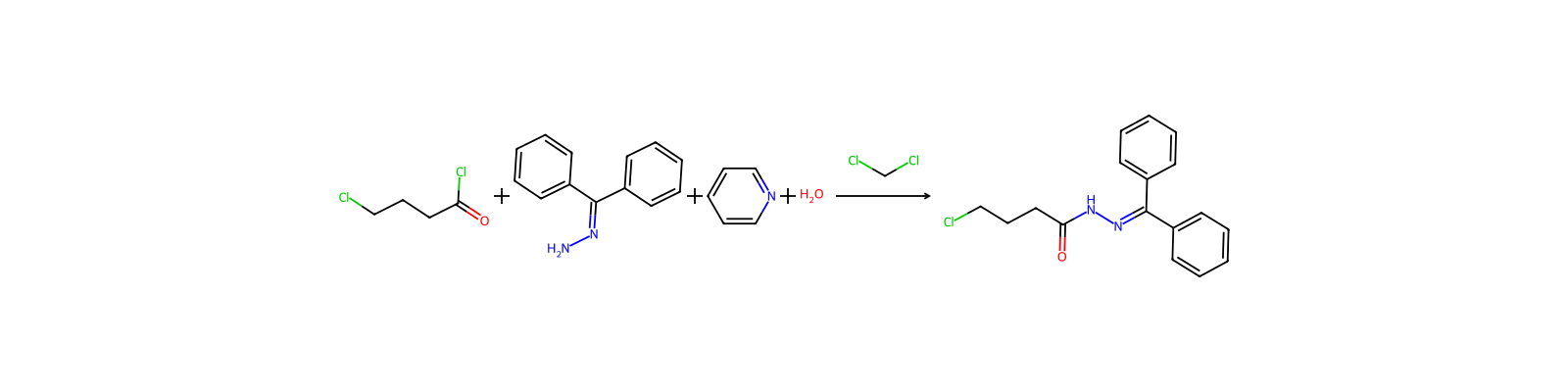
HRID 958As reactantuspto-grants-1998_03
HRID 960 reaction equation
HRID 960As reactantuspto-grants-1998_03
HRID 4954 reaction equation
HRID 4954As reactantuspto-grants-1993_09
HRID 8204 reaction equation
HRID 8204As reactantuspto-grants-2006_08
HRID 8798 reaction equation
HRID 8798As reactantuspto-grants-2006_08
HRID 17861 reaction equation
HRID 17861As reactantuspto-grants-2010_06
HRID 18128 reaction equation
HRID 18128As reactantuspto-grants-2010_06
Page 1 of 71

Compound notes

Loading…

On this pageBasic informationNames & identifiersPropertiesSafety & regulationChemistry & industryRelated reactionsCompound notes
More actions
New noteNew reactionRequest quotes

Physicochemical properties

Melting point
-47 °C · -47 °C
Boiling point
173 · 173-174 °C(lit.)
Density
1.26 g/mL · 1.26 g/mL at 25 °C(lit.)
vapor pressure
3 mm · 3 mm Hg ( 20 °C)
refractive index
20 · n20/D 1.461(lit.)
Flash point
163 °F · 163 °F
storage temp.
30 °C · Store below +30°C.
solubility
Chloroform, DMSO (Sparingly), Ethyl Acetate (Slightly)
form
Liquid
color
Clear colorless to yellow
explosive limit
5.5 · 5.5-11.7%(V)
Water Solubility
soluble in diethyl ether, ethanol, slightly soluble in water.
Sensitive
Moisture Sensitive
BRN
773860 · 773860
Stability
Hygroscopic, Moisture Sensitive
InChI
1S/C4H6Cl2O/c5-3-1-2-4(6)7/h1-3H2
InChIKey
CDIIZULDSLKBKV-UHFFFAOYSA-N
SMILES
ClCCCC(Cl)=O
CAS DataBase Reference
4635 · 4635-59-0(CAS DataBase Reference)
EWG's Food Scores
1 · 1
FDA UNII
3663 U0VKRI · 3663U0VKRI
NIST Chemistry Reference
4 · Butanoyl chloride, 4-chloro-(4635-59-0)
EPA Substance Registry System
4 · Butanoyl chloride, 4-chloro- (4635-59-0)
UNSPSC Code
12352106 · 12352106
NACRES
22 · NA.22
Symbol(GHS)
5 · GHS05,GHS06,GHS09
Signal word
Danger
Hazard statements
290 · H290-H302-H314-H330-H400
Precautionary statements
273 · P273-P280-P301+P312-P303+P361+P353-P304+P340+P310-P305+P351+P338
PPE
Faceshields, Gloves, Goggles, type ABEK (EN14387) respirator filter
Hazard Codes
T,C
Risk Statements
22 · 22-23-35
Safety Statements
26 · 26-28-36/37/39-45-28A
RIDADR
3390 · UN 3390 6.1/PG 1
WGK Germany
1 · 1
RTECS
1406000 · EM1406000
Autoignition Temperature
824 °F · 824 °F
Hazard Note
Toxic/Corrosive/Moisture Sensitive
TSCA
TSCA listed
HazardClass
6.1 · 6.1
PackingGroup
II
HS Code
29159080 · 29159080
Storage Class
6.1 A · 6.1A - Combustible acute toxic Cat. 1 and 2very toxic hazardous materials
Hazard Classifications
2 InhalationAcute · Acute Tox. 2 InhalationAcute Tox. 4 OralAquatic Acute 1Eye Dam. 1Met. Corr. 1Skin Corr. 1A
Hazardous Substances Data
4635 · 4635-59-0(Hazardous Substances Data)
REACH Registrations
Active
Excepted Quantities
Not Permitted as Excepted Quantity
Protective Action Criteria (PAC) · 3 items

0.43 [mg/m3]

4.8 [mg/m3]

29 [mg/m3]

Toxicology

Environmental FateAQUATIC FATE: 4-Chlorobutyryl chloride 2,4 is expected to hydrolyze rapidly in water to form 4-chlorobutyric acid(1).
Adverse EffectsDermatotoxin - Skin burns.
Non-Human Toxicity Excerpts · 5 items

/LABORATORY ANIMALS: Acute Exposure/ In a further acute toxicity study in rats, the LD50 was determined as 1350 mg/kg body weight following oral administration of a 4.3- to 92.8 percent solution of the substances in olive oil and a 14 day observation period (male rats approximately 1500 mg/kg body weight, female rats 1210 mg/kg body weight; 5 male and 5 female rats). The LD100 was 2150 mg/kg body weight (death occurring within 1 hour), while the LD0 was 215 mg/kg body weight. The clinical signs of toxicity observed included staggering, tremors, apathy, dyspnoea, atonia, exsiccosis and paresis. Autopsy revealed atrial dilatation of the heart and congestive hyperemia, acinar pattern of the liver as well as several instances of hemorrhagic eschar formatio on the gastric mucosa and pronounced reddening of the intestinal mucosa. All animals sacrificed at the end of the test were found to have adhesions between the forestomach and the spleen, the liver and the peritoneum.

/LABORATORY ANIMALS: Acute Exposure/ In mice, exposure to 4-chlorobutanoic acid chloride vapors causes sensory irritation of the upper respiratory tract with biphasic impairment of respiratory rate.

/LABORATORY ANIMALS: Acute Exposure/ The application of the neat substance to the skin and eyes of rabbits produces a very severe corrosive effect.

/LABORATORY ANIMALS: Acute Exposure/ Groups of 5 male and 5 female Wistar rats each (average initial weights 317 g and 197 g, respectively) inhaled 4-chlorobutanoic acid chloride (purity of test substance 99.5%) at concentrations of 510, 650 and 870 mg/cu m in a single exposure lasting 4 hours. The observation period was 14 days. The signs of toxicity included labored breathing, closed eyes, piloerection, hunched posture and during the observation period a deteriorated general condition, irregular breathing, encrustations around the nares, including wounded noses, and encrustations around the eyes. Of all 10 rats exposed to the highest concentration (870 mg/cu m), 8 died or had to be killed in extremis in the course of the observation period. No deaths occurred in the other two concentration groups (650 and 510 mg/cu m). Body weight was extremely low in most of the animals which died and was also markedly decreased in the surviving animals up to day 7 of observation, though normal weight was regained by day 14 of the observation period. Post-mortems on the deceased rats revealed considerable abnormalities of the lungs (swellings, atelectasis, irregular surface markings, spongy appearance), and some of the rats which were sacrificed at the end of the observation period were found to have greyish, pale or spotted lungs. In addition, the gastrointestinal tracts of several of the deceased rats were filled with air. ...

For more Non-Human Toxicity Excerpts (Complete) data for 4-CHLOROBUTYRYL CHLORIDE (7 total), please visit the HSDB record page.

Environmental Abiotic Degradation4-Chlorobutyryl chloride 2,4 is expected to hydrolyze rapidly in water to form 4-chlorobutyric acid(1).
Antidote and Emergency Treatment · 2 items

Basic treatment: Establish a patent airway. Suction if necessary. Watch for signs of respiratory insufficiency and assist respirations if necessary. Administer oxygen by nonrebreather mask at 10 to 15 L/min. Monitor for pulmonary edema and treat if necessary ... . Monitor for shock and treat if necessary ... . For eye contamination, flush eyes immediately with water. Irrigate each eye continuously with normal saline during transport ... . Do not use emetics. For ingestion, rinse mouth and administer 5 ml/kg up to 200 ml of water for dilution if the patient can swallow, has a strong gag reflex, and does not drool. Activated charcoal is not effective ... . Do not attempt to neutralize because of exothermic reaction. Cover skin burns with dry, sterile dressings after decontamination ... . /Organic acids and related compounds/

Advanced treatment: Consider orotracheal or nasotracheal intubation for airway control in the patient who is unconscious, has severe pulmonary edema, or is in respiratory arrest. Early intubation, at the first sign of upper airway obstruction, may be necessary. Positive pressure ventilation techniques with a bag valve mask device may be beneficial. Monitor cardiac rhythm and treat arrhythmias as necessary ... . Start an IV with D5W /SRP: "To keep open", minimal flow rate/. Use lactated Ringer's if signs of hypovolemia are present. Watch for signs of fluid overload. Consider drug therapy for pulmonary edema ... . For hypotension with signs of hypovolemia, administer fluid cautiously. Consider vasopressors if patient is hypotensive with a normal fluid volume. Watch for signs of fluid overload ... . Use proparacaine hydrochloride to assist eye irrigation ... . /Organic acids and related compounds/

Toxicity DataLC50 (rat) = 650 mg/m3/4h
Non-Human Toxicity Values · 3 items

LC50 Rat inhalation 650 to 870 mg/cu m/4hr

LD50 Rat oral 1350 mg/kg bw

LD50 Rat oral 1510 mg/kg bw

Safety data

PPE
Faceshields, Gloves, Goggles, type ABEK (EN14387) respirator filter
wgk
1
tsca
TSCA listed
rtecs
EM1406000
ridadr
UN 3390 6.1/PG 1
hs_code
29159080
risk_code
22-23-35
Signal word
Danger
Symbol(GHS)
GHS05,GHS06,GHS09
hazard_code
T,C
hazard_note
Toxic/Corrosive/Moisture Sensitive
safety_code
26-28-36/37/39-45-28A
hazard_class
6.1
Storage Class
6.1A - Combustible acute toxic Cat. 1 and 2very toxic hazardous materials
packing_group
II
Hazard statements
H290-H302-H314-H330-H400
Excepted Quantities
Not Permitted as Excepted Quantity
REACH Registrations
Active
Hazard Classifications
Acute Tox. 2 InhalationAcute Tox. 4 OralAquatic Acute 1Eye Dam. 1Met. Corr. 1Skin Corr. 1A
Autoignition Temperature
824 °F
Precautionary statements
P273-P280-P301+P312-P303+P361+P353-P304+P340+P310-P305+P351+P338
Hazardous Substances Data
4635-59-0(Hazardous Substances Data)
4-Chloro-1-(3-methoxyphenyl)-1-oxobutane
1-[(1R)-1-Phenylethyl]pyrrolidin-2-one
4-Chloro-1-(4-ethoxy-phenyl)-butan-1-one
4-Chloro-N-cyclohexyl-N-MethylbutyraMide, 97%
4-Chloro-4'-fluorobutyrophenone