HomeMCPSkillsWorkbenchOpenChem
HomeWorkbenchNotificationsMe
llms.txt · skill.md · MCP GuidePrivacy Policy · Terms of Service · Supportv1.8.4
  1. Home
  2. /Reaction

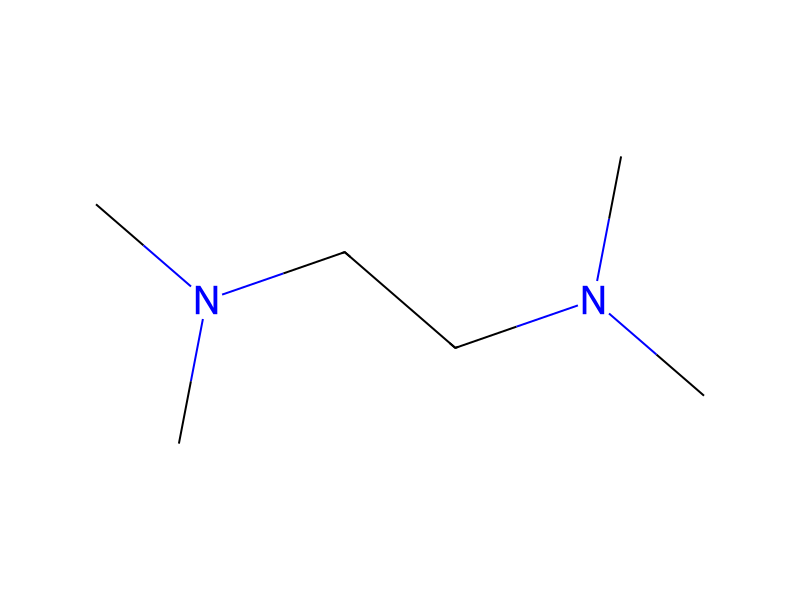
N,N,N',N'-Tetramethylethylenediamine → 2.5-Diethyl-8-isopropyl-5,10-dihydro-11H-indeno[1,2-b]quinolin-10-one

HRID 1263449
Print

Reaction equation

C([Li])CCC.CCCCCC.CN(CCN(C)C)C.[CH2:20]([C:22]1[CH:23]=[C:24]2[C:28](=[CH:29][CH:30]=1)[C:27](=O)[CH2:26][CH2:25]2)[CH3:21].[CH2:32]([N:34]1[C:43]2[C:38](=[CH:39][C:40]([CH:44]([CH3:46])[CH3:45])=[CH:41][CH:42]=2)[C:37](=[O:47])C=C1C1OC=CC=1)[CH3:33]>C1COCC1.[Cl-].[NH4+]>[CH2:20]([C:22]1[CH:23]=[C:24]2[C:28](=[CH:29][CH:30]=1)[C:27]1[N:34]([CH2:32][CH3:33])[C:43]3[CH:42]=[CH:41][C:40]([CH:44]([CH3:45])[CH3:46])=[CH:39][C:38]=3[C:37](=[O:47])[C:26]=1[CH2:25]2)[CH3:21]

ParticipantsProcedureWorkupSources & evidenceReaction notes

Participants

8

Reactant 5

HCID 8037N,N,N',N'-TetramethylethylenediamineHCID 8058HexaneHCID 5164341-Ethyl-2-(2-furyl)-6-isopropyl-quinolin-4-oneHCID 110519505-Ethyl-2,3-dihydro-1H-inden-1-oneHCID 178418339Butyllithium

Product 1

HCID 9905607
2.5-Diethyl-8-isopropyl-5,10-dihydro-11H-indeno[1,2-b]quinolin-10-one

Reagents, catalysts & solvents 2

HCID 8028TetrahydrofuranSolvent2×HCID 25517Ammonium ChlorideSolvent

Procedure

To a 1.53M solution of n-butyl lithium in hexane (13.2 mL, 20.2 mmol) was added TMEDA (3.1 mL, 20.2 mmol) under argon atmosphere at room temperature with stirring. To this was added with ice cooling a solution of 5-ethyl-1-indanone(3.24 g, 20.2 mmol) in anhydrous THF followed by stirring at room temperature for 1 hour. After ice cooling the mixture, a solution of 1-ethyl-6-isopropylisatoic anhydride (Example 6, step 1) (2.35 g, 10.1 mmol) in anhydrous THF was added dropwise thereto. The mixture was stirred at room temperature overnight and diluted with saturated aqueous solution of ammonium chloride. The orgaic layer was separated and concentrated in vacuo. The residue was dissolved in ethyl acetate, washed with saturated sodium chloride solution and dried with sodium sulfate. After removing the solvent, the residue was purified by silica gel-chromatography (chloroform:acetone=20:1) and crystallization from diethyl ether to give the desired compound. 1H-NMR(CDCl3) δ 1.32(3H,t,CH2CH3), 1.34(6H,d,CH(CH3)2), 1.70(3H,t,NCH2CH3), 2.78(2H,q,CH2CH3), 3.10(1H,septet,CH), 3.91(2H,s,H-11), 4.72(2H,q,NCH2), 7.30-7.85(5H,m,Ar-H), 8.45(1H,s,H-9)

Workup

  1. stirringby stirring at room temperature for 1 hour
  2. stirringThe mixture was stirred at room temperature overnight
  3. customThe orgaic layer was separated
  4. concentrationconcentrated in vacuo
  5. dissolutionThe residue was dissolved in ethyl acetate
  6. washwashed with saturated sodium chloride solution
  7. dry with materialdried with sodium sulfate
  8. customAfter removing the solvent
  9. customthe residue was purified by silica gel-chromatography (chloroform:acetone=20:1) and crystallization from diethyl ether

Sources & evidence

ORD record
ord-313a6d429cae425989a3c6d44804f7ab
Source dataset
uspto-grants-2003_04
DOI
10.6084/m9.figshare.5104873.v1
Patent number
US06541470B1

Reaction notes

On this pageParticipantsProcedureWorkupSources & evidenceReaction notes


