Reaction equation

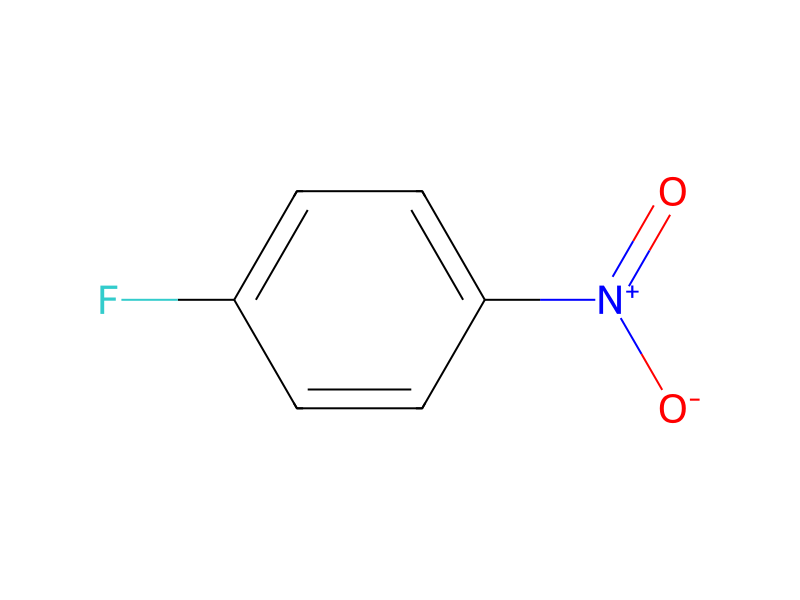
[Br:1][C:2]1[CH:7]=[C:6]([Br:8])[CH:5]=[C:4]([Br:9])[C:3]=1[OH:10].F[C:12]1[CH:17]=[CH:16][C:15]([N+:18]([O-:20])=[O:19])=[CH:14][CH:13]=1.C(=O)([O-])[O-].[Cs+].[Cs+]>CN(C)C=O>[Br:8][C:6]1[CH:7]=[C:2]([Br:1])[C:3]([O:10][C:12]2[CH:17]=[CH:16][C:15]([N+:18]([O-:20])=[O:19])=[CH:14][CH:13]=2)=[C:4]([Br:9])[CH:5]=1Participants
5
Reactant 3


Product 1

Reagents, catalysts & solvents 1

Procedure
A stirred solution of 2,4,6-tribromophenol (3.8 g), 4-fluoronitrobenzene (1:6 g), cesium carbonate (3.7 g) in dimethylformamide (8 mL) was heated at reflux until the starting materials were consumed. The reaction was cooled to room temperature and concentrated. The residue was dissolved in ethyl acetate and washed with sodium hydroxide (2 N), hydrochloric acid (2 N) and brine. Concentration of the organic phase gave 1,3,5-tribromo-4-(4-nitrophenoxy)benzene in quantitative yield. The crude product was used directly in the next step.
Workup
- temperatureat reflux until the starting materials
- customwere consumed
- concentrationconcentrated
- dissolutionThe residue was dissolved in ethyl acetate
- washwashed with sodium hydroxide (2 N), hydrochloric acid (2 N) and brine
Sources & evidence
- ORD record
- ord-f7d8a15e89044a28844d345b9cd75f4f
- Source dataset
- uspto-grants-2007_04
- Patent number
- US07199265B2
Linked notes
Loading…