Reaction equation

[Cl:1][C:2]1[CH:7]=[CH:6][C:5]([NH:8][CH:9]([CH:14]([CH3:16])[CH3:15])[C:10](=[NH:13])[O:11][CH3:12])=[CH:4][CH:3]=1.[O:17]([C:24]1[CH:25]=[C:26]([CH:29]=[CH:30][CH:31]=1)CO)[C:18]1[CH:23]=[CH:22][CH:21]=[CH:20][CH:19]=1>CO>[Cl:1][C:2]1[CH:3]=[CH:4][C:5]([NH:8][CH:9]([CH:14]([CH3:16])[CH3:15])[C:10](=[NH:13])[O:11][CH2:12][C:26]2[CH:29]=[CH:30][CH:31]=[C:24]([O:17][C:18]3[CH:23]=[CH:22][CH:21]=[CH:20][CH:19]=3)[CH:25]=2)=[CH:6][CH:7]=1Participants
4
Reactant 2
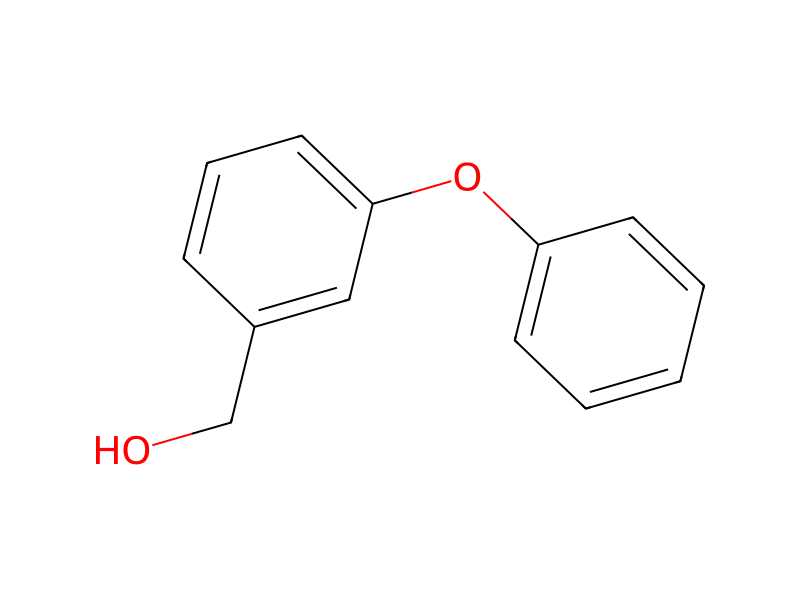

Product 1

Reagents, catalysts & solvents 1

Procedure
A solution of 2.25 g (10 mmol) of methyl 2-(4-chlorophenylamino)-3-methylbutanimidate and 4.00 g (20 mmol) of 3-phenoxybenzyl alcohol is heated with continuous removal of methanol. Upon cessation of methanol evolution, there is obtained an oil, 3-phenoxybenzyl 2-(4-chlorophenylamino)-3-methylbutanimidate.
Sources & evidence
- ORD record
- ord-25c9c6c8c5294111bda856bf486330e4
- Source dataset
- uspto-grants-1981_03
- Patent number
- US04254264
Linked notes
Loading…