4-Hydroxybenzaldehyde → 4-(Benzo[d]oxazol-2-yl)phenol
HRID 127641
Reaction equation

[OH:1][C:2]1[CH:9]=[CH:8][C:5]([CH:6]=[O:7])=[CH:4][CH:3]=1.[NH2:10][C:11]1[CH:16]=[CH:15][CH:14]=[CH:13][C:12]=1O>[N+](C1C=CC=CC=1)([O-])=O>[OH:1][C:2]1[CH:9]=[CH:8][C:5]([C:6]2[O:7][C:12]3[CH:13]=[CH:14][CH:15]=[CH:16][C:11]=3[N:10]=2)=[CH:4][CH:3]=1Participants
4
Reactant 2
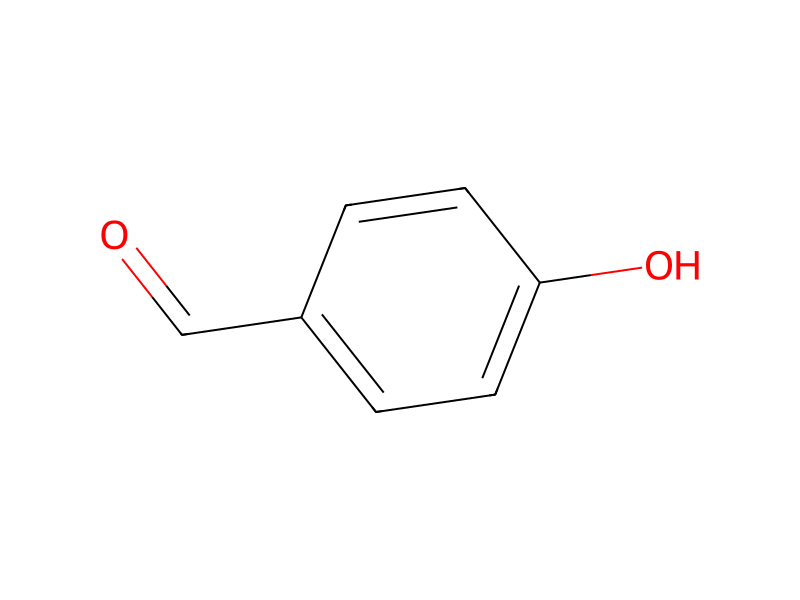

Product 1

Reagents, catalysts & solvents 1
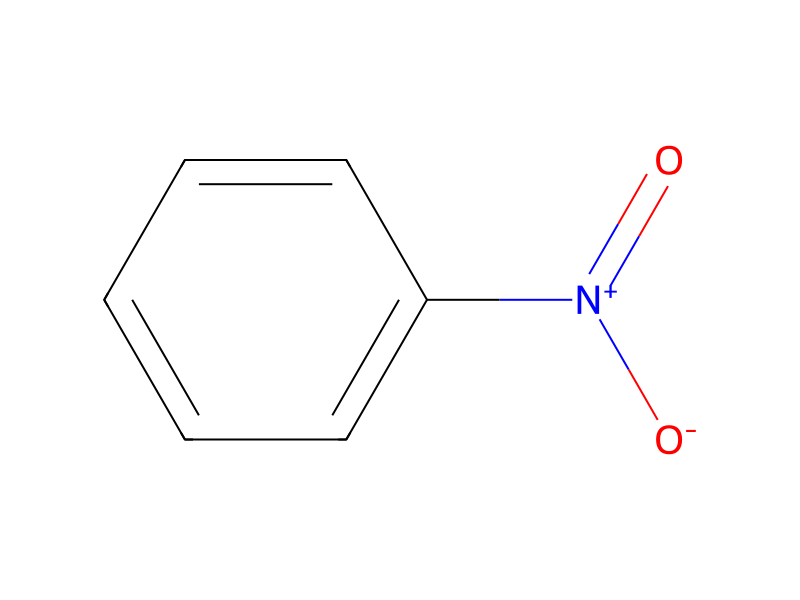
Procedure
Equal molar quantities of p-hydroxybenzaldehyde and o-aminophenol in excess nitrobenzene was refluxed for five hours. The nitrobenzene was removed and the residue was washed with hot xylene. 2-(4-Hydroxyphenyl)benzoxazole was obtained by crystallization from ethanol in 64% yield (m.p. 253°). A mixture of the sodium salt of 2-(4-hydroxyphenyl)benzoxazole (0.01 mole) and 4-(2-bromoethoxy)-2-hydroxybenzophenone (0.01 mole) in 250 ml of ethanol was refluxed for 20 hours. The reaction mixture was cooled, 200 ml. of water was added and the product, I, was filtered out. Other multichromophoric compounds can be prepared by substitution of other benzoxazoles for 2-(p-hydroxyphenyl)benzoxazole.