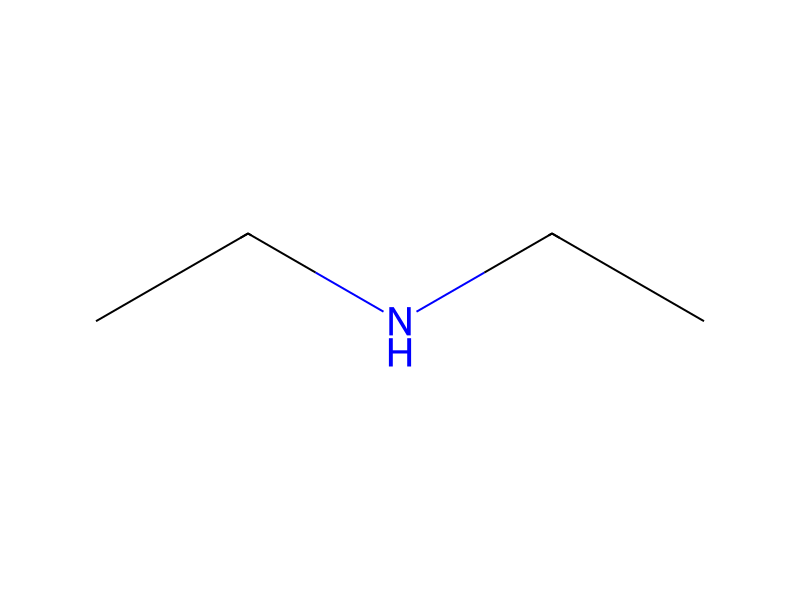
Diethylamine → HCID 10599908, compound
HRID 1288819
Reaction equation

Cl[CH2:2][C:3]1[N:8]=[C:7]2[S:9][C:10]([CH3:13])=[C:11]([CH3:12])[C:6]2=[C:5]([C:14]2[CH:19]=[CH:18][C:17]([O:20][CH3:21])=[C:16]([O:22][CH3:23])[CH:15]=2)[C:4]=1[C:24]([O:26][CH2:27][CH3:28])=[O:25].[CH2:29]([NH:31][CH2:32][CH3:33])[CH3:30]>ClCCl>[CH2:29]([N:31]([CH2:2][C:3]1[N:8]=[C:7]2[S:9][C:10]([CH3:13])=[C:11]([CH3:12])[C:6]2=[C:5]([C:14]2[CH:19]=[CH:18][C:17]([O:20][CH3:21])=[C:16]([O:22][CH3:23])[CH:15]=2)[C:4]=1[C:24]([O:26][CH2:27][CH3:28])=[O:25])[CH2:32][CH3:33])[CH3:30]Participants
4
Reactant 2

Product 1

Reagents, catalysts & solvents 1

Procedure
A mixture of ethyl 6-chloromethyl-4-(3,4-dimethoxyphenyl)-2,3-dimethylthieno[2,3-b]pyridine-5-carboxylate (1.5 g), diethylamine (1.04 g) and dichloromethane (35 ml) was stirred for 14 hours under reflux. The reaction mixture was washed with water and dried (MgSO4), then the solvent was distilled off. The residue was subjected to column chromatography on silica gel. From the fraction eluted with chloroform, ethyl 6-(N,N-diethylaminomethyl)-4-(3,4-dimethoxyphenyl)-2,3-dimethylthieno[2,3-b]pyridine-5-carboxylate (1.1 g, 68%) was obtained. Recrystallization from ethyl acetate-hexane gave colorless prisms, m.p.110°-111° C.