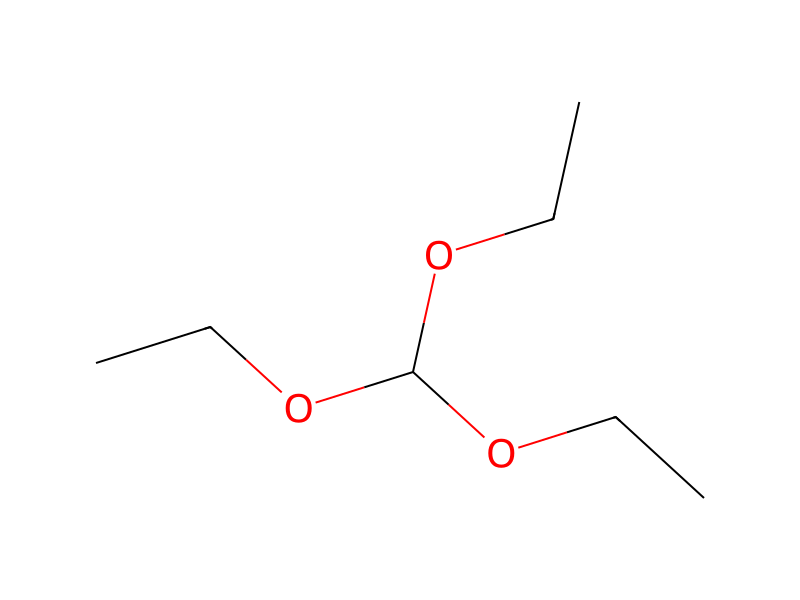
[C:1]12[C:7](=[CH:8][CH:9]=[CH:10][CH:11]=1)[NH:6][C:5](=O)[O:4][C:2]2=O.[CH3:13][O:14][C:15]1[CH:20]=[CH:19][C:18]([NH2:21])=[CH:17][CH:16]=1.C[C:23](N(C)C)=[O:24].[CH2:28]([O:30]C(OCC)OCC)C>>[CH3:28][O:30][C:11]1[CH:10]=[C:9]([O:24][CH3:23])[CH:8]=[C:7]2[C:1]=1[C:2](=[O:4])[N:21]([C:18]1[CH:19]=[CH:20][C:15]([O:14][CH3:13])=[CH:16][CH:17]=1)[CH:5]=[N:6]2A mixture of 50 g (0.224 mol) of the isatoic anhydride as prepared in Example 5, 68.9 g (0.560 mol) of p-anisidine, 2.73 g (0.022 mol) of N,N-dimethylamino pyridine, and 500 mL of anhydrous dimethylacetamide, was warmed to 110° C. A clear brown solution formed at 80-90° C. and bubbling was observed (CO2 loss). After 24 hr, the reaction was cooled to room temperature, diluted with water (1L), and extracted with EtOAc (3×500 mL). The combined organic layers were washed with brine (1×250 mL), dried over MgSO4, filtered, and concentrated to give a brown residue weighing 85.2 g. The brown residue was dissolved in anhydrous triethylorthoformate (720 mL) and warmed to reflux for 4 hr. Upon cooling to room temperature, an off-white solid precipitated. Filtration, washing with triethylorthoformate (1×1 L), air drying, and drying under high vacuum gave 55.1 g (79%) of 5,7-dimethoxy-3-(4-methoxyphenyl)quinazoline-4-one, as an off-white solid.
Loading…