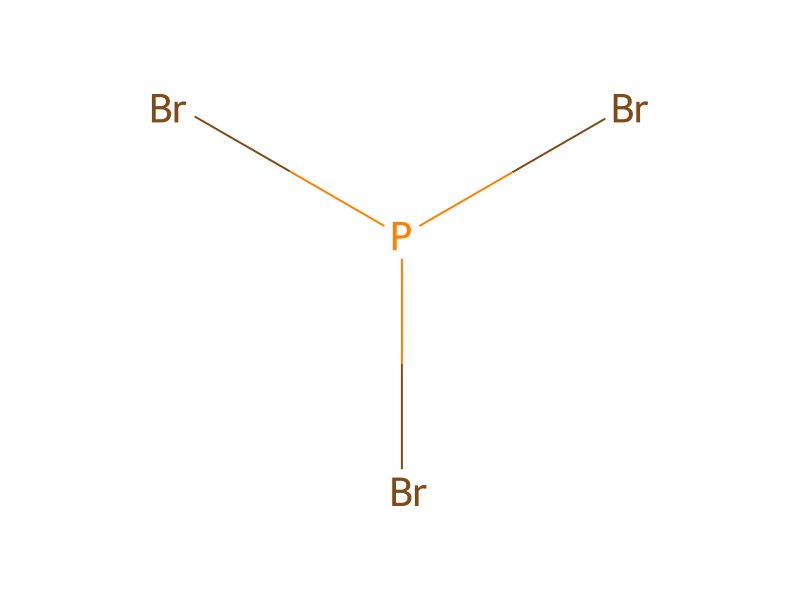
[CH2:1]([O:11][CH:12](O)[C:13]1[CH:18]=[CH:17][CH:16]=[CH:15][CH:14]=1)[CH2:2][CH2:3][CH2:4][CH2:5][CH2:6][CH2:7][CH2:8][CH:9]=[CH2:10].P(Br)(Br)[Br:21].CO.C(=O)([O-])O.[Na+]>C(OCC)C>[CH2:1]([O:11][CH:12]([Br:21])[C:13]1[CH:18]=[CH:17][CH:16]=[CH:15][CH:14]=1)[CH2:2][CH2:3][CH2:4][CH2:5][CH2:6][CH2:7][CH2:8][CH:9]=[CH2:10]First, 16.05 g (0.061 M) of 9-decenoxybenzyl alcohol (compound (23)) prepared in Synthetic example 1-2 was dissolved in 85 mL of diethyl ether, and the solution was cooled to 0° C. After cooling, 6.76 g (0.022 M) of phosphorus tribromide (compound (21)) was added dropwise thereto at 5° C. or less. The mixture was aged at 5° C. for 2 hours and then at 15° C. for 1.5 hours. After aging, the solution was cooled to 5° C. Then, 38 mL of methanol was added dropwise at 5° C. or less. After dropwise addition, 73.4 g of a sodium hydrogen carbonate aqueous solution (1 M) was added dropwise at 10° C. or less, and then phase separation was performed. After the separation, the separated organic layer was washed with 32 mL of deionized water and then concentrated. Thereby, 18.19 g of 9-decenoxybenzyl bromide (compound (24)) was produced (yield: 91.6%).
Loading…