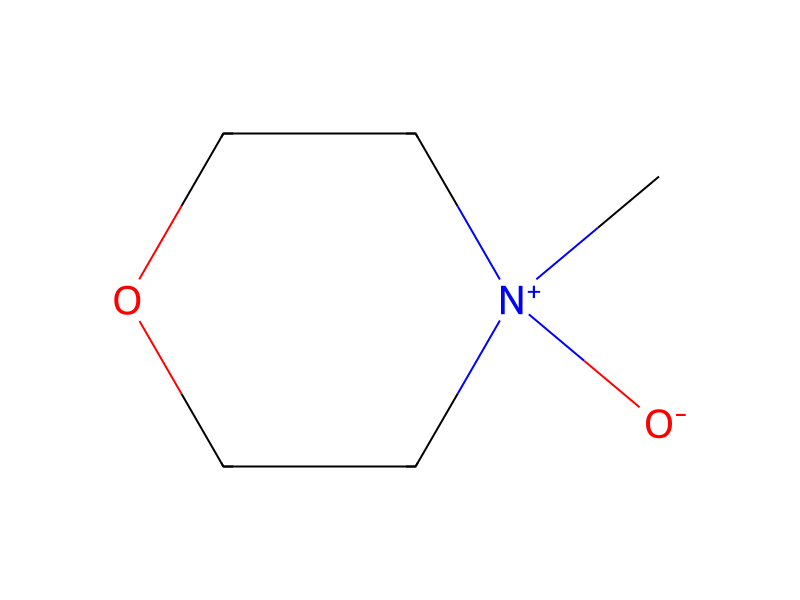
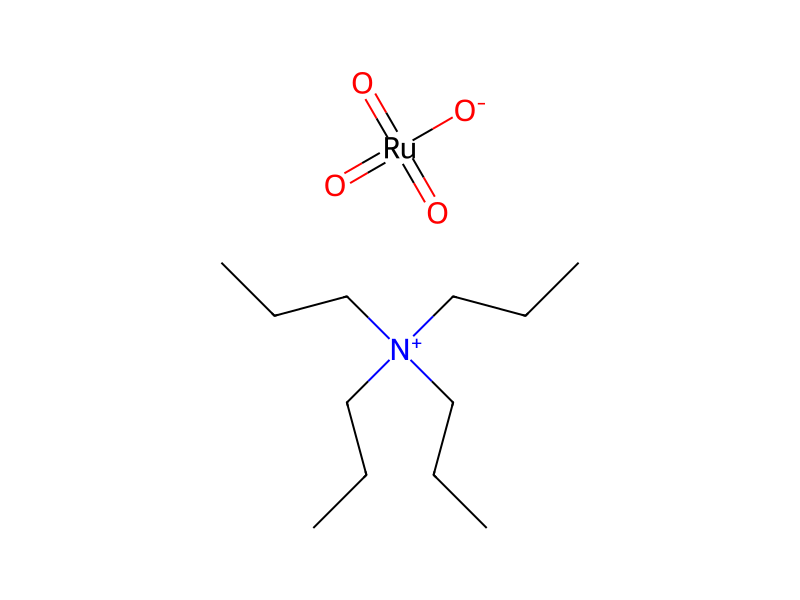
(2Z)-3-[5,6,7,8-Tetrahydro-5,5,8,8-tetramethyl-2-(n-propyloxy)naphthalen-3-yl]-but-2-en-1-al (Structure 9 of Schemes 1 and 2, where R1, R4, R6=H, R1and R3 together form a tetramethyl saturated six-membered carbocyclic ring, R5=methyl, R7=n-propyl). To an oven-dried 10-mL r.b. flask containing (2Z)-3-(4-hydroxy-2-buten-2-yl)-5,6,7,8-tetrahydro-5,5,8,8-tetramethyl-2-(n-propyloxy)naphthalene (25.0 mg, 0.08 mmol) and N-methylmorpholine N-oxide (NMO, 14 mg, 0.12 mmol, 1.5 equiv) in 0.5 mL CH2Cl2 at 0° C. was added tetra-n-propylammonium perruthenate (TPAP, 1.3 mg, 5 mol%), and the mixture was allowed to warm to room temperature. After 1 h at room temperature, the reaction mixture was filtered through a pad of silica gel, washing with an additional 50 mL CH2Cl2. The solvent was then removed under reduced pressure to afford 25 mg (99%) of (2Z)-3-[5,6,7,8-tetrahydro-5,5,8,8-tetramethyl-2-(n-propyloxy)naphthalen-3-yl]-but-2-en-1-al as a colorless low-melting solid. The aldehyde thus obtained was of greater than 98% purity as judged by the 1H NMR spectrum, and was used directly in the next step without further purification. 1H NMR (400 MHz, CDCl3) 9.36 (d, 1H, J=8.1 Hz), 6.99 (s, 1H), 6.79 (s, 1H), 6.09 (dd, 1H, J=8.4, 1.1 Hz), 3.90 (t, 2H, J=6.4 Hz), 2.29 (d, 3H, J=1.1 Hz), 1.76 (m, 2H), 1.68 (d, 4H, J=1.6Hz), 1.30 and 1.23 (2s, 2×3H) 1.00 (t, 3H, J=7.5Hz). 13C NMR (100 MHz, CDCl3) 194.0, 161.7, 153.3, 146.9, 136.6, 129.7, 128.6, 125.3, 109.5, 69.7, 35.1, 35.0, 34.6, 33.6, 31.9, 31.8, 25.9, 22.6, 10.7. IR (thin film) 2922 (br, m), 1674 (s), 1202 (s), 1147 (s).