
Methyl morpholine oxide
Completing data — refresh the page later to see the latest
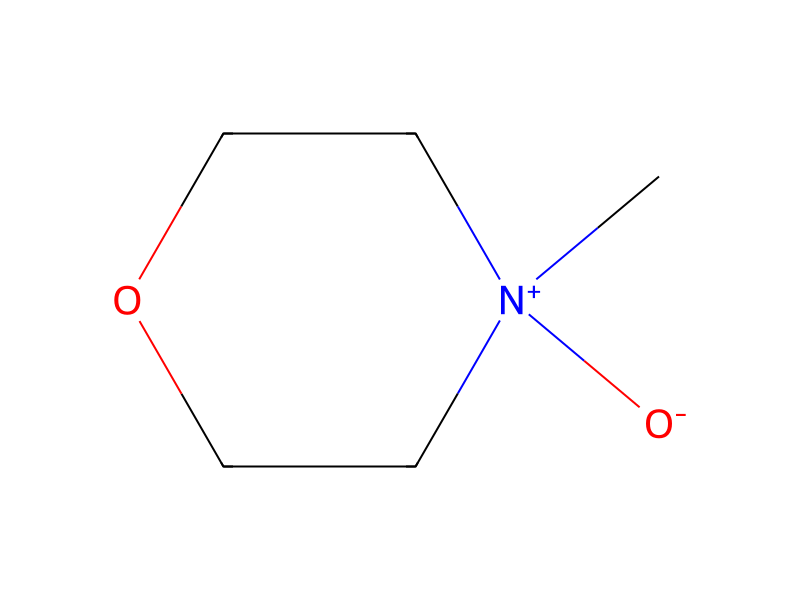
Basic information
- CAS
7529-22-8- Standard SMILES
C[N+]1([O-])CCOCC1- InChIKey
LFTLOKWAGJYHHR-UHFFFAOYSA-N- Molecular formula
- C5H11NO2
- Average molar mass
- 117.15 g/mol
- Monoisotopic mass
- 117.07897859
Overview
N-methylmorpholine N-oxide is a morpholine N-oxide resulting from the oxidation of the amino group of N-methylmorpholine.
Names & identifiers
- Preferred name
- Methyl morpholine oxide
- IUPAC
- 4-methyl-4-oxidomorpholin-4-ium
- English name
- 4-Methylmorpholine N-oxide
- Molecular formula
- C5H11NO2
- Molecular weight
- 117.15
Names & synonyms
7529-22-84-Methylmorpholine 4-oxideN-Methylmorpholine oxideN-Methylmorpholine N-oxideMorpholine, 4-methyl-, 4-oxideMethyl morpholine oxide4-Methylmorpholine-4-oxide4-Methylmorpholine Oxide4-methylmorpholine-N-oxideN-Methylmorpholine 4-oxideNSC 73198NSC 82153
Show more names
NMO4-methyl-morpholin4-oxideMMNO4-methyl-4-oxidomorpholin-4-ium4-methylmorpholine n-oxide solution4-MethylMorpholin-4-iuM-4-olate
DTXSID3029287EINECS 231-391-8NSC-73198NSC-821534-methylmorpholine 4-oxide, monohydrateDTXCID509287CHEBI:52093EC 231-391-8
Database identifiers
- CAS
7529-22-8- PubChem CID
- 82029
- DTXSID
DTXSID3029287- ChEMBL
CHEMBL3184330- ChEBI
CHEBI:52093- UNII
- ARC64PKJ0F
- EC Number
- 231-391-8
- Nikkaji
- J256.599D
Properties
Computed structural propertiesFilling in
- XLogP
- -0.7
- Topological polar surface area
- 27.3 Ų
- Hydrogen bond donors
- 0
- Hydrogen bond acceptors
- 2
- Rotatable bonds
- 0
- Heavy atoms
- 8
- Formal charge
- 0
- Complexity
- 78.5
Experimental & physicochemical properties
Chemical ClassesNitrogen Compounds -> Amine Oxides
CosmeticsCleansing; Foam boosting; Surfactant
Physical Description
Liquid
White hygroscopic solid; [Merck Index] Light yellow crystalline solid; [Sigma-Aldrich MSDS]
Physicochemical properties
- Melting point
- 180 · 180-184 °C(lit.)
- Boiling point
- 118 · 118-119°C
- Density
- 1 · 1,14 g/cm3
- vapor pressure
- 1.41 hPa · 1.41hPa at 20℃
- refractive index
- 20 · n20/D 1.43
- Flash point
- 118 · 118-119°C
- storage temp.
- 2 · 2-8°C
- solubility
- DMSO (Soluble), Methanol (Slightly)
- form
- Liquid
Safety & regulation
Safety information is for reference only and does not replace the supplier’s Safety Data Sheet (SDS), applicable regulations, or professional assessment.
GHS classification
GHS Classification
This chemical does not meet GHS hazard criteria for 0.5% (1 of 202) of reports.
Danger
H228 (66.8%): Flammable solid [Danger Flammable solids]
P203, P210, P220, P240, P241, P261, P264, P264+P265, P271, P280, P302+P352, P304+P340, P305+P351+P338, P318, P319, P321, P332+P317, P337+P317, P362+P364, P370+P378, P403+P233, P405, and P501 (click each P-code to see the statement)
Aggregated GHS information provided per 202 reports by companies from 14 notifications to the ECHA C&L Inventory. Each notification may be associated with multiple companies.
Hazard information
Regulatory Information
Chemical: Morpholine, 4-methyl-, 4-oxide
Morpholine, 4-methyl-, 4-oxide is listed on the EPA's Chemical Data Reporting (CDR) system. Manufacturers and importers of Morpholine, 4-methyl-, 4-oxide are required to report information about their production and use of this chemical to the EPA under the Toxic Substances Control Act (TSCA). (40 eCFR Part 711)
Status: Active Update: 12-12-2022 https://echa.europa.eu/registration-dossier/-/registered-dossier/15946
Morpholine, 4-methyl-, 4-oxide: Does not have an individual approval but may be used under an appropriate group standard
Hazards Summary
An irritant; [Merck Index] An oxidizer that may intensify fire; [ECHA REACH Registrations] A skin and strong eye irritant; May cause allergic reactions in sensitive individuals, based on QSAR modeling; [Sigma-Aldrich MSDS] Search for (7529-22-8[EC/RN Number]) AND (allergic OR sensitizer OR sensitization OR dermatitis): no results; [PubMed]
Hazard Classes and CategoriesFlam. Sol. 1 (66.8%)
Safety data
Chemistry & industry
Uses & manufacturing
Uses
Used as a reagent in synthetic organic chemistry and commercially for swelling and dissolution of cellulose; [Merck Index] Used as an intermediate, to make flexible and rigid polyurethane foams, as a solvent in synthetic fiber production, and in industrial and professional coatings, adhesives, and sealants; [ECHA REACH Registrations]
Textiles (Fiber & Fabric Manufacturing) [Category: Industry]
U.S. Production2023: 500,000 - <1,000,000 lb
Industry UsesOther
Use ClassificationCosmetics -> Cleansing; Foam boosting; Surfactant
General Manufacturing Information
Organic Fiber Manufacturing
Morpholine, 4-methyl-, 4-oxide: ACTIVE
Applications
Uses4-Methylmorpholine N-Oxide is a metabolite of Morpholine (M723725). N-Methylmorpholine N-Oxide is commonly used to dissolve cellulose as well as in the dissolution of of scleroproteins.
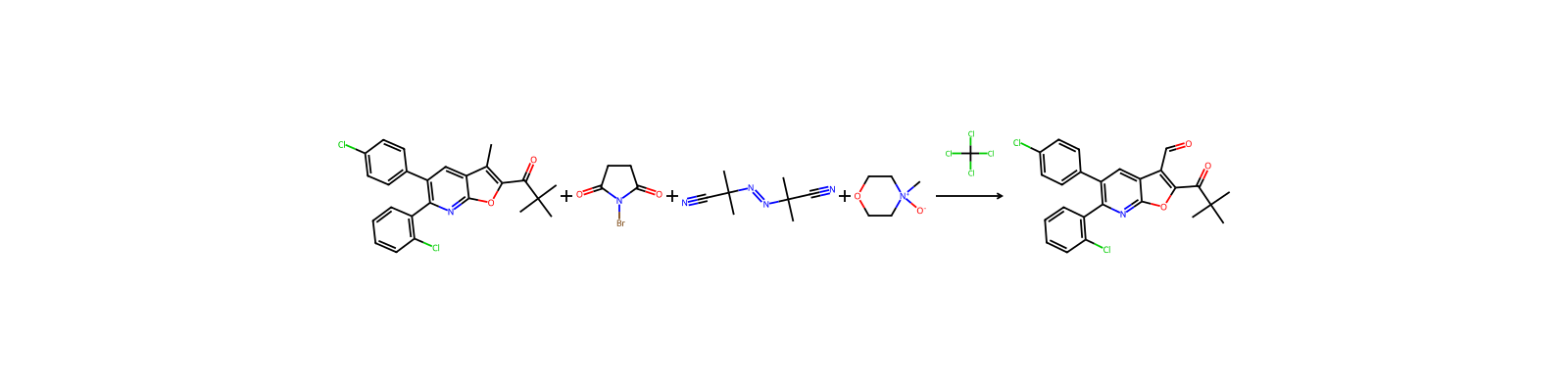
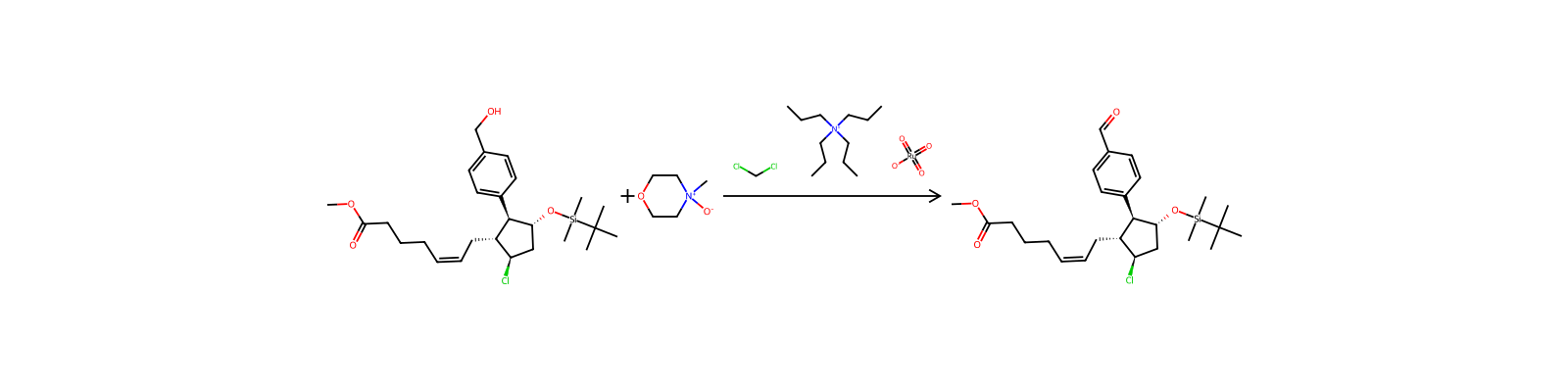
Uses4-Methylmorpholine N-oxide acts as a non-metallic catalyst for the cyanosilylation of ketones. It is also employed as a co-oxidant for Sharpless asymmetric dihydroxylation in ionic liquids. It serves as a solvent in the Lyocell process to produce tencel fiber. Further, it is used in the preparation of aldehydes from primary alcohols in the presence of tetrapropylammonium perruthenate.
UsesNon-metallic catalyst for the cyanosilylation of ketones. Co-oxidant for Sharpless asymmetric dihydroxylation in ionic liquids.
General Description4-MethylmorpholineN-oxide is an organic compound used as a co-oxidant along with OsO4 and ruthenates in organic synthesis. In recent studies, it has been used as a catalyst in silylcyanation of aldehydes and ketones. Lyocell, a regenerated cellulose fiber, can be prepared using 4-methylmorpholineN-oxide in an eco-friendly manner.
Related reactions
2,008 records





Compound notes
Loading…