HomeMCPWorkbenchSkills
HomeWorkbenchNotificationsMe
llms.txt · MCP GuidePrivacy Policy · Terms of Service · Supportv1.8.3
  1. Home
  2. /Reaction

3-Bromotoluene → 2-Bromo-1-(4-bromo-2-methylphenyl)propan-1-one

HRID 1368274
Print

Reaction equation

HRID 1368274 reaction equation
[Al+3].[Cl-].[Cl-].[Cl-].[Br:5][CH:6]([CH3:10])[C:7](Cl)=[O:8].BrC(C)C(O)=O.S(Cl)(Cl)=O.[Br:21][C:22]1[CH:23]=[C:24]([CH3:28])[CH:25]=[CH:26][CH:27]=1.[NH4+].[Cl-]>ClC(Cl)C.CN(C)C=O>[Br:5][CH:6]([CH3:10])[C:7]([C:25]1[CH:26]=[CH:27][C:22]([Br:21])=[CH:23][C:24]=1[CH3:28])=[O:8]
ParticipantsProcedureWorkupSources & evidenceReaction notes

Participants

9

Reactant 6

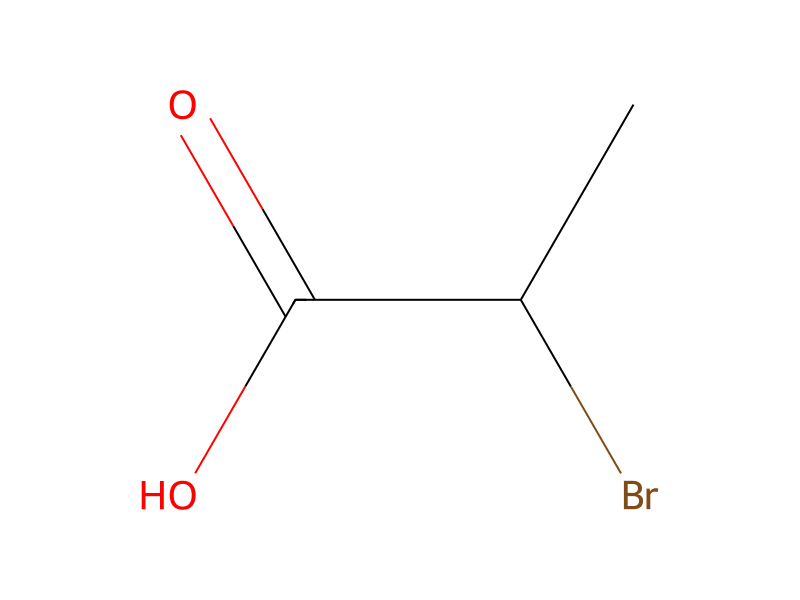
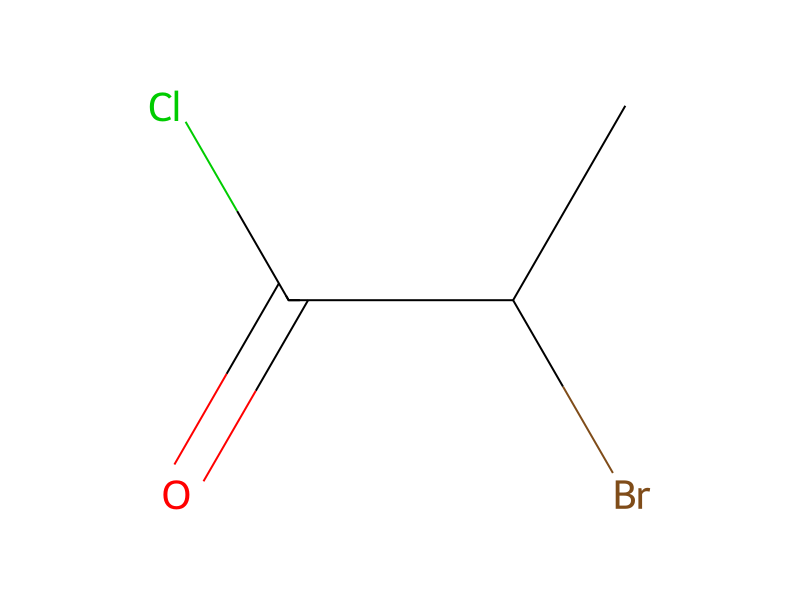
HCID 115603-BromotolueneHCID 117292-Bromopropionic acidHCID 24386Thionyl ChlorideHCID 25517Ammonium ChlorideHCID 979802-Bromopropanoyl chlorideHCID 6451240Aluminum(III) Chloride

Product 1

HCID 18520183
2-Bromo-1-(4-bromo-2-methylphenyl)propan-1-one

Reagents, catalysts & solvents 2

HCID 6228DimethylformamideSolventHCID 63651,1-DichloroethaneSolvent

Procedure

To a suspension of AlCl3 (20.4 g, 153 mmol) in dichloroethane (150 mL, DCE) was added 2-bromopropionyl chloride, freshly prepared from 2-bromopropionic acid (23.4 g, 153 mmol), excess thionyl chloride, and catalytic N,N-dimethylformamide, at 25° C. To the resulting mixture was added 3-bromotoluene (20.2 g, 118 mmol) at 17° C., and the dark solution was stirred at room temperature for 2 h. The reaction was cooled to 0° C. and satd aq NH4Cl was slowly added. The phases were separated and the organic layer was washed with additional satd aq NH4Cl, dried (Na2SO4), filtered, and concentrated in vacuo to give crude 2-bromo-1-(4-bromo-2-methylphenyl)propan-1-one as a dark oil. Flash chromatography (SiO2; 0-5% Et2O/Hexanes) afforded the desired product as the major component in a mixture of isomeric products (32.3 g crude). The resulting gold oil (10.0 g, 32.7 mmol) was dissolved in 1,2-dichloroethane (120 mL), and potassium acetate (4.8 g, 49 mmol) and benzyltriethylammonium chloride (0.37 g, 1.6 mmol) were added. The resulting mixture was heated to reflux and stirred for 6 h and then at 25° C. for 16 h. The reaction mixture was washed with water, and the organic phase was dried (Na2SO4), filtered, and concentrated in vacuo to give crude product as a yellow oil. Flash chromatography (SiO2; 0-20% Et2O/Hexanes) afforded the racemic product (5.0 g, 54%) as a yellow oil: 1H NMR (CDCl3) δ 1.42 (d, 3H, J=7.3 Hz), 2.11 (s, 3H), 2.41 (s, 3H), 5.69 (q, 1H, J=7.3 Hz), 7.38-7.44 (m, 2H), 7.52 (d, 1H, J=8.4 Hz); EI/MS 285 m/e (M+).

Workup

  1. temperatureThe reaction was cooled to 0° C.
  2. additionwas slowly added
  3. customThe phases were separated
  4. washthe organic layer was washed with additional satd aq NH4Cl
  5. dry with materialdried (Na2SO4)
  6. filtrationfiltered
  7. concentrationconcentrated in vacuo

Sources & evidence

ORD record
ord-bc61c0a3dbb840448ded04803a1da8c1
Source dataset
uspto-grants-2003_06
DOI
10.6084/m9.figshare.5104873.v1
Patent number
US06573286B1

Reaction notes

On this pageParticipantsProcedureWorkupSources & evidenceReaction notes