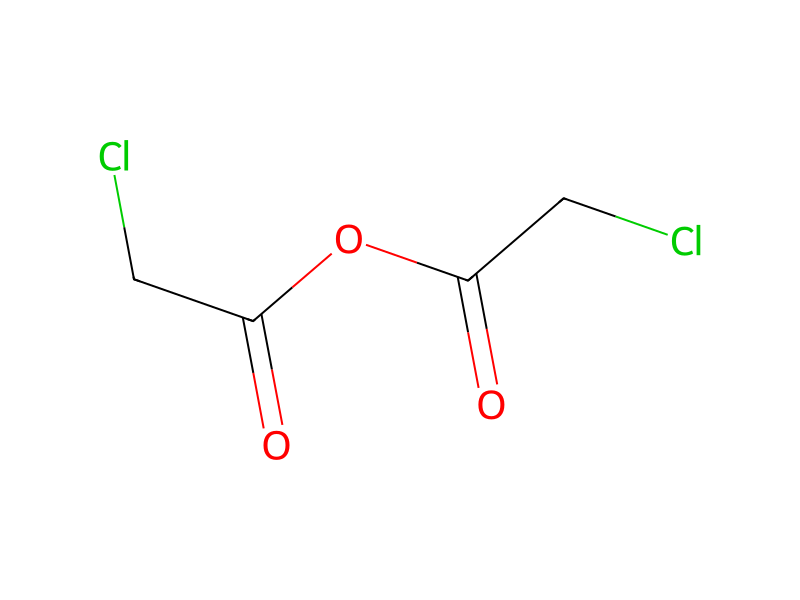
[Br:1][C:2]1[C:7]2[C:8](=[O:21])[N:9]([CH3:20])[CH2:10][C:11]3[N:12]([CH:13]=[N:14][C:15]=3[C:16](=[N:18][OH:19])[NH2:17])[C:6]=2[CH:5]=[CH:4][CH:3]=1.[Cl:22][CH2:23][C:24](OC(=O)CCl)=O>CN(C)C=O>[Br:1][C:2]1[C:7]2[C:8](=[O:21])[N:9]([CH3:20])[CH2:10][C:11]3[N:12]([CH:13]=[N:14][C:15]=3[C:16]3[N:17]=[C:24]([CH2:23][Cl:22])[O:19][N:18]=3)[C:6]=2[CH:5]=[CH:4][CH:3]=116.9 g (48.3 mmol) of 7-bromo-5-methyl-6-oxo-5,6-dihydro-4H-imidazo[1,5-a][1,4]benzodiazepine-3-carboxamidoxime were stirred with 9.5 g (55.5 mmol) of chloroacetic anhydride in 100 ml of N,N-dimethylformamide at room temperature for 1 hour and at 105° for 3 hours. After evaporating the solvent the residue was dissolved in methylene chloride and the solution was washed with saturated sodium bicarbonate solution. By drying the organic phase over magnesium sulfate, evaporation of the solvent and chromatography of the residue on silica gel while eluting with methylene chloride/methanol 9/1 there were obtained 16.3 g (84%) of 7-bromo-3-(5-chloromethyl-1,2,4-oxadiazol-3-yl)-5-methyl-5, 6-dihydro-4H-imidazo[1,5-a][1,4]benzodiazepin-6-one of m.p. 242°-244°.