HomeMCPWorkbenchSkills
HomeWorkbenchNotificationsMe
llms.txt · MCP GuidePrivacy Policy · Terms of Service · Supportv1.8.0
  1. Home
  2. /Reaction

Trimethyl borate → Benzenepropanoic acid, 4-borono-α,α-dimethyl-

HRID 1378359
Notes
Print preview

Reaction equation

HRID 1378359 reaction equation
[C:1]([C:4]([CH3:14])([CH3:13])[CH2:5][C:6]1[CH:11]=[CH:10][C:9](Br)=[CH:8][CH:7]=1)([OH:3])=[O:2].C([Li])CCC.[B:20](OC)([O:23]C)[O:21]C>O1CCCC1.CCCCCC>[C:1]([C:4]([CH3:14])([CH3:13])[CH2:5][C:6]1[CH:11]=[CH:10][C:9]([B:20]([OH:23])[OH:21])=[CH:8][CH:7]=1)([OH:3])=[O:2]
ParticipantsConditionsProcedureWorkupSources & evidenceReaction notes

Participants

6

Reactant 3

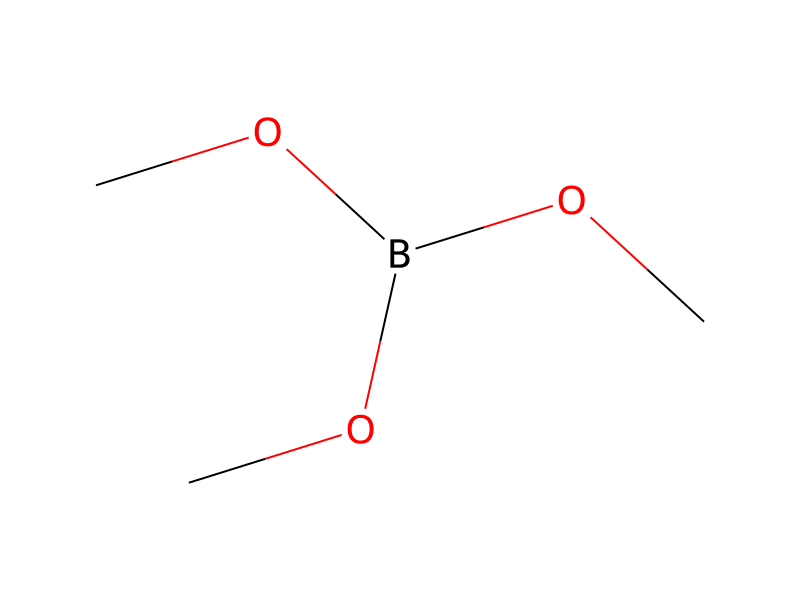
HCID 8470Trimethyl borateHCID 211862823-(4-Bromophenyl)-2,2-dimethylpropanoic acidHCID 178418339Butyllithium

Product 1

HCID 21186231Benzenepropanoic acid, 4-borono-α,α-dimethyl-

Reagents, catalysts & solvents 2

HCID 8028TetrahydrofuranSolventHCID 8058
Hexane
Solvent

Conditions

Temperature
-70 °C

Procedure

4-(2-Carboxy-2-methylpropyl)bromobenzene (1.93 g) was dissolved in anhydrous tetrahydrofuran (20 ml) and cooled to -70° C. A 1.25M solution of n-butyl lithium in hexane (18 ml) was added dropwise with stirring under an argon atmosphere, such that the temperature did not exceed -65° C. After a further 20 minutes, trimethyl borate was slowly added at -65° C. and the reaction mixture was allowed to attain -15° C. The reaction was quenched by the addition of a saturated aqueous solution of ammonium chloride (50 ml) and the mixture acidified by the addition of 2M HCl. The organic phase was separated and the aqueous layer was extracted with ethyl acetate (2×50 ml). The combined organic phase was washed with saturated sodium chloride solution (15 ml) and evaporated and the residue was triturated with hexane to give 4-(2-carboxy-2-methylpropyl)benzeneboronic acid (1.2 g); 1H NMR (DMSO-d6): 1.06 (s, 6H), 2.78 (s, 2H), 7.11 (d, 2H), 7.67 (d, 2H), 7.9 (br s, 2H), 12.2 (br s, 1H); mass spectrum (-ve ESP) 221 (M-H)-.

Workup

  1. customdid not exceed -65° C
  2. customto attain -15° C
  3. customThe reaction was quenched by the addition of a saturated aqueous solution of ammonium chloride (50 ml)
  4. additionthe mixture acidified by the addition of 2M HCl
  5. customThe organic phase was separated
  6. extractionthe aqueous layer was extracted with ethyl acetate (2×50 ml)
  7. washThe combined organic phase was washed with saturated sodium chloride solution (15 ml)
  8. customevaporated
  9. customthe residue was triturated with hexane

Sources & evidence

ORD record
ord-62628b89420a4d9799eb32ba959131d1
Source dataset
uspto-grants-1997_09
DOI
10.6084/m9.figshare.5104873.v1
Patent number
US05668137

Reaction notes

Loading…

On this pageParticipantsConditionsProcedureWorkupSources & evidenceReaction notes


